


Over 80 percent of companies now outsource at least one back office function, aiming to sharpen their focus on growth while trimming overhead. As business operations grow more complex, finding ways to manage HR, accounting, and IT support efficiently has become a key concern for organizations of every size. Understanding what back office outsourcing really means—and how it can transform hidden costs into strategic advantages—helps businesses stay nimble, competitive, and ready to scale.
Table of Contents
- Defining Back Office Outsourcing and Its Importance
- Types of Back Office Functions Outsourced
- How Back Office Outsourcing Works in Practice
- Key Benefits and Strategic Advantages
- Risks, Costs, and Mitigation Strategies
Key Takeaways
| Point | Details |
|---|---|
| Strategic Focus | Back office outsourcing enables companies to concentrate on core business activities by delegating non-customer-facing functions to external providers. |
| Enhanced Performance | Research indicates that outsourcing can significantly boost productivity and profitability, particularly for small and medium enterprises (SMEs). |
| Various Functions | Commonly outsourced tasks include financial management, human resources, and IT services, which are essential for streamlined business operations. |
| Risk Management | Successful outsourcing requires addressing potential risks such as data security and communication issues, as well as implementing robust mitigation strategies. |
Defining Back Office Outsourcing and Its Importance
Back office outsourcing represents a strategic business approach where companies delegate non-customer-facing administrative and support functions to external service providers. These functions typically include critical operational tasks such as human resources, accounting, data processing, IT support, and administrative management. By transferring these responsibilities, organizations can focus their internal resources on core business objectives and strategic growth initiatives.
According to research from Springer, back office outsourcing significantly impacts organizational performance, particularly for small and medium enterprises (SMEs). The study highlights how strategic outsourcing can enhance productivity and profitability by allowing companies to optimize their operational efficiency. Key advantages of back office outsourcing include:
- Reduced operational costs
- Access to specialized expertise
- Increased scalability and flexibility
- Enhanced technological capabilities
- Improved process standardization
In the banking sector, Theseus research reveals that back office outsourcing involves complex cooperation arrangements that demand careful strategic planning. Successful implementation requires thoroughly evaluating potential risks and establishing robust partnership frameworks. Companies must conduct comprehensive assessments to ensure the selected outsourcing partner aligns with their operational requirements, technological standards, and organizational culture. The goal is not just cost reduction but creating a symbiotic relationship that drives mutual business growth and operational excellence.
Types of Back Office Functions Outsourced
Back office functions represent the critical behind-the-scenes operations that support an organization’s core business activities. These functions, while not directly customer-facing, are fundamental to maintaining smooth organizational performance and strategic effectiveness. Springer research indicates that companies increasingly recognize the strategic value of outsourcing these complex administrative tasks to specialized service providers.
The most commonly outsourced back office functions can be categorized into several key areas:
Financial Management Functions:
- Accounting and bookkeeping
- Payroll processing
- Financial reporting and analysis
- Tax preparation and compliance
- Expense management

Human Resources Functions:
- Recruitment and talent acquisition
- Employee onboarding
- Performance management
- Benefits administration
- Training and development coordination
Information Technology Services:
- Technical support
- Network infrastructure management
- Cybersecurity monitoring
- Software maintenance
- Data management and storage
According to research from Springer, organizations typically select outsourcing partners based on their ability to provide specialized expertise, technological capabilities, and cost-effective solutions. The decision to outsource specific back office functions involves a comprehensive evaluation of potential strategic advantages, including improved operational efficiency, access to advanced technological resources, and the flexibility to scale operations dynamically without substantial internal investment.
How Back Office Outsourcing Works in Practice
Back office outsourcing is a strategic process that transforms complex administrative functions into streamlined, efficient operations through carefully orchestrated partnerships. Springer research highlights the intricate evolution of outsourcing, emphasizing that successful implementation requires more than simple task delegation—it demands a comprehensive approach to organizational management.
The practical implementation of back office outsourcing typically follows a structured workflow:
- Initial Assessment and Strategy Development
- Identify back office functions suitable for outsourcing
- Conduct comprehensive organizational capability analysis
- Define clear performance metrics and expectations
- Partner Selection and Onboarding
- Research potential outsourcing providers
- Evaluate technological capabilities and expertise
- Negotiate service level agreements (SLAs)
- Establish communication protocols
- Implementation and Integration
- Design detailed transition plan
- Transfer knowledge and operational documentation
- Configure technological integration points
- Train internal and external teams
According to Springer, successful back office outsourcing requires robust strategic controls and continuous performance monitoring. Organizations must develop sophisticated governance frameworks that enable seamless collaboration, ensuring outsourced functions align perfectly with core business objectives. This involves creating transparent reporting mechanisms, regular performance reviews, and adaptive management strategies that allow for quick adjustments when operational needs change.
The ultimate goal is not merely cost reduction but creating a dynamic, flexible operational model that enhances overall organizational efficiency. By carefully selecting specialized partners and implementing rigorous management processes, companies can transform back office functions from traditional cost centers into strategic assets that drive competitive advantage.
Key Benefits and Strategic Advantages
Back office outsourcing represents a powerful strategic approach that delivers multifaceted benefits for organizations seeking operational excellence. Springer research demonstrates that outsourcing back office functions can dramatically transform organizational performance, particularly for small and medium enterprises (SMEs) looking to optimize their operational capabilities.
The key strategic advantages of back office outsourcing can be categorized into several critical domains:
Financial Benefits:
- Significant reduction in operational expenses
- Conversion of fixed costs to variable costs
- Elimination of infrastructure and technology investment requirements
- Access to economies of scale
- Predictable and streamlined budget management
Operational Advantages:
- Enhanced organizational flexibility
- Faster deployment of technological capabilities
- Improved process standardization
- Reduced administrative burden on internal teams
- Accelerated response times to business challenges
Talent and Expertise Advantages:
- Immediate access to specialized skills
- Continuous professional development
- Reduced recruitment and training complexities
- Global talent pool accessibility
- Expert management of complex administrative functions
According to Springer, strategic outsourcing enables organizations to transcend traditional operational limitations by providing scalable solutions and high-quality service delivery. By strategically selecting outsourcing partners, companies can transform back office functions from cost centers into value-generating strategic assets. The most successful organizations view back office outsourcing not merely as a cost-cutting mechanism, but as a sophisticated strategy for driving innovation, efficiency, and competitive differentiation in an increasingly complex global business landscape.
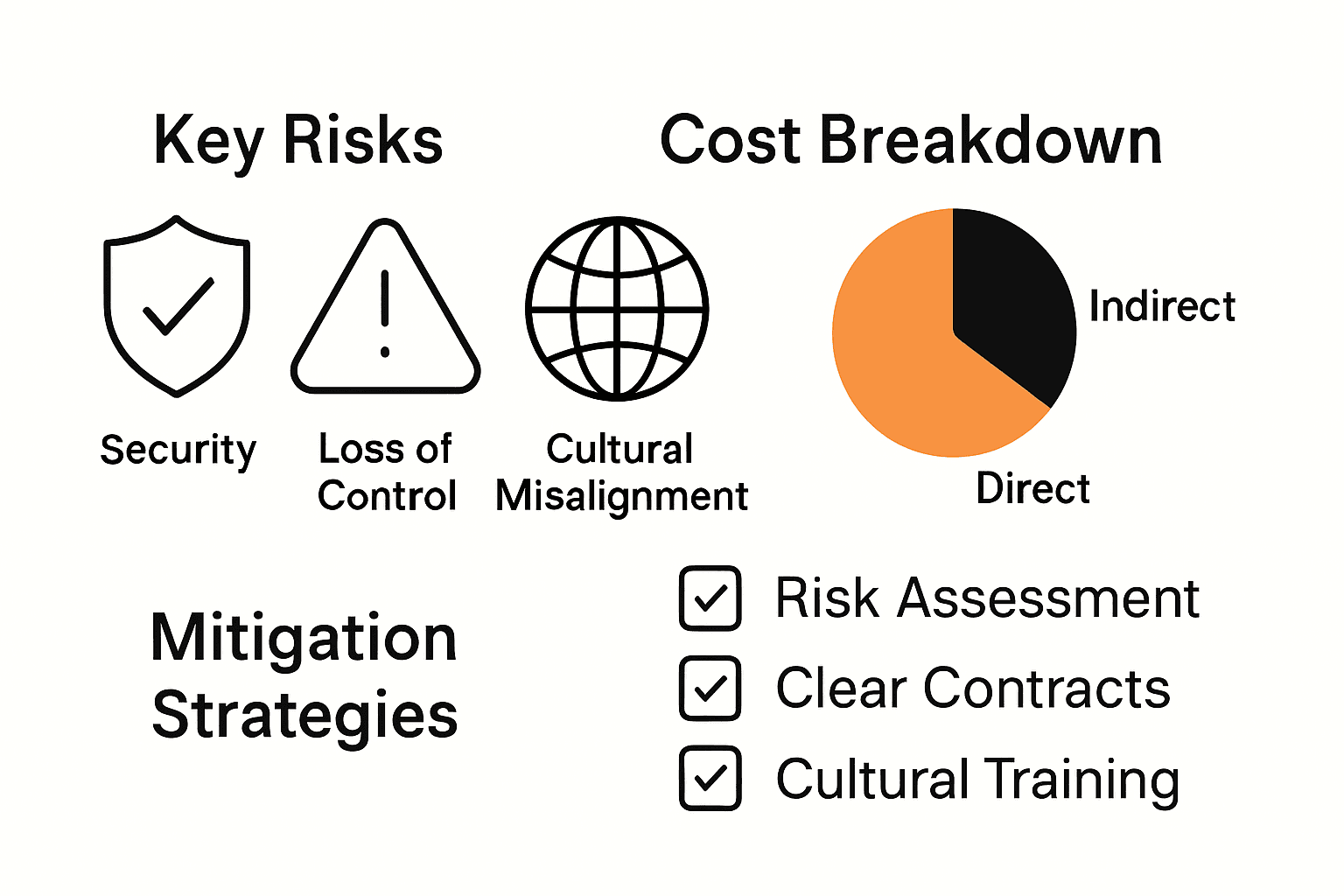
Risks, Costs, and Mitigation Strategies
Back office outsourcing introduces complex challenges that require sophisticated risk management approaches. Springer research reveals that organizations must carefully navigate potential pitfalls to ensure successful outsourcing partnerships, emphasizing the critical need for comprehensive risk assessment and strategic mitigation planning.
Primary Risks in Back Office Outsourcing:
- Data security and confidentiality vulnerabilities
- Loss of direct operational control
- Communication and cultural misalignment
- Potential service quality inconsistencies
- Unexpected hidden costs
- Technological integration challenges
- Compliance and regulatory risks
Cost Evaluation Framework:
- Direct Costs
- Initial transition expenses
- Monthly service fees
- Technology integration investments
- Indirect Costs
- Management oversight
- Performance monitoring
- Potential productivity disruptions
- Training and knowledge transfer
Mitigation Strategies:
- Conduct thorough vendor due diligence
- Develop comprehensive service level agreements (SLAs)
- Implement robust data protection protocols
- Establish clear communication channels
- Create detailed performance monitoring mechanisms
- Build flexibility into contract structures
- Maintain partial internal capability
According to Springer, successful risk management in back office outsourcing demands a proactive and dynamic approach. Organizations must view risk mitigation as an ongoing process, continuously evaluating partner performance, technological capabilities, and alignment with strategic objectives. By developing adaptive strategies and maintaining transparent, collaborative relationships, companies can transform potential risks into opportunities for operational enhancement and strategic growth.
Transform Your Back Office Challenges into Strategic Strengths
Back office outsourcing presents powerful benefits but also complex challenges like data security, operational control, and seamless integration. If you are looking to reduce operational costs while gaining access to specialized expertise and scalable solutions, you need a partner who understands these strategic nuances. At StorsenDigital, we specialize in comprehensive outsourcing and Business Process Outsourcing services designed to tackle exactly these pain points. Our tailored approaches ensure your back office functions like finance, HR, and IT operate smoothly while you focus on growing your core business.

Ready to elevate your operational efficiency with expert outsourcing solutions? Visit StorsenDigital today to discover how our strategic consulting, managed BPO, and nearshoring services can transform your back office into a competitive advantage. Don’t wait to create a dynamic, scalable operation that adapts to your evolving business needs. Explore our offerings now at StorsenDigital and take the first step toward streamlined success.
Frequently Asked Questions
What is back office outsourcing?
Back office outsourcing is a strategic business practice where companies delegate non-customer-facing administrative and support functions, such as human resources, accounting, and IT services, to external service providers to enhance efficiency and focus on core operations.
What are the main benefits of back office outsourcing?
The primary benefits include reduced operational costs, access to specialized expertise, increased scalability, improved technological capabilities, and enhanced process standardization, enabling organizations to optimize their performance and productivity.
What types of functions are typically outsourced in back office operations?
Commonly outsourced functions include financial management tasks like accounting and payroll, human resources operations such as recruitment and onboarding, and IT services, including technical support and cybersecurity management.
What risks are associated with back office outsourcing?
Key risks include data security vulnerabilities, loss of operational control, communication misalignment, potential service quality issues, hidden costs, and compliance challenges. Organizations need to implement thorough risk management strategies to mitigate these risks.


