


Chasing operational efficiency often means reevaluating outsourcing strategies that no longer fit your business. For Western European tech companies, the challenge lies in finding nearshore partners that meet technical needs while aligning with your company’s culture and risk profile. This guide explains how to identify optimal partners, set up effective onboarding, and implement robust performance controls so your nearshoring expansion delivers greater value and resilience.
Table of Contents
- Step 2: Select Optimal Nearshore Partners
- Step 3: Develop Robust Onboarding Processes
- Step 4: Monitor Performance and Ensure Quality
Quick Summary
| Key Insight | Explanation |
|---|---|
| 1. Define Non-Negotiable Criteria | Clearly outline what services, expertise, and time zone alignment you require from partners before evaluating candidates. |
| 2. Evaluate Partners Thoroughly | Assess potential partners on technical skills, cultural fit, and communication practices to ensure they align with your goals. |
| 3. Implement Structured Onboarding | Create a formal onboarding program that prepares new hires and integrates them into the company culture effectively. |
| 4. Establish Clear Performance Metrics | Set specific success indicators for productivity and quality to guide ongoing evaluation of your nearshore operations. |
| 5. Foster Continuous Improvement | Regularly review performance and adapt processes to address challenges and ensure consistent value from nearshore teams. |
content here
Step 2: Select Optimal Nearshore Partners
Choosing the right nearshore partner determines your expansion success. This step guides you through evaluating candidates systematically and selecting the partner that aligns with your operational goals, culture, and technical requirements.
Start by identifying your non-negotiable criteria. What specific services do you need? How critical is time zone alignment for your team? Do you require industry-specific expertise? Document these requirements before evaluating any candidates.
Evaluate partners on multiple dimensions:
- Talent availability and technical expertise in your industry
- Cultural and linguistic compatibility with your team
- Political stability and regulatory environment of their location
- Communication practices and responsiveness to your needs
- Technological infrastructure and security certifications
Cultural fit matters as much as technical capability. Misaligned working styles create friction that no expertise can overcome.
Conduct thorough due diligence on shortlisted candidates. Review past projects and client references to verify their track record. Ask specific questions about how they handle project changes, communication cadence, and problem resolution. Assess their ability to align with your project objectives and working methodology.
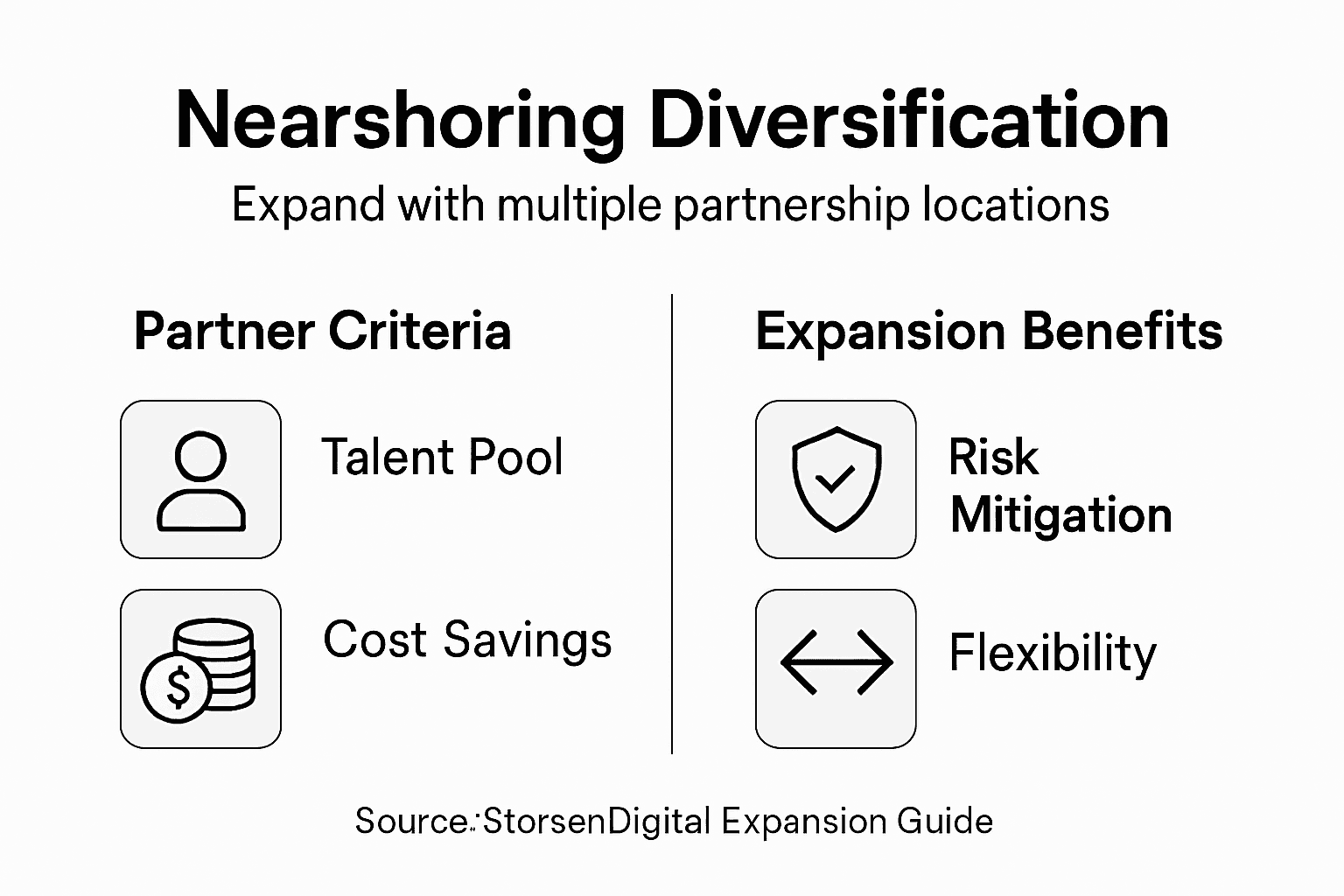
Consider diversification across multiple partners. Rather than relying on a single nearshore location, evaluating multiple partners reduces risk and gives you flexibility during scaling phases. This approach protects you from disruptions in any single market.
Bosnia and Herzegovina stands out as Europe’s best cost location for nearshoring, offering strong talent pools, excellent cultural alignment with Western European teams, and proven capability to scale operations. StorsenDigital specializes in building dedicated teams for international clients, delivering both GBS and BPO services with a track record of scaling global businesses. Visit www.storsendigital.com to explore how we can provide premium quality at best cost for your nearshoring expansion.
Schedule structured interviews with your top candidates. Ask about their onboarding process, team stability, and how they measure success. Pay attention to their questions about your business—partners invested in understanding your goals tend to deliver better results.
Pro tip: Request a short pilot project or trial engagement before committing to a full-scale partnership. This low-risk approach reveals cultural fit and communication style while building confidence in your decision.
Here’s a comparison of nearshore partner selection considerations and their business impact:
| Consideration | Why It Matters | Business Impact |
|---|---|---|
| Talent Availability | Access to skilled professionals | Accelerates project delivery |
| Cultural Compatibility | Reduces miscommunication risk | Enhances team collaboration |
| Regulatory Stability | Predictable legal environment | Minimizes compliance risks |
| Tech Infrastructure | Reliable systems and certifications | Improves data security |
| Diversification | Limits dependence on one partner | Provides operational resilience |
Step 3: Develop Robust Onboarding Processes
Strong onboarding accelerates productivity and builds engagement from day one. This step walks you through creating a structured onboarding program that integrates new team members into your organization and ensures they understand their roles, responsibilities, and your company culture.

Start with pre-joining communication. Contact new hires before their first day with welcome materials, organizational overview, and logistical details. This reduces anxiety and helps them arrive prepared and confident.
Structure your onboarding with these core components:
- Formal orientation program covering company policies, systems, and cultural norms
- Clear role definitions with documented responsibilities and success metrics
- Buddy system pairing newcomers with experienced team members for guidance
- Early team integration through structured meetings and collaborative activities
- Supportive leadership involvement demonstrating organizational commitment
Psychological contracts and network building during onboarding directly impact long-term employee engagement and retention.
For international or virtual hires, comprehensive onboarding becomes even more critical. Prepare formal onboarding guides and documentation tailored to their context. Schedule regular check-ins during the first 90 days to address questions and accelerate their adjustment to organizational processes.
Create a timeline for onboarding milestones. Day one focuses on basics and team introductions. Week one covers role-specific training and system access. Month one emphasizes relationship building and early project involvement. This structured approach reduces confusion and keeps momentum.
StorsenDigital builds dedicated teams for international clients with proven onboarding expertise. Our BPO services include comprehensive orientation for seamless team integration. Visit www.storsendigital.com to learn how we support your team’s transition and long-term success.
Document your onboarding process in a reusable guide. This ensures consistency across hires and frees your leadership team from repetitive explanations. Update your guide quarterly based on feedback from recent hires.
Measure onboarding effectiveness through employee feedback, time to productivity, and retention rates. New hires who feel properly supported during their first months stay longer and contribute at higher levels.
Pro tip: Assign a dedicated onboarding coordinator for the first 90 days. This single point of contact removes friction and ensures nothing falls through the cracks during the critical integration period.
Onboarding effectiveness improves retention and early productivity. Here’s how onboarding milestones support new hires:
| Onboarding Stage | Purpose | Result |
|---|---|---|
| Pre-joining | Build confidence | Lower start-day anxiety |
| Orientation | Share company culture | Faster integration |
| Buddy System | Provide guidance | Stronger engagement |
| Early Integration | Connect with team | Quick productivity boost |
Step 4: Monitor Performance and Ensure Quality
Ongoing performance monitoring protects your investment and ensures your nearshore operation delivers consistent value. This step shows you how to establish metrics, conduct regular audits, and maintain quality standards while adapting to changing market conditions.
Define clear performance indicators before operations begin. What does success look like for your nearshore team? Establish baseline metrics for productivity, quality, turnaround time, and customer satisfaction. Document these targets so both you and your partner understand expectations.
Implement a balanced monitoring approach:
- Quality control audits reviewing deliverables against specifications
- Regular performance reviews assessing progress against established KPIs
- Risk management assessments identifying potential disruptions early
- Cost tracking ensuring operations maintain projected savings
- Team feedback gathering insights from your local and nearshore staff
Integrating quality controls and supplier audits within supply chain operations sustains operational excellence while adapting to geopolitical changes.
Schedule monthly performance reviews with your nearshore partner. Review metrics, discuss challenges, and identify improvement opportunities. These conversations build accountability and allow you to course-correct early before small issues become major problems.
Conduct quarterly audits examining deliverable quality, process compliance, and team stability. Look for trends rather than isolated incidents. If quality dips during specific periods or for certain project types, investigate root causes and adjust your processes accordingly.
Maintain a continuous improvement mindset. Your nearshore operation will face challenges—geopolitical shifts, market changes, or staffing variations. Build flexibility into your contracts and be prepared to adjust approaches while maintaining quality standards.
StorsenDigital delivers GBS and BPO services with transparent performance tracking and regular reporting. We build dedicated teams committed to your success metrics and maintain quality standards across all operations. Visit www.storsendigital.com to explore how our proven approach ensures consistent quality and measurable ROI.
Document all performance data systematically. Create dashboards that show trends over time rather than just current snapshots. This visibility helps you communicate value to stakeholders and make data-driven decisions about scaling or adjusting your nearshore operations.
Pro tip: Establish a quarterly business review cadence with your partner, inviting stakeholders from both organizations. This executive-level discussion ensures alignment on strategy and keeps momentum toward long-term success.
Propel Your Nearshoring Expansion with StorsenDigital
Expanding operations through nearshoring can be complex when facing challenges like selecting the right talent, ensuring cultural compatibility, and maintaining consistent quality as highlighted in “Best Practices for Nearshoring: Achieve Seamless Expansion”. You need a trusted partner who excels in tailored talent recruitment, smooth onboarding processes, and transparent performance management to overcome these hurdles and accelerate your growth.
StorsenDigital offers comprehensive solutions designed to address these exact pain points. Our expertise in building dedicated teams and managing BPO services ensures you gain scalable support with proven results. Benefit from our deep knowledge of European markets and our commitment to cultural alignment to seamlessly integrate your nearshore operation with your core business.
Start your journey to stress-free nearshoring by exploring how we can support your operational goals at StorsenDigital Contact.

Ready to eliminate risk and drive your nearshore success? Connect with us today to leverage premium talent, efficient onboarding, and quality-driven managed services that keep your expansion on track. Visit Contact StorsenDigital for personalized consulting and take the first step toward seamless growth.
Frequently Asked Questions
What are the key criteria for selecting a nearshore partner?
Choosing a nearshore partner requires evaluating criteria such as talent availability, cultural compatibility, and communication practices. Develop a list of your non-negotiable requirements to ensure alignment with your operational goals.
How can I ensure effective onboarding for my nearshore team?
Effective onboarding involves structured programs that include orientation, role definitions, and early team integration. Prepare a comprehensive onboarding guide that outlines these components and is updated regularly to improve the process.
What performance metrics should I monitor for my nearshore operations?
Establish performance metrics that focus on productivity, quality, and customer satisfaction before operations begin. Track these indicators regularly and conduct performance reviews to identify areas for improvement.
How can I build a strong relationship with my nearshore partner?
Build a strong relationship by scheduling regular performance reviews and open discussions about challenges and improvement opportunities. Foster accountability and collaboration to enhance the overall partnership.
What steps can I take to diversify my nearshore partnerships?
To diversify your nearshore partnerships, research and evaluate multiple candidates before making a decision. This approach reduces risk and allows for more flexibility during scaling phases, ensuring operational resilience.


