


Over half of american businesses now rely on outsourcing to sharpen their competitive edge and control costs. With operations growing more complex each year, choosing what to outsource feels less like a simple decision and more like a strategic puzzle. Understanding how to assess your needs, select the right partners, and build a sustainable outsourcing strategy can make the difference between wasted investment and measurable growth.
Table of Contents
- Step 1: Assess Outsourcing Needs And Objectives
- Step 2: Select The Right Outsourcing Partner
- Step 3: Define Scalable And Cost-Efficient Processes
- Step 4: Implement Transition And Integration Plans
- Step 5: Monitor Performance And Optimize Results
Quick Summary
| Key Insight | Explanation |
|---|---|
| 1. Assess BPO needs thoroughly | Perform a strategic assessment to identify which processes could benefit from outsourcing. |
| 2. Choose partners carefully | Evaluate potential partners based on competencies that align with your business needs, not just costs. |
| 3. Define effective processes | Create scalable and standardizable processes ready for outsourcing while considering long-term value. |
| 4. Implement integration plans | Develop a comprehensive transition plan to ensure smooth process handover and organizational alignment. |
| 5. Monitor and optimize continuously | Establish performance metrics to assess efficiency and adapt strategies as business needs evolve. |
Step 1: Assess outsourcing needs and objectives
Understanding your organization’s unique business process outsourcing (BPO) requirements starts with a comprehensive internal assessment. This critical first step helps determine which functions are optimal candidates for external management and which should remain in house.
Begin by conducting a detailed strategic process mapping that analyzes your current operational workflows. Identify processes that consume significant time and resources but are not core to your strategic competencies. Managers should examine each function through the lens of organizational capability and strategic value. Some key considerations include labor intensity, repetitive tasks, standardization potential, and the complexity of knowledge transfer.
Careful evaluation requires cross functional collaboration between department heads. HR might highlight recruitment challenges, while finance can pinpoint administrative bottlenecks. The goal is creating a holistic view of potential outsourcing opportunities that align with broader business growth strategies. Warning: Avoid the common mistake of outsourcing purely to cut costs without considering long term strategic implications.
Once you complete this assessment, you will have a clear roadmap for selecting which business processes represent the most promising outsourcing candidates ready for the next detailed evaluation stage.
Step 2: Select the right outsourcing partner
Choosing the ideal outsourcing partner represents a critical decision that can dramatically impact your business performance and growth trajectory. This step requires a strategic approach that goes beyond surface level evaluations.
When evaluating potential partners, focus on comprehensive capability assessments that examine core competencies aligned with your specific business needs. Research indicates that capabilities matter far more than brand reputation or surface level skills. Organizations must meticulously analyze potential providers across multiple dimensions including technological infrastructure, talent pool expertise, process standardization, and strategic alignment.
The selection process demands thorough due diligence and a systematic approach. Begin by creating a detailed evaluation matrix that scores potential partners against key performance indicators relevant to your specific outsourcing objectives. Critical evaluation areas should include technological capabilities, cultural compatibility, scalability potential, data security protocols, and proven track record in your industry sector. Warning: Do not rush this process or make decisions solely based on cost considerations.
Your goal is identifying a strategic partner who can seamlessly integrate with your organizational culture and drive meaningful operational improvements. The right outsourcing relationship transforms from a mere service transaction into a collaborative growth partnership.
Step 3: Define scalable and cost-efficient processes
Defining scalable and cost-efficient processes represents the strategic cornerstone of successful business process outsourcing. This critical step transforms theoretical potential into actionable operational improvements that drive real organizational value.
Begin by conducting a comprehensive analysis of organizational resource allocation that identifies processes with the highest potential for standardization and external management. Research indicates that successful outsourcing strategies require a nuanced understanding of both internal capabilities and external opportunities. Your goal is creating a detailed process map that highlights repetitive tasks, administrative workflows, and support functions that can be efficiently transferred without compromising core strategic competencies.

Careful process definition demands a systematic approach that goes beyond simple cost reduction. Evaluate each potential outsourced function through multiple lenses including technological compatibility, knowledge transfer complexity, and long term scalability potential. Warning: Avoid the common pitfall of outsourcing processes that are too complex or too closely tied to your unique organizational culture. The most effective outsourcing strategies create a seamless extension of your existing operational infrastructure rather than a disruptive replacement.
By meticulously defining your scalable processes, you are setting the foundation for a transformative outsourcing partnership that can adapt and grow alongside your evolving business needs.
Step 4: Implement transition and integration plans
Implementing effective transition and integration plans is the critical bridge that transforms outsourcing strategy from concept to operational reality. This phase demands meticulous planning and synchronized execution across multiple organizational dimensions.
Begin by developing a comprehensive change management framework that addresses the complex human and technological aspects of your outsourcing initiative. Research highlights that successful transitions involve strategic processes including vendor relationship management, competence building, organizational restructuring, and carefully managed knowledge transfer. Your integration roadmap should include detailed timelines, clear communication protocols, training programs, and explicit mechanisms for monitoring performance during the initial transition period.
The integration process requires a holistic approach that balances technical implementation with organizational culture alignment. Establish dedicated transition teams responsible for coordinating between internal departments and your outsourcing partner. Warning: Underestimating the complexity of knowledge transfer and cultural adaptation can derail even the most well-planned outsourcing strategies. Prioritize transparent communication, regular check-ins, and flexible adaptation mechanisms that allow for real time adjustments.
By crafting a robust transition plan, you are not just moving processes externally but creating a dynamic partnership capable of driving sustainable operational excellence.
Step 5: Monitor performance and optimize results
Monitoring performance and continuously optimizing outsourced business processes represents the critical final stage of your strategic outsourcing journey. This ongoing evaluation ensures your partnership delivers sustained value and adapts to evolving organizational needs.
Develop a robust performance measurement framework that establishes clear metrics for tracking operational efficiency, quality, and strategic alignment. Research emphasizes the importance of creating comprehensive risk and control strategies that help organizations identify potential performance gaps and develop proactive mitigation approaches. Your monitoring system should include quantitative key performance indicators, regular performance reviews, and mechanisms for real time feedback and continuous improvement.
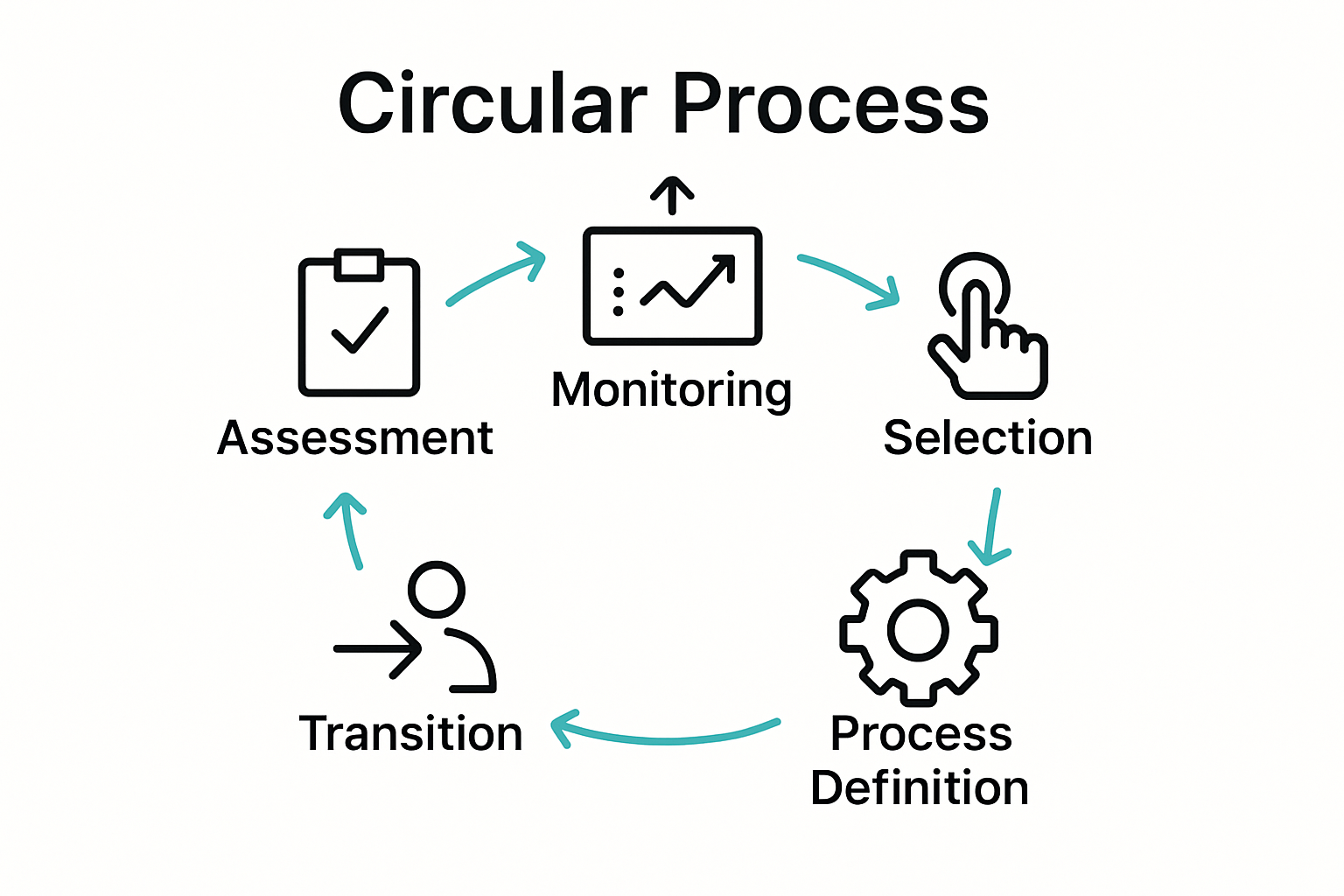
The optimization process demands a holistic approach that balances data driven insights with strategic flexibility. Establish a dedicated performance management team responsible for analyzing performance metrics, conducting periodic vendor assessments, and recommending operational enhancements. Warning: Avoid rigid performance evaluation models that fail to account for the dynamic nature of outsourcing partnerships. Instead, create adaptive monitoring systems that allow for iterative refinements and strategic realignments based on emerging business requirements.
By implementing a systematic performance monitoring approach, you transform outsourcing from a transactional service into a strategic collaborative ecosystem that continuously drives organizational excellence.
Unlock Scalable Growth with Expert Business Process Outsourcing Support
Are you ready to overcome the challenges of selecting the right outsourcing partner and defining cost-efficient scalable processes? Many organizations struggle with aligning their outsourcing strategy to long-term business goals while managing complex transitions and performance monitoring. This article highlights how careful planning around process mapping, partner selection, and integration is key to transforming outsourced functions into powerful growth engines.
At StorsenDigital, we specialize in turning these critical steps into seamless action. From tailored talent acquisition and managed BPO services to strategic consulting designed to optimize your outsourcing journey, we provide the expertise and digital infrastructure needed to drive operational excellence. Discover more about how you can optimize outsourcing costs and leverage our proven frameworks for successful transitions in our guide to BPO outsourcing for enterprises.

Empower your business today by partnering with experts who understand every step of the outsourcing process. Visit StorsenDigital.com now to start scaling your growth with confidence and create a strategic, sustainable outsourcing partnership.
Frequently Asked Questions
What are the first steps to assess my organization’s outsourcing needs?
Understanding your organization’s outsourcing needs starts with a comprehensive internal assessment. Conduct a strategic process mapping to analyze your current workflows and identify processes suitable for outsourcing, focusing on labor intensity and repetitive tasks.
How do I select the right outsourcing partner for my business?
Choosing the right outsourcing partner involves thorough research and evaluation. Create a detailed evaluation matrix to score potential partners based on technological capabilities, cultural compatibility, and proven track record in your industry.
What processes should I consider outsourcing for scalable growth?
Identify processes that consume significant time and resources but are not core to your strategic competencies. Focus on tasks that have the potential for standardization and can be efficiently transferred without disrupting your operational framework.
How can I ensure a smooth transition to an outsourcing partnership?
To ensure a smooth transition, develop a comprehensive change management framework. Establish clear communication protocols and create dedicated transition teams to manage coordination between internal departments and your outsourcing partner.
What performance metrics should I monitor after outsourcing?
Establish a robust performance measurement framework that includes key performance indicators for operational efficiency and quality. Regularly conduct performance reviews and incorporate mechanisms for real-time feedback to continuously optimize outsourced processes.
How do I avoid common pitfalls in outsourcing?
Avoid common pitfalls by not rushing the selection process and underestimating the complexity of knowledge transfer. Prioritize thorough evaluations and maintain flexible monitoring systems that adapt to the dynamic nature of your outsourcing partnership.


