


Nearly 80 percent of European tech leaders now see digital transformation as a top priority, driven by fierce global competition from American innovators. For C-suite executives, achieving efficient workflows requires more than just adopting the latest technology. This guide lays out actionable steps to define clear objectives, identify automation opportunities, select the right solutions, and sustain continuous improvement within complex outsourcing operations.
Table of Contents
- Step 1: Define Transformation Objectives And Success Metrics
- Step 2: Assess Current Workflows And Identify Automation Targets
- Step 3: Select Technology Solutions And Align Stakeholders
- Step 4: Implement Changes And Transition Processes
- Step 5: Monitor Results And Optimize Continuously
Quick Summary
| Key Insight | Explanation |
|---|---|
| 1. Set Specific Transformation Goals | Define clear objectives and measurable outcomes to align technology initiatives with strategic business results. |
| 2. Prioritize Automation Opportunities | Assess workflows to identify repetitive tasks for automation, enhancing efficiency and reducing manual effort. |
| 3. Engage Stakeholders Early On | Create a stakeholder map to manage diverse perspectives, ensuring successful alignment and support for technology solutions. |
| 4. Develop a Structured Rollout Plan | Implement changes in phases, using detailed roadmaps to minimize disruption and ensure proper adaptation. |
| 5. Monitor and Optimize Continuously | Establish performance tracking systems to evaluate outcomes regularly, enabling adaptive strategies and ongoing improvements. |
Step 1: Define transformation objectives and success metrics
Successful digital transformation starts with crystal clear objectives and measurable outcomes. Your mission is to map out precise goals that align technology initiatives with strategic business results, ensuring every investment delivers meaningful value.
Begin by conducting a comprehensive assessment of your current operational landscape. Measuring digital transformation impact requires understanding where you are and where you want to go. Identify key performance indicators across critical business dimensions like customer experience, operational efficiency, innovation potential, and revenue generation. Use frameworks such as Objectives and Key Results (OKRs) to create structured, trackable goals that transform abstract ambitions into concrete milestones.
When defining your metrics, aim for balance and specificity. Instead of generic targets, develop nuanced indicators that reflect your unique business context. For instance, if improving customer experience is a goal, quantify that through metrics like reduced response times, increased customer satisfaction scores, or higher retention rates. Key metrics for digital transformation should demonstrate tangible business value beyond mere technological implementation.
Pro tip: Schedule quarterly reviews to reassess and recalibrate your transformation metrics, ensuring continuous alignment with evolving business strategies and market dynamics.
Here’s a comparison of key business dimensions and their digital transformation metrics:
| Business Dimension | Example Metric | Strategic Benefit |
|---|---|---|
| Customer Experience | Satisfaction score increase | Higher retention and loyalty |
| Operational Efficiency | Process cycle time reduction | Lower costs and faster delivery |
| Innovation Potential | New products launched yearly | Competitive differentiation |
| Revenue Generation | Annual sales growth percentage | Improved financial performance |
Step 2: Assess current workflows and identify automation targets
In this critical phase of digital transformation, you will systematically evaluate your current operational processes to pinpoint precise opportunities for strategic automation. Your goal is to uncover inefficiencies and repetitive tasks that can be streamlined through technology.
AI readiness assessment frameworks offer a structured approach to identifying automation potential. Start by mapping out existing workflows across different departments, carefully documenting each step and analyzing time spent on routine tasks. Look for processes characterized by high repetition, standardized steps, and minimal creative decision making. These are prime candidates for automation. Pay special attention to administrative functions like data entry, reporting, scheduling, and customer communication where rule-based activities dominate.
Engaging your team is crucial during this assessment. Automation implementation strategies emphasize the importance of a human-centered approach. Schedule collaborative workshops where team members can share insights about their daily workflows, bottlenecks, and potential automation opportunities. This not only helps identify targets more accurately but also builds organizational buy-in and reduces resistance to technological changes.
Pro tip: Create a prioritization matrix that scores potential automation targets based on complexity, potential time savings, and strategic impact to guide your implementation strategy.
Step 3: Select technology solutions and align stakeholders
This crucial phase transforms your digital transformation strategy from concept to actionable plan. You will carefully evaluate technology solutions that match your organizational needs while simultaneously building critical support across different stakeholder groups.
Stakeholder alignment methodologies reveal that successful digital initiatives depend on managing diverse perspectives and motivations. Begin by creating a comprehensive stakeholder map that identifies key individuals and groups impacted by the transformation. Categorize stakeholders based on their influence, interest, and potential resistance to change. This approach allows you to develop targeted communication strategies that address specific concerns and highlight potential benefits for each group.
Prioritize technology solutions through a structured evaluation process that considers technical compatibility, scalability, and alignment with strategic objectives. Stakeholder engagement frameworks emphasize the importance of consulting key stakeholders during solution selection. Organize collaborative workshops where technical experts and organizational leaders can assess potential technologies, share insights, and build consensus. Focus on solutions that not only meet technical requirements but also demonstrate clear value across different organizational levels.
Pro tip: Create a stakeholder communication matrix that maps personalized engagement strategies for each group, ensuring transparent and targeted information sharing throughout the transformation process.
This table summarizes how stakeholder groups influence technology solution selection:
| Stakeholder Group | Influence on Selection | Engagement Strategy |
|---|---|---|
| Executives | Set strategic priorities | Present business impact analysis |
| IT Department | Assess technical compatibility | Organize technical workshops |
| End Users | Evaluate usability concerns | Run feedback sessions |
| Middle Managers | Identify operational fit | Share progress updates |
Step 4: Implement changes and transition processes
This pivotal stage transforms your digital transformation strategy from planning to execution. You will systematically roll out technological changes while managing organizational adaptation and minimizing disruption to existing operations.

Digital Transformation Canvas frameworks provide a structured approach for coordinating complex change implementation. Begin by developing a phased rollout plan that breaks down the transformation into manageable stages. Create detailed transition roadmaps that specify exact timelines, resource allocations, and specific milestones for each technological and process change. This approach allows for incremental implementation with built-in flexibility to adjust based on real-world feedback and organizational readiness.
Systemic implementation strategies emphasize the importance of continuous engagement across different organizational levels. Establish cross functional transformation teams that include representatives from key departments to facilitate smooth knowledge transfer and address potential resistance. Design comprehensive training programs that not only teach new technological skills but also help employees understand the broader strategic context of the changes. Monitor key performance indicators closely during the transition, maintaining open communication channels to quickly identify and resolve any implementation challenges.
Pro tip: Schedule weekly transformation progress meetings with leadership to maintain momentum and quickly address any emerging implementation barriers.
Step 5: Monitor results and optimize continuously
This final stage transforms your digital transformation from a one-time project into a dynamic, adaptive strategy. You will establish robust monitoring mechanisms that enable ongoing performance evaluation and strategic refinement of your technological initiatives.
Continuous digital transformation monitoring requires developing comprehensive performance tracking systems that capture quantitative and qualitative metrics. Implement a balanced scorecard approach that measures outcomes across multiple dimensions including operational efficiency, financial impact, employee engagement, and customer experience. Design real-time dashboards that provide immediate visibility into key performance indicators, allowing your leadership team to make data-driven decisions quickly and precisely.
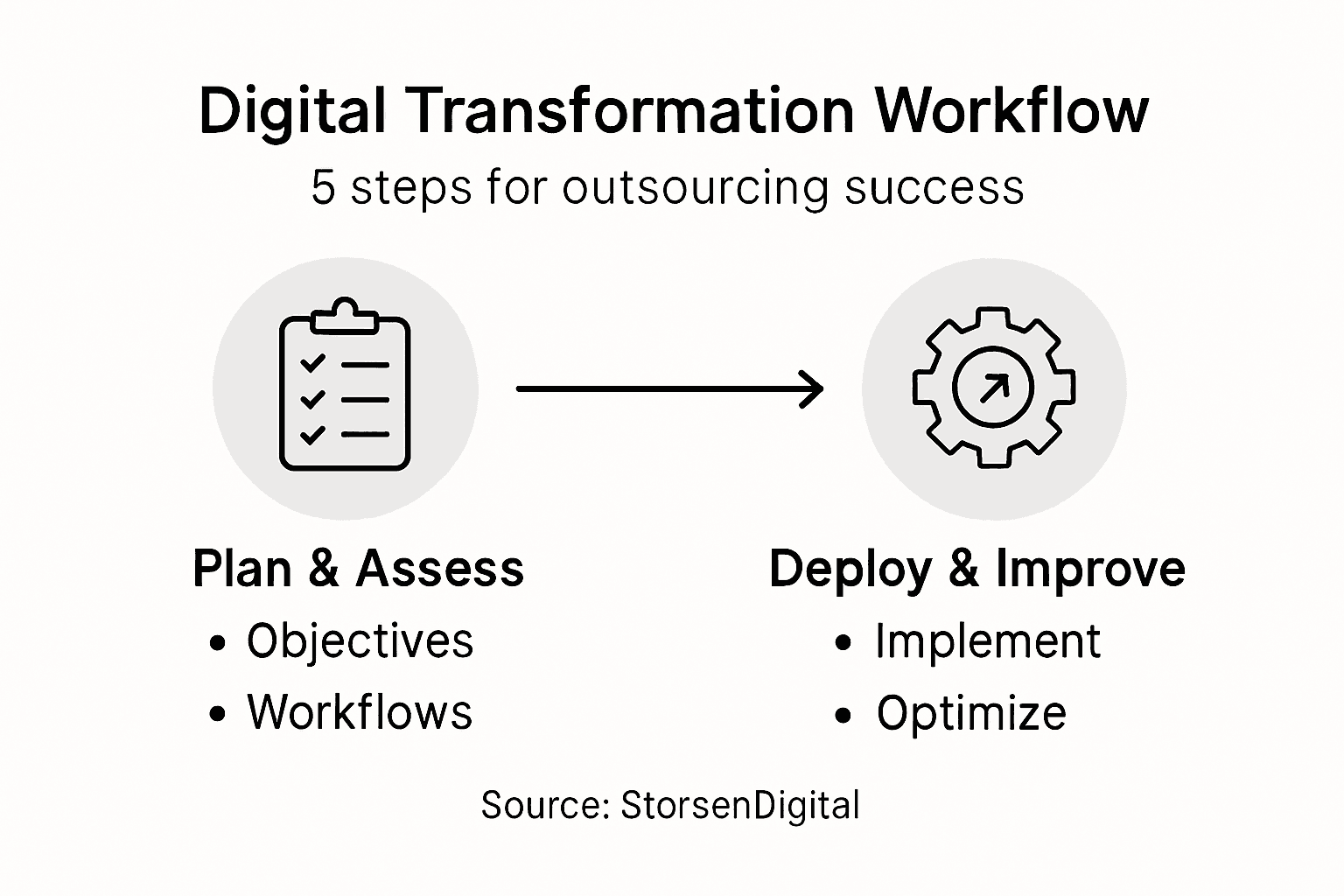
Optimization strategies emphasize the importance of creating adaptive feedback loops. Establish regular review cycles where cross functional teams analyze performance data, identify improvement opportunities, and rapidly implement incremental changes. Focus on both technological and human aspects of transformation by collecting feedback from employees and stakeholders. Create mechanisms for continuous learning that allow your organization to evolve processes, technologies, and skills in response to emerging challenges and opportunities.
Pro tip: Develop a standardized quarterly optimization report that synthesizes performance metrics, lessons learned, and recommended adjustments to maintain transformation momentum.
Accelerate Your Digital Transformation Workflow with Strategic Outsourcing
Mastering the digital transformation workflow requires clear objectives, precise automation targets, and seamless stakeholder alignment—all challenges that can overwhelm even the most experienced teams. The article highlights critical pain points such as measuring transformation success, selecting technology solutions, and managing complex change implementation. If you are striving to optimize costs while scaling operations across Europe, StorsenDigital.com offers tailored outsourcing and nearshoring solutions designed to support your digital transformation journey at every step.
Partnering with StorsenDigital means gaining access to expert talent acquisition, managed Business Process Outsourcing including HR, finance, IT, and software development, as well as strategic consulting that directly addresses your unique workflow challenges. Our comprehensive services help you reduce operational friction, enhance efficiency, and ensure sustained transformation success.
Explore how our dedicated teams can empower your initiatives with proven frameworks and real-world expertise in digital transformation. Visit our Contact Page to connect with us today and unlock the full potential of your outsourcing strategy.

Ready to overcome workflow bottlenecks and drive measurable business impact? Discover how StorsenDigital’s outsourcing and nearshoring services can turn your digital transformation objectives into reality. Reach out now through our Contact Page to start your partnership with Europe’s trusted managed service provider. Don’t wait — the future of your transformation depends on strategic actions today.
Frequently Asked Questions
What are the key steps in the digital transformation workflow for outsourcing?
Implementing digital transformation for outsourcing involves defining transformation objectives, assessing current workflows, selecting technology solutions, implementing changes, and continuously monitoring results. Start by setting clear goals and measurable outcomes that align with your outsourcing strategy.
How do I assess current workflows for automation opportunities?
To identify automation targets, systematically evaluate your existing operational processes. Map out workflows and document time spent on routine tasks, focusing on those that are repetitive and standardized to determine which processes can be streamlined through technology.
What technology solutions should I consider for outsourcing digital transformation?
Select technology solutions that meet your organizational needs and align with your strategic objectives. Evaluate the compatibility and scalability of potential technologies and prioritize those that demonstrate clear value across different levels of your organization.
How can I effectively implement changes during the digital transformation process?
Create a phased rollout plan to manage the implementation of changes without disrupting operations. Establish cross-functional teams to facilitate knowledge transfer and provide comprehensive training to all employees on new technologies and processes.
How do I monitor results and ensure continuous optimization in digital transformation?
Set up robust performance tracking systems to evaluate metrics regularly across multiple dimensions, such as operational efficiency and customer experience. Schedule regular review cycles to analyze performance data and make incremental adjustments based on feedback and emerging challenges.
What role do stakeholders play in the digital transformation workflow for outsourcing?
Stakeholders influence the selection of technology solutions and the overall success of the digital transformation initiative. Create a stakeholder map to identify key individuals, then develop targeted communication strategies to engage and inform them throughout the transformation process.


