


Expanding into European markets is rarely straightforward when every country brings its own rules, customer expectations, and legal hurdles. Operations managers face a web of local regulations and evolving data privacy directives such as GDPR that can impact every decision. This guide highlights actionable steps for assessing market potential, adapting to regulatory demands, and building agile teams through nearshoring and trusted partnerships, all tailored to help your company navigate the complex European business environment with confidence.
Table of Contents
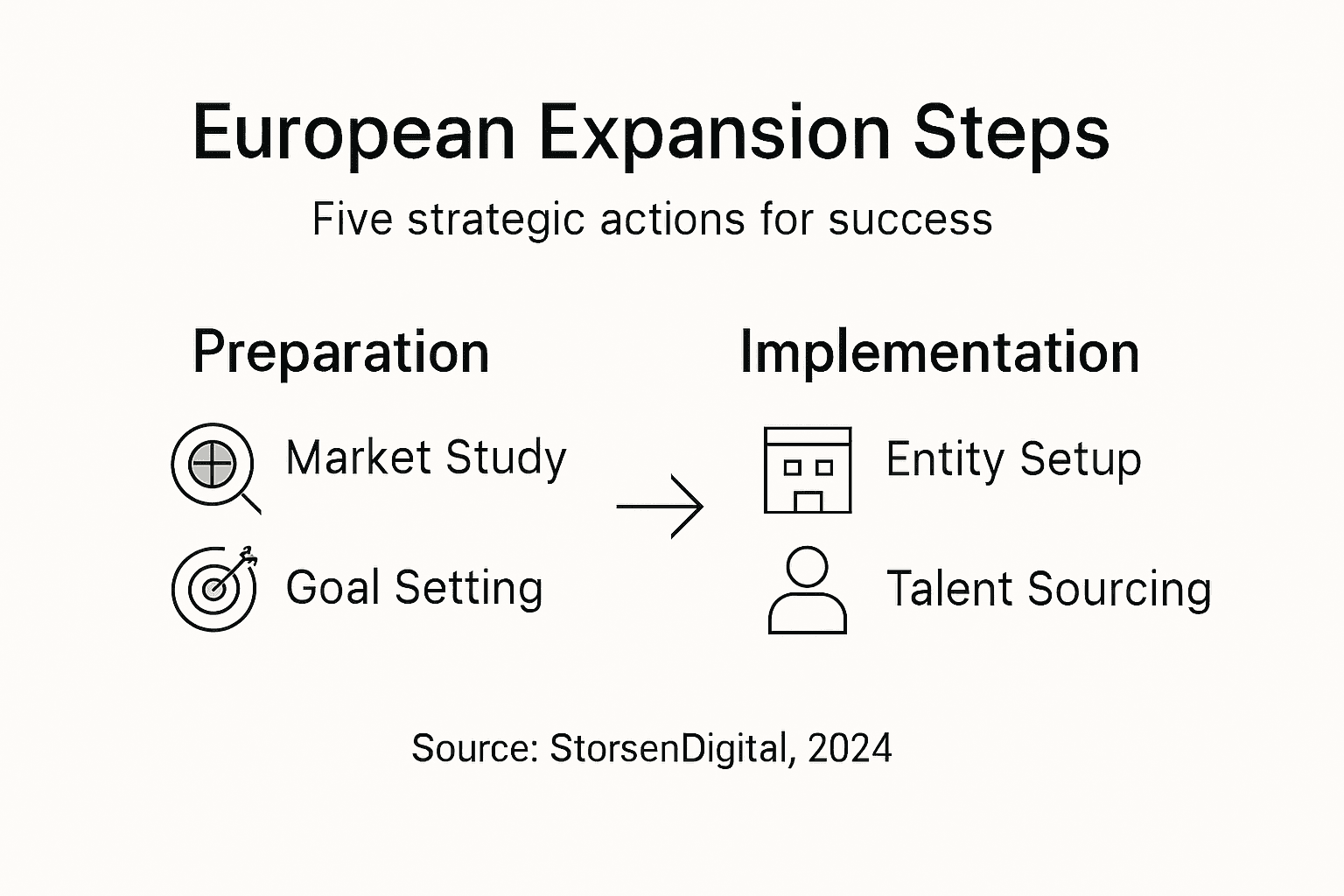
- Step 1: Assess Market Opportunities And Regulatory Demands
- Step 2: Define Expansion Goals And Resource Requirements
- Step 3: Establish A Local Entity And Operational Framework
- Step 4: Secure Talent Through Nearshoring And BPO Partners
- Step 5: Optimize Processes And Validate Operational Readiness
Quick Summary
| Key Point | Explanation |
|---|---|
| 1. Conduct Thorough Market Research | Understand local business environments, consumer behaviors, and regulatory frameworks before entering new markets. |
| 2. Create a Detailed Resource Strategy | Develop a comprehensive plan covering financial, human, and technological resources needed for successful market entry. |
| 3. Establish Compliance and Operations Framework | Build a robust legal entity that adheres to local regulations and creates efficient operational processes. |
| 4. Focus on Strategic Talent Acquisition | Leverage nearshoring and BPO partnerships to secure skilled talent while managing costs effectively. |
| 5. Implement Process Optimization and Validation | Continuously assess operational processes to ensure efficiency and adaptability, enabling smooth market integration. |
Step 1: Assess Market Opportunities and Regulatory Demands
Expanding your operations into European markets requires strategic market assessment and comprehensive regulatory research. Your goal in this critical first step is to develop a nuanced understanding of local business environments and legal frameworks that can significantly impact your international growth strategy.
Start by conducting thorough market research on international expansion challenges. This involves mapping out consumer behavior patterns, competitive landscapes, and specific regulatory requirements unique to each target country. Focus on key areas such as labor laws, tax regulations, data privacy standards, and industry specific compliance expectations. Pay special attention to European Union directives like GDPR that govern data protection and privacy across member states.
Your research should go beyond surface level analysis and include detailed consultations with local legal experts, industry associations, and potential business partners who understand the nuanced market dynamics. Compile comprehensive documentation that outlines potential risks, market entry barriers, and strategic opportunities specific to your business model. Consider engaging specialized consulting firms or leveraging networks like StorsenDigital who have deep expertise in European market expansions and can provide targeted insights.
Pro tip: Create a systematic risk assessment matrix that categorizes potential regulatory and market challenges by likelihood and potential business impact, allowing for more strategic decision making.
Here is a comparative overview of key regulatory focus areas for European market entry:
| Area of Regulation | Scope | Potential Business Impact |
|---|---|---|
| Labor Laws | Employment conditions, contracts | Affects hiring and compliance |
| Tax Regulations | Corporate and VAT requirements | Influences cost structure |
| Data Privacy (GDPR) | Personal data protection rules | Requires IT and policy adaptations |
| Industry Compliance | Sector-specific standards | May limit service/product design |
Step 2: Define Expansion Goals and Resource Requirements
Successfully expanding into European markets demands clear strategic goals and precise resource planning. Your objective in this step is to develop a comprehensive roadmap that aligns your business objectives with realistic resource allocation and European Union strategic expectations773719_EN.pdf).
Begin by conducting a thorough internal assessment of your current capabilities and identifying specific expansion targets. This involves analyzing your company’s strengths, financial capacity, technological infrastructure, and talent pool. Evaluate potential markets based on strategic fit, growth potential, and alignment with your core competencies. Consider factors such as market size, competitive landscape, regulatory environment, and potential return on investment. Create detailed financial projections that account for initial setup costs, ongoing operational expenses, hiring requirements, and potential revenue streams.

Develop a multifaceted resource strategy that goes beyond financial planning. This includes identifying the specific human capital needed, technological investments required, and potential partnerships that could accelerate your market entry. Look for opportunities to leverage specialized services like StorsenDigital that can provide targeted support in talent acquisition, office establishment, and operational scaling. Ensure your expansion goals are not just ambitious but also pragmatic, with clear milestones and flexibility to adapt to changing market conditions.
Pro tip: Create a dynamic resource allocation matrix that categorizes potential investments by priority, expected return, and strategic alignment to enable more agile and informed decision making.
For strategic planning, here’s a summary of resource requirements and their business significance:
| Resource Type | Role in Expansion | Importance to Success |
|---|---|---|
| Human Capital | Builds local operational teams | Drives market integration |
| Financial | Funds setup and operations | Enables sustainable growth |
| Technology | Supports remote collaboration | Boosts efficiency and compliance |
| Partnerships | Accelerates market entry | Offers local expertise access |
Step 3: Establish a Local Entity and Operational Framework
Transitioning your business into the European market requires strategic legal and operational infrastructure development. Your primary goal is to create a robust local entity that complies with regional regulations and positions your organization for sustainable growth.
Start by navigating the legal frameworks for business establishment across your target European markets. This involves carefully researching each country’s specific registration requirements, corporate structure options, and administrative procedures. Engage local legal experts who understand the nuanced municipal structures and can guide you through national registration processes. Pay special attention to the Point of Single Contact (PSC) online portals that streamline administrative procedures, which can significantly simplify your entity creation process.
Develop a comprehensive operational framework that goes beyond basic legal registration. This means creating detailed protocols for local governance, financial management, compliance monitoring, and human resource policies tailored to European employment regulations. Consider partnering with specialized services like StorsenDigital that can provide targeted support in establishing localized operational structures. Your framework should include clear mechanisms for regulatory compliance, tax reporting, and adaptability to potential administrative reforms in your target market.
Pro tip: Create a comprehensive compliance checklist that tracks all registration requirements, permits, and ongoing administrative obligations to ensure seamless operational integration.
Step 4: Secure Talent Through Nearshoring and BPO Partners
Navigating talent acquisition in European markets requires strategic approaches that balance quality, cost, and operational efficiency. Your goal is to build a robust workforce that meets your organizational needs while leveraging the unique advantages of nearshoring and Business Process Outsourcing (BPO) partnerships.
Focus on strategic talent acquisition through nearshoring by identifying key European countries with strong talent pools. Countries like Portugal, Poland, and Romania offer highly skilled professionals with competitive cost structures and excellent English proficiency. Evaluate potential partners based on their technical expertise, cultural alignment, and ability to integrate seamlessly with your existing teams. Pay special attention to communication frameworks and remote collaboration capabilities that can bridge potential geographical and cultural gaps.
Develop a comprehensive talent acquisition strategy that goes beyond traditional recruitment. Partner with specialized services like StorsenDigital that understand the nuanced landscape of European talent markets. This approach allows you to access top tier professionals while maintaining flexibility in your workforce composition. Your strategy should include clear protocols for remote team management, cultural integration, and ongoing professional development. Consider implementing robust onboarding processes that help new team members understand your organizational culture and operational expectations.
Pro tip: Create a detailed talent mapping framework that identifies skill gaps, potential recruitment channels, and integration strategies to streamline your nearshoring efforts.
Step 5: Optimize Processes and Validate Operational Readiness
Successful European market expansion requires meticulous process optimization and comprehensive operational validation. Your objective is to create a robust framework that ensures seamless integration, efficiency, and adaptability across your new organizational infrastructure.
Begin by implementing comprehensive operational readiness strategies that systematically assess and validate your organizational capabilities. This involves conducting thorough process mapping, identifying potential bottlenecks, and developing flexible protocols that can adapt to the dynamic European business environment. Engage cross functional teams to review existing workflows, technology integrations, and communication channels. Pay special attention to areas like quality control, compliance monitoring, and performance measurement that will be critical to your operational success.
Develop a comprehensive validation framework that goes beyond traditional performance metrics. Partner with specialized services like StorsenDigital that can provide external perspectives and expertise in process optimization. Your validation approach should include rigorous testing of operational protocols, technology systems, and team collaboration mechanisms. Implement continuous improvement processes that allow for real time adjustments and learning. Create feedback loops that capture insights from different organizational levels and external stakeholders, enabling you to refine and enhance your operational strategies dynamically.
Pro tip: Develop a dynamic operational readiness scorecard that tracks key performance indicators across multiple dimensions, enabling rapid identification and resolution of potential operational challenges.
Unlock Seamless European Expansion with Expert Support
Expanding operations into European markets presents complex challenges like navigating diverse labor laws, ensuring GDPR compliance, establishing local entities, and securing high-quality talent through nearshoring. These can create uncertainty and slow your growth if not managed strategically. At StorsenDigital, we understand the critical need for a comprehensive approach combining legal setup, talent acquisition, and process optimization to help your business thrive across Europe.
Benefit from tailored solutions designed to:
- Accelerate your market entry while fully addressing local regulatory demands
- Access top-tier European talent pools with our nearshoring and BPO expertise
- Streamline operational readiness with proven managed services in HR, finance, IT, and customer support
Explore how we transform your challenges into opportunities.

Ready to optimize your expansion strategy with trusted experts? Contact StorsenDigital today to create a strategic roadmap that aligns with your goals and unlocks the full potential of European markets. Start your journey now at our contact page and leverage our proven expertise to make your international growth vision a reality.
Frequently Asked Questions
What are the first steps in assessing market opportunities for European expansion?
To assess market opportunities, begin by conducting thorough market research, focusing on consumer behavior, competitive landscapes, and regulatory requirements. Consider gathering local insights by consulting with legal experts and industry associations within the first 30 days of your research.
How do I define clear expansion goals and resource requirements for entering European markets?
Define clear expansion goals by evaluating your current capabilities and assessing potential target markets. Create a detailed resource allocation strategy, including financial projections and human capital needs, within the first 60 days of planning.
What legal steps are necessary to establish a local entity in Europe?
To establish a local entity, navigate the specific registration requirements and corporate structure options for your target markets. Engage with local legal experts dedicated to helping businesses comply with national regulations within the first 90 days.
How can I effectively secure talent through nearshoring or BPO partners in Europe?
Secure talent by identifying European countries with strong talent pools and evaluating potential nearshoring or BPO partners for cultural and technical fit. Prioritize building relationships with these partners within the first three months of your expansion efforts.
What processes should I prioritize to optimize operational readiness in a new European market?
Prioritize comprehensive operational readiness strategies by mapping your current processes and identifying potential bottlenecks. Implement flexible protocols and validation frameworks within the first six months to ensure seamless integration and adaptability.
How can I track the success of my European expansion strategy?
Track the success of your expansion strategy by developing a dynamic scorecard that monitors key performance indicators across various dimensions of your operations. Review this scorecard regularly, aiming for updates at least quarterly to rapidly identify and address any operational challenges.


