


Strategic finance outsourcing offers compelling operational advantages for European enterprises, yet navigating complex regulatory frameworks like EBA guidelines and DORA while maintaining control presents significant challenges. This guide delivers a practical, step-by-step framework specifically designed for C-suite executives and procurement leaders in medium to large organizations. You’ll discover how to prepare for compliance requirements, execute strategic outsourcing with effective risk mitigation, and verify sustained operational excellence across your finance functions.
Table of Contents
- Understanding The European Finance Outsourcing Landscape In 2026
- Preparing For Regulatory Compliance And Risk Management Challenges
- Executing A Strategic Finance Outsourcing Plan With Risk Mitigation
- Verifying Outcomes And Sustaining Operational Excellence In Finance Outsourcing
- Optimize Your Finance Outsourcing Strategy With Expert Support
- FAQ
Key takeaways
| Point | Details |
|---|---|
| Market growth | The European FAO market grows at 8.8% CAGR through 2028, with Germany dominating half the volume. |
| Regulatory complexity | EBA’s proposed guidelines extend beyond DORA, affecting all third-party services and increasing compliance requirements. |
| Strategic execution | Successful outsourcing requires rigorous provider vetting, continuous risk management, and strong governance frameworks. |
| Treasury risks | Offshoring treasury functions creates strategic control loss and heightened regulatory breach potential. |
Understanding the European finance outsourcing landscape in 2026
European enterprises increasingly recognize finance outsourcing as a strategic lever for operational optimization. The European FAO market grows at 8.8% CAGR from 2022 to 2028, reflecting strong adoption momentum. By 2025, the market reached €921 million, with Germany accounting for half this value, positioning it as the dominant player.
Adoption rates demonstrate market maturity. Approximately 51% of European companies outsource financial services, while 61% outsource tax-related functions. This widespread adoption reflects the tangible benefits organizations achieve through strategic partnerships.
European finance outsourcing market overview (2026)
| Metric | Value | Context |
|---|---|---|
| Market size (2025) | €921 million | Germany represents 50% of total market |
| CAGR (2022-2028) | 8.8% | Sustained growth driven by expertise demand |
| Financial services adoption | 51% | Over half of European companies outsource |
| Tax services adoption | 61% | Higher adoption for specialized compliance needs |
The drivers behind this growth extend beyond simple cost reduction. Organizations pursuing why outsource in Europe strategies gain access to specialized expertise, advanced technology platforms, and enhanced compliance capabilities. These factors become particularly critical as regulatory requirements evolve.
Key market drivers for finance outsourcing:
- Access to specialized financial expertise and domain knowledge
- Advanced technology platforms enabling process automation
- Enhanced compliance capabilities addressing evolving regulations
- Operational efficiency improvements through standardized processes
- Scalability to support growth without proportional cost increases
The european outsourcing guide 2026 provides additional context on navigating this landscape effectively. Organizations that understand these market dynamics position themselves to capitalize on outsourcing benefits while managing inherent risks.
With the European outsourcing landscape clear, next is preparing for regulatory compliance challenges.
Preparing for regulatory compliance and risk management challenges
Regulatory requirements for finance outsourcing continue evolving, creating new compliance obligations. The European Banking Authority proposes expanded third-party risk management requirements for EU financial entities. These proposed guidelines extend significantly beyond existing frameworks.
The EBA’s approach differs fundamentally from the Digital Operational Resilience Act (DORA). While DORA focuses primarily on ICT service providers, the EBA guidelines affect broader third-party providers including non-ICT service functions. This expansion means finance outsourcing arrangements face more comprehensive oversight.
Financial institutions must prepare for simultaneous adherence to both frameworks. The compliance challenges from overlapping rules create time-consuming and costly obligations. Organizations face increased risks of errors and penalties when navigating multiple regulatory regimes concurrently.
Critical compliance requirements under EBA guidelines:
- Comprehensive due diligence on all third-party service providers
- Enhanced contractual provisions addressing regulatory expectations
- Continuous monitoring and oversight of provider performance
- Detailed documentation of risk assessments and mitigation strategies
- Regular reporting to regulatory authorities on outsourcing arrangements
- Exit strategies and contingency planning for service disruptions
These requirements demand substantial internal resources and expertise. Organizations lacking robust compliance frameworks face significant exposure. The regulatory landscape continues shifting, making static approaches inadequate.
Pro Tip: Engage compliance stakeholders early in outsourcing planning and establish continuous monitoring of regulatory updates. This proactive approach reduces risks of non-compliance and enables agile response to new requirements.
Successful navigation requires integrating compliance into every phase of outsourcing. Navigating regulatory compliance in finance outsourcing demands dedicated resources, clear governance structures, and ongoing vigilance. Organizations that treat compliance as an afterthought expose themselves to substantial penalties and operational disruptions.
Having understood the regulatory environment, the next section covers strategic execution of outsourcing with risk mitigation.
Executing a strategic finance outsourcing plan with risk mitigation
Successful finance outsourcing requires methodical planning and execution. European companies prioritize high-quality services, expertise, and compliance when selecting providers. These factors outweigh simple cost considerations for strategic decision-makers.
Your execution framework should follow these strategic steps:
- Conduct comprehensive provider evaluation examining technical capabilities, compliance certifications, and regional expertise specific to your target markets.
- Perform detailed risk analysis assessing operational, regulatory, and strategic risks associated with different outsourcing models and providers.
- Negotiate robust contracts incorporating clear performance metrics, compliance obligations, audit rights, and exit provisions protecting your interests.
- Develop integrated compliance planning aligning provider processes with your regulatory requirements and internal control frameworks.
- Establish performance monitoring systems tracking key metrics, compliance incidents, and operational efficiency against defined benchmarks.
- Create governance structures defining clear accountability, escalation procedures, and decision-making authority across internal and provider teams.
The choice between onshore, nearshore, and offshore approaches significantly impacts outcomes. Each model presents distinct advantages and challenges.

Comparison of finance outsourcing approaches
| Approach | Key Benefits | Primary Risks | Best For |
|---|---|---|---|
| Onshore | Regulatory alignment, cultural fit, direct oversight | Higher costs, limited talent pool | High-compliance functions |
| Nearshore | Cost optimization, timezone compatibility, EU regulations | Moderate cultural differences | Balanced cost and control |
| Offshore | Maximum cost savings, large talent pool | Regulatory complexity, control challenges | Low-risk transactional work |
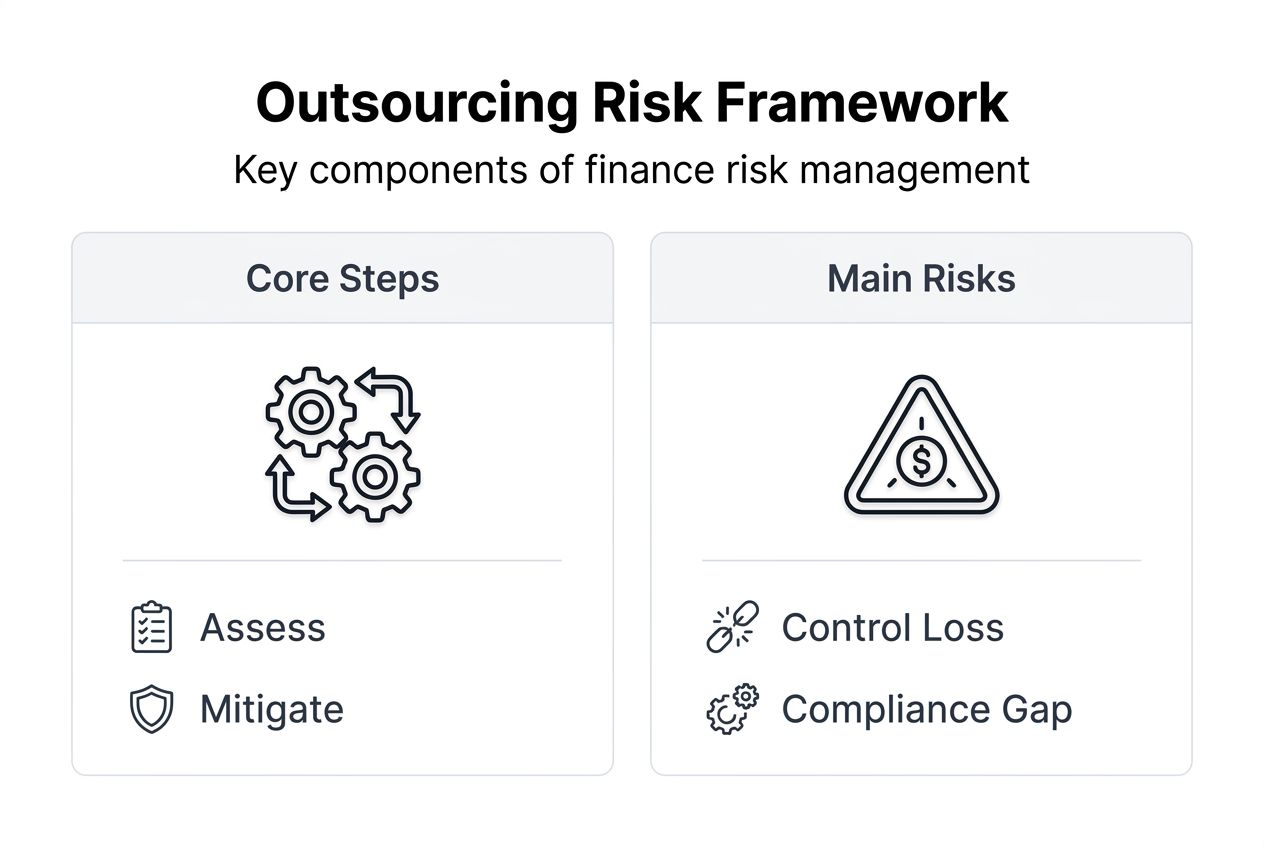
Treasury functions require particular caution. Offshoring treasury creates strategic control loss, weakened internal controls, and increased regulatory breach potential. These risks often outweigh cost benefits, making nearshore or onshore approaches more appropriate for strategic finance functions.
The outsourcing risk management process provides frameworks for identifying and mitigating these challenges. Organizations should systematically evaluate risks across operational, regulatory, and strategic dimensions before finalizing arrangements.
Pro Tip: Maintain strong governance and implement continuous control reviews post-outsourcing. Regular audits, performance reviews, and compliance checks prevent fraud, operational failures, and regulatory breaches that can emerge over time.
Strategic planning extends beyond initial implementation. The benefits of outsourcing in Europe materialize only when organizations maintain active oversight and adapt to changing conditions. Strategic outsourcing planning for European enterprises requires ongoing refinement based on performance data and market evolution.
With execution strategies defined, the final body section focuses on verifying outcomes and sustaining operational excellence through monitoring.
Verifying outcomes and sustaining operational excellence in finance outsourcing
Measuring outsourcing success requires systematic verification beyond initial implementation. You need clear metrics spanning accuracy, compliance incidents, turnaround times, and realized cost savings. These KPIs provide objective evidence of value delivery and highlight areas requiring intervention.
Common issues emerge even with strong initial planning. Communication gaps between internal teams and providers create misaligned expectations. Compliance lapses occur when providers misunderstand regulatory requirements or internal controls weaken. Strategic objectives drift when governance structures fail to maintain alignment over time.
Essential verification actions:
- Implement comprehensive audit plans examining financial accuracy, process adherence, and control effectiveness quarterly
- Conduct regular performance reviews comparing actual results against contractual commitments and operational benchmarks
- Execute compliance checks validating adherence to regulatory requirements and internal policies across all outsourced functions
- Establish feedback loops capturing input from internal stakeholders, providers, and external auditors for continuous improvement
- Monitor operational metrics in real-time through integrated dashboards providing visibility into process performance and exceptions
Governance committees combining internal and provider representatives ensure continuous improvement. These structures facilitate transparent communication, rapid issue resolution, and proactive risk management. They prevent the strategic misalignment that occurs when treasury is treated as relocatable processes rather than strategic functions requiring ongoing oversight.
Pro Tip: Schedule quarterly governance reviews with executive participation to maintain strategic alignment and ensure outsourcing arrangements continue delivering value as business needs evolve.
The outsourcing process guide provides detailed frameworks for post-implementation management. Organizations achieving sustained success treat verification as continuous rather than periodic. They build monitoring into daily operations rather than relying solely on formal review cycles.
Your outsourcing best practices checklist should include specific verification protocols addressing the unique risks of finance functions. Financial accuracy, regulatory compliance, and data security require more rigorous oversight than many other outsourced processes.
Effective verification ensures sustained value, operational control, and strategic alignment. It prevents the control erosion and compliance failures that undermine outsourcing benefits. Organizations that excel at verification achieve superior outcomes while managing risks proactively.
Having covered outcome verification, the article will now introduce relevant service solutions to support strategic finance outsourcing.
Optimize your finance outsourcing strategy with expert support
Navigating finance outsourcing complexities requires proven frameworks and strategic expertise. Your success depends on understanding regulatory requirements, implementing robust governance, and maintaining operational control throughout the engagement lifecycle.

StorsenDigital delivers specialized resources helping enterprises optimize their finance outsourcing strategies. Our outsourcing process guide walks you through each phase with practical templates and decision frameworks. The outsourcing best practices checklist ensures you address critical success factors before finalizing arrangements. For comprehensive planning, explore our strategic outsourcing planning resources tailored for European enterprises facing unique regulatory and operational requirements.
Following this promotional resource summary, the article will address frequently asked questions to clarify common concerns.
FAQ
Is finance outsourcing compliant with evolving EU regulations?
Yes, finance outsourcing can comply with new EU regulations through proactive planning and continuous monitoring. Organizations must stay informed about EBA guideline developments and DORA requirements, implementing comprehensive compliance frameworks that address both regulatory regimes. Visit regulatory compliance in finance outsourcing for detailed guidance on maintaining compliance.
What are the risks of offshoring treasury functions?
Offshoring treasury creates significant risks including loss of strategic control, weakened internal controls, and heightened potential for regulatory breaches. These offshoring treasury risks often outweigh cost savings, making nearshore or onshore approaches more appropriate for strategic finance functions requiring close oversight.
How does nearshoring compare to offshoring in finance outsourcing?
Nearshoring offers closer geographic proximity, stronger cultural alignment, and reduced regulatory complexity compared to offshoring. While offshore arrangements may deliver lower costs, they introduce greater challenges around operational control and compliance management. Review our nearshoring vs offshoring comparison to determine the optimal approach for your organization.
What are essential steps to successfully outsource finance functions?
Successful finance outsourcing requires strategic planning, thorough provider vetting, integrated compliance management, and continuous performance monitoring. Following systematic approaches reduces risks and ensures sustained value delivery. Our outsourcing best practices checklist provides a comprehensive framework addressing each critical success factor throughout the engagement lifecycle.


