


Hiring for growth in Western Europe often means competing for specialized skills in a market where both brain drain and workforce shortages can disrupt your plans. For HR leaders in the tech sector, knowing how to pinpoint essential gaps and adapt quickly is the difference between thriving and falling behind. This guide shares practical steps for transforming your approach from reactive hiring to a systematic talent strategy shaped by data, shifting markets, and clear performance benchmarks.
Table of Contents
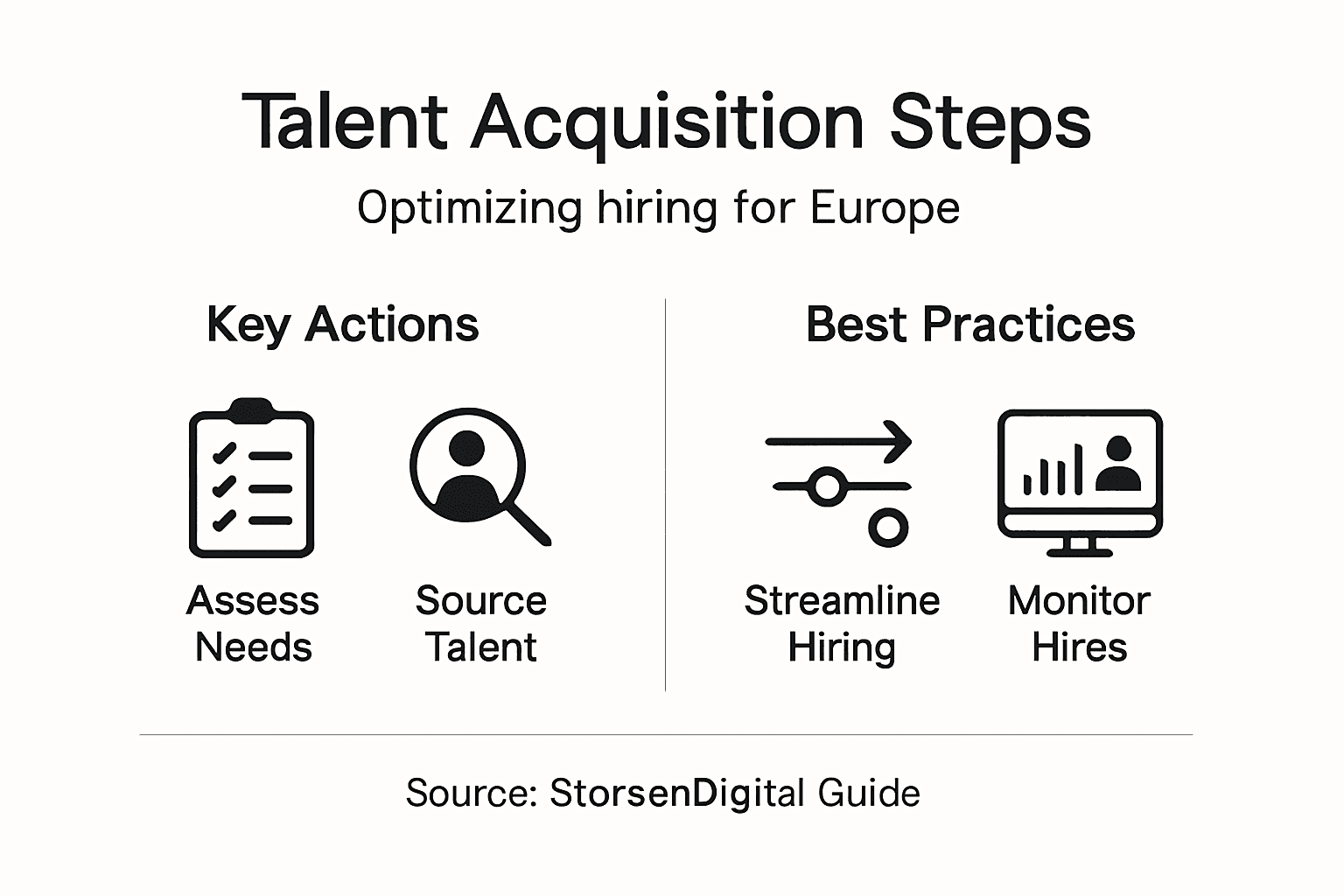
- Step 1: Assess Talent Needs And Market Fit
- Step 2: Develop A Europe-Focused Sourcing Strategy
- Step 3: Streamline Interview And Selection Processes
- Step 4: Navigate Compliance And Onboarding Requirements
- Step 5: Monitor Hires And Optimize Results
Quick Summary
| Key Insight | Explanation |
|---|---|
| 1. Assess Talent Needs Strategically | Conduct a comprehensive analysis of current skills compared to future needs for effective hiring. |
| 2. Develop a Tailored Sourcing Strategy | Map university talent ecosystems to align emerging skills with business requirements effectively. |
| 3. Streamline Selection Processes | Implement AI screening and structured interviews to enhance efficiency and candidate experience. |
| 4. Understand Compliance Requirements | Create a detailed onboarding checklist to navigate legal nuances in different European regions. |
| 5. Monitor Talent Performance | Use systematic tools for continuous improvement of hiring strategies and employee integration. |
Step 1: Assess Talent Needs and Market Fit
Successfully acquiring European talent starts with a strategic assessment of your organization’s specific talent requirements and understanding the broader market dynamics. This step transforms talent acquisition from a reactive process to a proactive talent strategy.
Begin by conducting a comprehensive skills gap analysis that maps your current workforce capabilities against future organizational objectives. The systematic approach to talent monitoring recommended by European Commission research suggests identifying precise skill deficits and potential growth areas. This means drilling down beyond generic job descriptions into specific technical competencies, soft skills, and emerging industry requirements.
To align talent needs effectively, leverage both quantitative and qualitative research methods. Conduct internal surveys with department heads, analyze performance data, and review strategic business plans to understand skill requirements. Simultaneously, examine external labor market trends focusing on regions with strong talent pools like Bosnia and Herzegovina, which offers highly skilled professionals at competitive rates. StorsenDigital specializes in helping companies build dedicated teams that meet these precise talent acquisition needs.
During this assessment, pay special attention to emerging skills in technology, digital transformation, and cross cultural collaboration. European talent markets are increasingly competitive, so understanding nuanced skill demands becomes crucial. Consider factors like language proficiency, technical expertise, and adaptability when defining your ideal candidate profile.
Pro Tip: Create a living talent needs document that gets quarterly updates to ensure your recruitment strategy remains dynamically aligned with organizational evolution.
Step 2: Develop a Europe-Focused Sourcing Strategy
Building an effective sourcing strategy for European talent requires a nuanced understanding of regional labor markets and strategic talent acquisition techniques. Your goal is to design a targeted approach that transforms recruitment from a transactional process into a strategic talent development initiative.

Start by mapping university talent ecosystems across different European regions. This means understanding the specific skill clusters emerging from academic institutions and aligning them with your organizational needs. Focus on regions with strong technical education systems like Bosnia and Herzegovina, which produces highly skilled professionals in software development, IT, and digital services. StorsenDigital can help you navigate these talent pools efficiently.
Your sourcing strategy should incorporate comprehensive market research that goes beyond traditional recruitment methods. Analyze labor market trends, understand regional skill specializations, and develop targeted outreach programs. This involves creating detailed candidate personas that reflect not just technical skills but also cultural adaptability and potential for long term growth. Consider factors like language proficiency, digital competency, and alignment with your company culture.
Remember that successful European talent sourcing requires a holistic approach. Develop partnerships with local universities, leverage professional networks, and create attractive employer branding that resonates with European professionals. Your strategy should be flexible enough to adapt to rapidly changing technology and skill landscapes while maintaining a consistent and compelling value proposition for potential candidates.
Here’s a summary of key considerations for sourcing European talent:
| Consideration | Why It Matters | Examples from Article |
|---|---|---|
| Skill Cluster Alignment | Ensures position fit for industry | Technical skills from universities |
| Regional Talent Pools | Accesses cost-effective expertise | Bosnia and Herzegovina’s strengths |
| Cultural Compatibility | Enhances team cohesion and retention | Language proficiency, adaptability |
| Employer Branding | Attracts high-quality candidates | Value proposition for professionals |
Pro Tip: Build relationships with local educational institutions and professional associations to create a continuous talent pipeline that keeps your sourcing strategy dynamic and forward looking.
Step 3: Streamline Interview and Selection Processes
Transforming your talent acquisition approach requires implementing a sophisticated yet efficient interview and selection process that identifies top European talent quickly and accurately. Your objective is to create a streamlined methodology that balances technological efficiency with human insight.
AI-powered screening technologies are revolutionizing candidate evaluation across Europe. Implement automated tools that can rapidly filter candidates based on predefined skills and competency metrics while maintaining a personalized touch. This means developing clear evaluation criteria that go beyond traditional resume screening and incorporate comprehensive skill assessments tailored to specific roles. StorsenDigital recommends using a multi stage approach that combines automated initial screening with in depth human interviews to ensure you capture both technical capabilities and cultural fit.
Design your selection process with transparency and candidate experience at its core. Develop structured interview protocols that assess technical skills, cultural alignment, and potential for growth. This involves creating standardized evaluation frameworks that minimize unconscious bias and provide consistent assessment across different candidates. Incorporate multiple evaluation touchpoints including technical assessments, behavioral interviews, and skills demonstrations to get a holistic view of each candidate potential.
Remember that European talent markets value authenticity and clear communication. Provide timely feedback, maintain professional communication throughout the selection process, and create an experience that reflects your organization values. Your goal is not just to select a candidate but to create an engaging journey that positions your company as an employer of choice in the competitive European talent landscape.
Pro Tip: Develop a candidate feedback loop that allows you to continuously refine your selection process based on insights from both successful and unsuccessful candidates.
Step 4: Navigate Compliance and Onboarding Requirements
Successfully integrating European talent demands a comprehensive understanding of complex legal and administrative requirements unique to different regions. Your goal is to create a smooth onboarding process that ensures legal compliance while welcoming new team members effectively.
Begin by developing a detailed compliance checklist specific to the European country where you are hiring. This includes understanding work permit regulations, tax implications, social security requirements, and employment contract standards. For regions like Bosnia and Herzegovina, StorsenDigital recommends working with local legal experts who understand nuanced regulatory landscapes. Pay special attention to documentation requirements including valid identification, work authorization certificates, and proof of professional qualifications.
Your onboarding strategy should balance administrative precision with a welcoming approach that makes new team members feel valued. Design a structured onboarding program that goes beyond paperwork to include cultural integration, role specific training, and clear communication about organizational expectations. This means creating comprehensive welcome packages, scheduling initial orientation sessions, and establishing mentorship connections that help new employees navigate both professional responsibilities and team dynamics.
Remember that each European country has unique employment regulations and cultural expectations. Invest time in understanding local nuances and developing flexible processes that can adapt to different regulatory environments. Maintain meticulous documentation and ensure transparent communication throughout the onboarding journey. Your objective is to transform compliance from a bureaucratic challenge into an opportunity to demonstrate your organization professionalism and commitment to new team members.
Use this table to compare compliance and onboarding requirements by region:
| Requirement | Western Europe | Eastern Europe |
|---|---|---|
| Work Permit Complexity | Often streamlined, digital | May require local liaison |
| Tax and Social Security | Standardized EU guidelines | Diverse local regulations |
| Language Norms | English and local languages | Emphasis on local language |
| Cultural Integration Focus | Advanced onboarding programs | Mentorship, local guidance |
Pro Tip: Create a digital onboarding portal that centralizes all required documentation and provides new employees with a user friendly platform to complete administrative requirements.
Step 5: Monitor Hires and Optimize Results
Evaluating the success of your European talent acquisition strategy requires a systematic approach to tracking performance, engagement, and organizational impact. Your goal is to transform recruitment from a one time event into a continuous improvement process.
Systematic talent monitoring tools are critical for understanding the effectiveness of your recruitment efforts. Develop comprehensive performance tracking mechanisms that go beyond traditional metrics like retention rates. This means creating holistic evaluation frameworks that assess new hires technical competence, cultural adaptation, team collaboration, and long term potential. StorsenDigital recommends implementing quarterly performance reviews, 360 degree feedback systems, and skills progression tracking to gain nuanced insights into talent performance.
Establish clear key performance indicators that align with both individual and organizational objectives. These should include measurable outcomes like project completion rates, innovation contributions, client satisfaction scores, and professional development milestones. Pay special attention to how new hires from different European regions integrate into your team and contribute to overall business goals. Use data driven insights to continuously refine your talent acquisition and onboarding strategies.
Remember that effective talent optimization is an ongoing process. Create feedback mechanisms that allow new hires to share their experiences and provide insights into the recruitment and onboarding process. This two way communication helps you identify potential improvements and demonstrates your commitment to employee growth and satisfaction. Your ultimate objective is to build a dynamic talent ecosystem that supports both individual professional development and organizational success.
Pro Tip: Implement a digital dashboard that provides real time insights into new hire performance and engagement metrics, enabling proactive talent management.
Unlock Your European Talent Acquisition Potential with StorsenDigital
Navigating the complex journey of European talent acquisition can feel overwhelming, especially when precise skill alignment, regional compliance, and cultural integration are on the line. If you are striving to build dedicated teams in competitive markets like Bosnia and Herzegovina while streamlining interview and onboarding processes, your challenge is clear: transform your recruitment efforts into a strategic advantage with expert support. StorsenDigital’s tailored outsourcing and nearshoring solutions specialize in bridging these exact gaps, turning talent acquisition hurdles into scalable business growth opportunities.
Here is how we empower your success:
- Targeted talent recruitment aligned with your unique skills requirements
- Seamless compliance management and efficient onboarding programs
- Ongoing performance tracking and optimization for durable results

Ready to evolve your talent acquisition strategy into a dynamic, cost-effective solution that taps into Europe’s rich talent ecosystems? Connect with our experts today at StorsenDigital Contact. Discover how our comprehensive services can accelerate your operational goals and place your company at the forefront of nearshoring excellence.
Frequently Asked Questions
How can I assess my organization’s talent needs for European recruitment?
Begin by conducting a comprehensive skills gap analysis that aligns your current workforce capabilities with future goals. Identify specific technical competencies and soft skills necessary and create a living talent needs document that gets quarterly updates.
What is a good way to develop a sourcing strategy for acquiring talent in Europe?
Focus on understanding regional labor markets and creating detailed candidate personas that reflect both technical skills and cultural adaptability. Map university talent ecosystems to align academic skills with your organizational needs while developing partnerships with local educational institutions.
How can I streamline my interview and selection processes for European candidates?
Implement AI-powered screening technologies to quickly filter candidates based on defined skills while maintaining personal connections through in-depth human interviews. Design clear evaluation criteria and structured interview protocols to ensure consistency and minimize bias.
What are the key compliance requirements when onboarding European talent?
Create a compliance checklist tailored to the specific European country where you are hiring, including work permits and tax regulations. Focus on developing a welcoming onboarding program that addresses both administrative necessities and cultural integration for new hires.
How can I monitor the success of my talent acquisition strategy for European hires?
Establish clear key performance indicators that relate to both individual and organizational objectives, such as project completion rates and client satisfaction. Regularly use performance tracking systems to assess new hire contributions and refine your talent acquisition processes based on data-driven insights.


