


Nearly 80 percent of European tech firms now consider american BPO partnerships to improve HR and IT efficiency and cut operational costs. For C-suite executives, the challenge lies in choosing the right outsourcing model that delivers measurable business impact without risking control or quality. This guide breaks down each essential step to help you define objectives, assess providers, and build resilient strategies for scalable success.
Table of Contents
- Step 1: Define Outsourcing Objectives And Requirements
- Step 2: Research Potential BPO Providers Thoroughly
- Step 3: Evaluate Service Quality And Capabilities
- Step 4: Compare Cost Structures And Scalability Options
- Step 5: Validate Provider Reputation And Client Feedback
- Step 6: Confirm Legal, Compliance, And Partnership Terms
Quick Summary
| Key Point | Explanation |
|---|---|
| 1. Define clear outsourcing goals | Establish measurable objectives that align with your overall business strategy for effective BPO. |
| 2. Thoroughly research BPO providers | Evaluate potential partners on multiple criteria, including technology and cultural fit, not just cost. |
| 3. Assess service quality deeply | Use a structured approach to evaluate technical capabilities and alignment with strategic goals. |
| 4. Analyze comprehensive cost structures | Look beyond superficial pricing to understand total engagement costs and scalability options. |
| 5. Validate provider reputation thoroughly | Investigate client feedback and industry insights to uncover the true performance of potential partners. |
Step 1: Define outsourcing objectives and requirements
Starting your business process outsourcing (BPO) journey requires crystal clear strategic alignment. Your outsourcing objectives must transform from vague aspirations into precise, measurable goals that directly support your organization’s core mission. Understanding resource allocation decisions becomes critical in determining exactly what functions make sense to outsource and which should remain in-house.
Begin by conducting a comprehensive internal audit of your current operational capabilities. Map out specific processes where external expertise could deliver superior performance. Identify key performance indicators (KPIs) that will measure the outsourcing partnership’s success. These might include cost reduction percentages, quality improvement metrics, scalability potential, or technological innovation acceleration. The goal is creating a detailed framework that transforms outsourcing from a transactional activity into a strategic growth mechanism. Organizational learning mechanisms suggest that successful outsourcing requires viewing this process as a dynamic, evolving strategy rather than a one-time decision.
Prioritize objectives that offer tangible business value. This means moving beyond simplistic cost-cutting and focusing on outcomes that enhance competitive positioning. Whether you seek to access specialized talent, accelerate digital transformation, or optimize operational efficiency, your requirements must be specific, measurable, and aligned with broader organizational strategy.
Pro Tip: Create a weighted scoring matrix to objectively evaluate potential BPO partners against your predefined objectives and requirements.
Here is a summary of critical criteria to define and evaluate outsourcing objectives effectively:
| Objective Type | Example Metric | Business Impact |
|---|---|---|
| Cost Reduction | 10% annual savings | Increases profitability |
| Quality Improvement | Fewer defects per 1,000 | Enhances customer satisfaction |
| Scalability Potential | Doubling staff capacity | Supports rapid growth |
| Innovation Acceleration | Technology upgrades/year | Boosts market competitiveness |
Step 2: Research potential BPO providers thoroughly
Researching potential BPO providers requires a strategic and comprehensive approach that goes far beyond simple cost comparisons. Your goal is to identify a partner who can transform your business processes through innovative outsourcing strategies that deliver sustainable competitive advantages.
Begin by developing a rigorous evaluation framework that assesses potential providers across multiple critical dimensions. Examine their technological capabilities, industry expertise, track record of innovation, talent pool quality, and cultural compatibility. Look beyond surface level metrics to understand their deeper operational strengths. Pay close attention to global BPO market dynamics that might impact service delivery, including regulatory environments, workforce skills, and technological infrastructure. Analyze case studies and request detailed references that demonstrate their ability to drive meaningful business transformation.
Create a structured scoring system that weights different evaluation criteria based on your specific business needs. This might include technical competence, scalability, cost efficiency, innovation potential, cybersecurity protocols, and alignment with your organizational culture. Conduct thorough due diligence by scheduling deep dive sessions with potential providers, reviewing their technological capabilities, and understanding their approach to continuous improvement and strategic partnership.
Pro Tip: Request pilot projects or limited scope engagements to test a potential BPO provider’s capabilities before committing to a full partnership.
To help compare BPO providers, here are key dimensions and what to look for in each:
| Evaluation Dimension | What to Assess | Desired Provider Attribute |
|---|---|---|
| Technological Capability | Advanced platforms used | Enables digital transformation |
| Industry Expertise | Years in relevant sector | Deep process knowledge |
| Cultural Alignment | Shared values and practices | Smooth collaboration |
| Track Record | Verified case studies | Proven business results |
Step 3: Evaluate service quality and capabilities
Evaluating service quality demands a comprehensive and systematic approach that goes beyond superficial assessments. Your objective is to uncover a provider’s true potential through rigorous service quality measurement that reveals their operational depth and strategic capabilities.

Develop a multidimensional evaluation framework that examines both tangible and intangible aspects of service delivery. This involves assessing technical competencies, process maturity, innovation potential, and alignment with your strategic objectives. Look for providers who demonstrate continuous business process improvements rather than those offering merely transactional services. Analyze their performance metrics, technological infrastructure, talent development programs, and ability to adapt to changing business landscapes. Request comprehensive documentation including service level agreements, quality control processes, and case studies that showcase their ability to drive meaningful organizational transformation.
Implement a robust assessment methodology that includes multiple evaluation touchpoints. Conduct thorough reference checks, request detailed performance reports, and consider arranging site visits or comprehensive presentations that allow you to deeply understand the provider’s operational excellence. Pay special attention to their approach to continuous learning, technological innovation, and their capacity to anticipate and respond to emerging business challenges.
Pro Tip: Develop a weighted scoring system that prioritizes capabilities aligned with your most critical business objectives, ensuring a holistic and strategic provider selection process.
Step 4: Compare cost structures and scalability options
Navigating the complex landscape of BPO cost structures requires a strategic approach that looks beyond simple pricing models. Your goal is to understand marketplace scalability dynamics that impact long term business performance and growth potential.
Develop a comprehensive cost analysis framework that examines multiple dimensions of pricing and scalability. This means looking deeper than headline rates and understanding the total cost of engagement, including hidden expenses, technology investments, transition costs, and potential future scaling requirements. Analyze providers who demonstrate service delivery transformation strategies that enable efficient cost management through standardization and automation. Consider not just current pricing, but the provider’s ability to adapt pricing models as your business evolves, including flexible engagement structures, volume based discounts, and modular service options that allow incremental scaling.
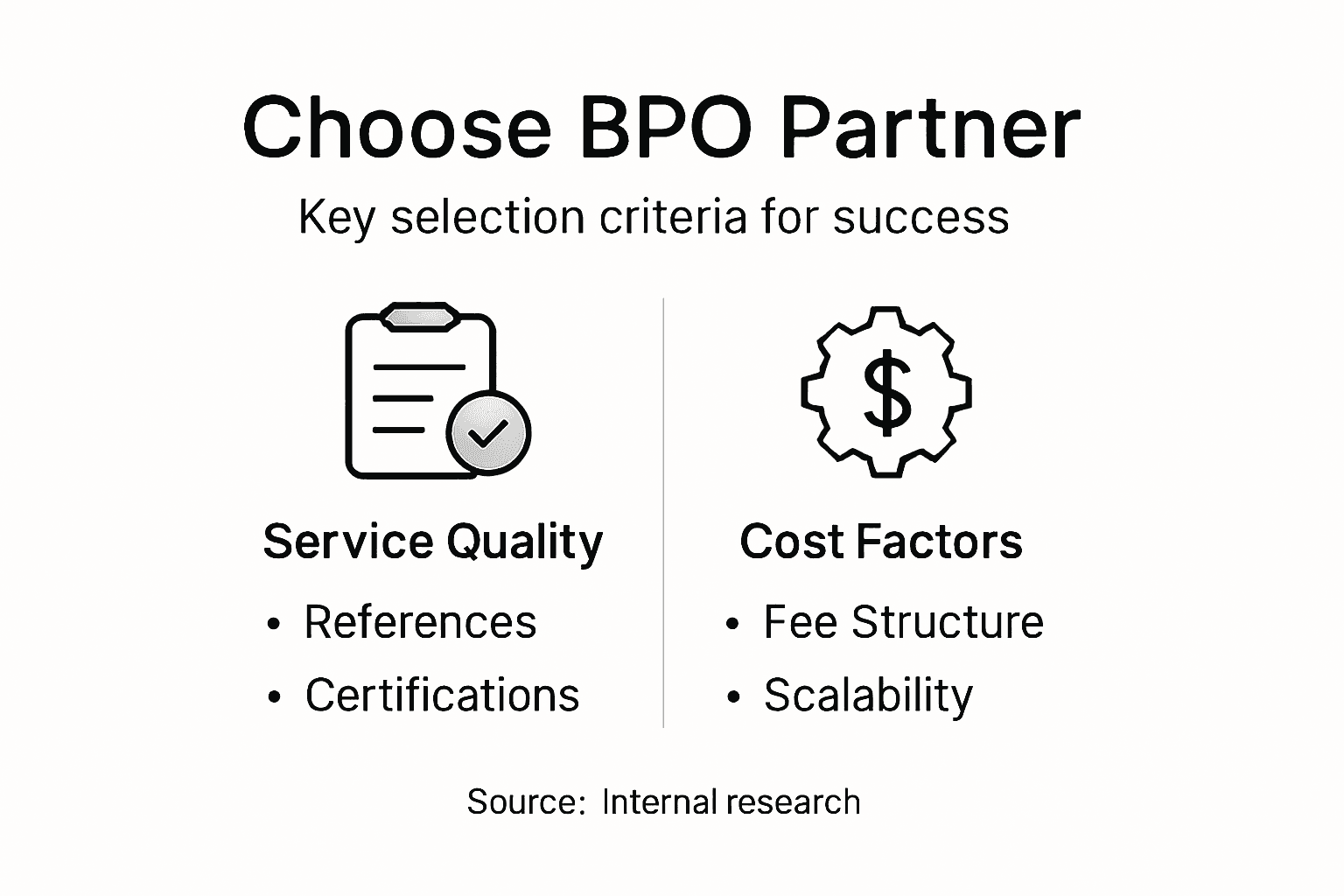
Construct a detailed financial model that compares potential providers across multiple cost scenarios. This should include initial setup costs, ongoing operational expenses, potential efficiency gains, and long term value creation. Evaluate each provider’s pricing transparency, flexibility in contract terms, and their demonstrated track record of delivering value beyond simple cost reduction. Pay special attention to their technological capabilities, talent pool quality, and ability to provide scalable solutions that can grow and adapt with your organizational needs.
Pro Tip: Request comprehensive total cost of ownership models from potential providers, ensuring you understand all direct and indirect expenses associated with the partnership.
Step 5: Validate provider reputation and client feedback
Assessing a BPO provider’s reputation requires a multifaceted approach that goes beyond surface level reviews. Your mission is to uncover authentic insights through strategic online reputation analysis that reveal the true performance and reliability of potential partners.
Employ a comprehensive reputation validation strategy that combines multiple research methods. Start by conducting deep digital forensics across professional platforms, industry forums, and social media channels. Examine detailed corporate reputation measurement techniques that provide nuanced insights into client experiences. Request comprehensive reference lists, seek out unfiltered client testimonials, and consider arranging direct conversations with current and past clients who can provide unvarnished perspectives on the provider’s actual performance. Scrutinize their track record in handling complex projects, responsiveness to challenges, and ability to deliver consistent results across different business contexts.
Develop a systematic scoring mechanism that evaluates reputation across multiple dimensions. This includes technological competence, communication effectiveness, problem resolution skills, cultural alignment, and long term partnership potential. Look beyond generic recommendations to understand specific client experiences, industry specific performance, and the provider’s adaptability in dynamic business environments. Pay special attention to how providers have navigated complex challenges, demonstrated innovation, and maintained client relationships over extended periods.
Pro Tip: Cross reference client feedback with independent industry reports and professional network recommendations to build a comprehensive reputation profile.
Step 6: Confirm legal, compliance, and partnership terms
Validating the legal landscape of your BPO partnership requires meticulous attention to detail and comprehensive understanding of contract law fundamentals that govern international business relationships. Your objective is to create a robust legal framework that protects your organizational interests and establishes clear expectations.
Craft a comprehensive due diligence process that systematically examines every aspect of potential partnership agreements. This involves conducting an exhaustive review of collaborative agreement provisions that cover intellectual property rights, data protection protocols, confidentiality clauses, service level guarantees, and compliance mechanisms. Engage legal experts who specialize in international outsourcing to scrutinize contract language, identify potential risks, and ensure alignment with your corporate governance standards. Pay special attention to dispute resolution mechanisms, termination conditions, performance metrics, and clauses that address potential technological or operational disruptions.
Develop a structured evaluation matrix that scores potential providers based on their legal preparedness, regulatory compliance, and contractual transparency. This should include assessments of their data security practices, adherence to international standards, ability to manage cross border legal complexities, and demonstrated commitment to ethical business practices. Verify their certifications, investigate their historical compliance record, and request comprehensive documentation that demonstrates their capability to meet your specific legal and operational requirements.
Pro Tip: Request multilingual contract reviews from independent legal experts to ensure complete understanding of all contractual nuances and potential interpretative variations.
Unlock Seamless Business Success with the Right BPO Partner
Choosing the perfect Business Process Outsourcing partner is a critical step in achieving strategic growth while ensuring operational excellence. If you aim to reduce costs, boost innovation, and scale efficiently through tailored outsourcing solutions, StorsenDigital.com offers expert guidance and comprehensive services across Europe designed to address these exact challenges. From talent acquisition and managed BPO services to strategic consulting, our approach aligns perfectly with your need for measurable outcomes and continuous improvement.

Explore how our proven expertise can transform your outsourcing objectives into tangible business success by partnering with a provider who understands your operational and cultural needs. Don’t leave your company’s future to chance. Get started today by contacting us through our dedicated support team. Let StorsenDigital.com be your trusted strategic partner in navigating the complex BPO landscape for sustainable growth and competitive advantage.
Frequently Asked Questions
How do I define my outsourcing objectives before choosing a BPO partner?
To define your outsourcing objectives, identify specific, measurable goals that align with your business mission. Conduct an internal audit to pinpoint processes that could benefit from external expertise and establish key performance indicators (KPIs) for success.
What criteria should I use to evaluate potential BPO providers?
You should assess potential BPO providers based on their technological capabilities, industry expertise, and cultural compatibility. Create a weighted scoring system to objectively evaluate them against your specific needs and desired outcomes.
How can I ensure the service quality of a BPO provider?
To ensure service quality, develop a multidimensional evaluation framework that includes both tangible and intangible aspects of service delivery. Request performance metrics, review case studies, and conduct reference checks to gauge past operational success and adaptability.
What factors should I consider for cost structures and scalability when choosing a BPO partner?
Consider the total cost of engagement, including hidden expenses and long-term value creation beyond initial pricing. Analyze how providers plan to support your scalability needs, including flexible engagement options and potential cost-saving measures as your business grows over time.
How can I validate a BPO provider’s reputation and client feedback?
To validate a provider’s reputation, conduct thorough research across professional networks and request references from current and past clients. Look for detailed client experiences and evaluate how well the provider handled complex challenges in the past.
What legal aspects should I review before finalizing a BPO partnership?
Before finalizing a partnership, thoroughly review contract provisions regarding intellectual property rights, data protection, and compliance mechanisms. Engage legal experts to ensure that the agreements align with your governance standards and adequately protect your interests.


