


Launching a remote office in Europe presents a clear opportunity for tech leaders to improve operational efficiency while accessing specialized talent. Defining your core remote work objectives is the foundation of every successful nearshoring initiative. With European countries like Poland and Romania offering both advanced infrastructure and deep IT talent pools, your strategic planning will shape company growth and cost outcomes. This guide lays out actionable steps for building secure, high-performing remote teams and optimizing every phase of your expansion.
Table of Contents
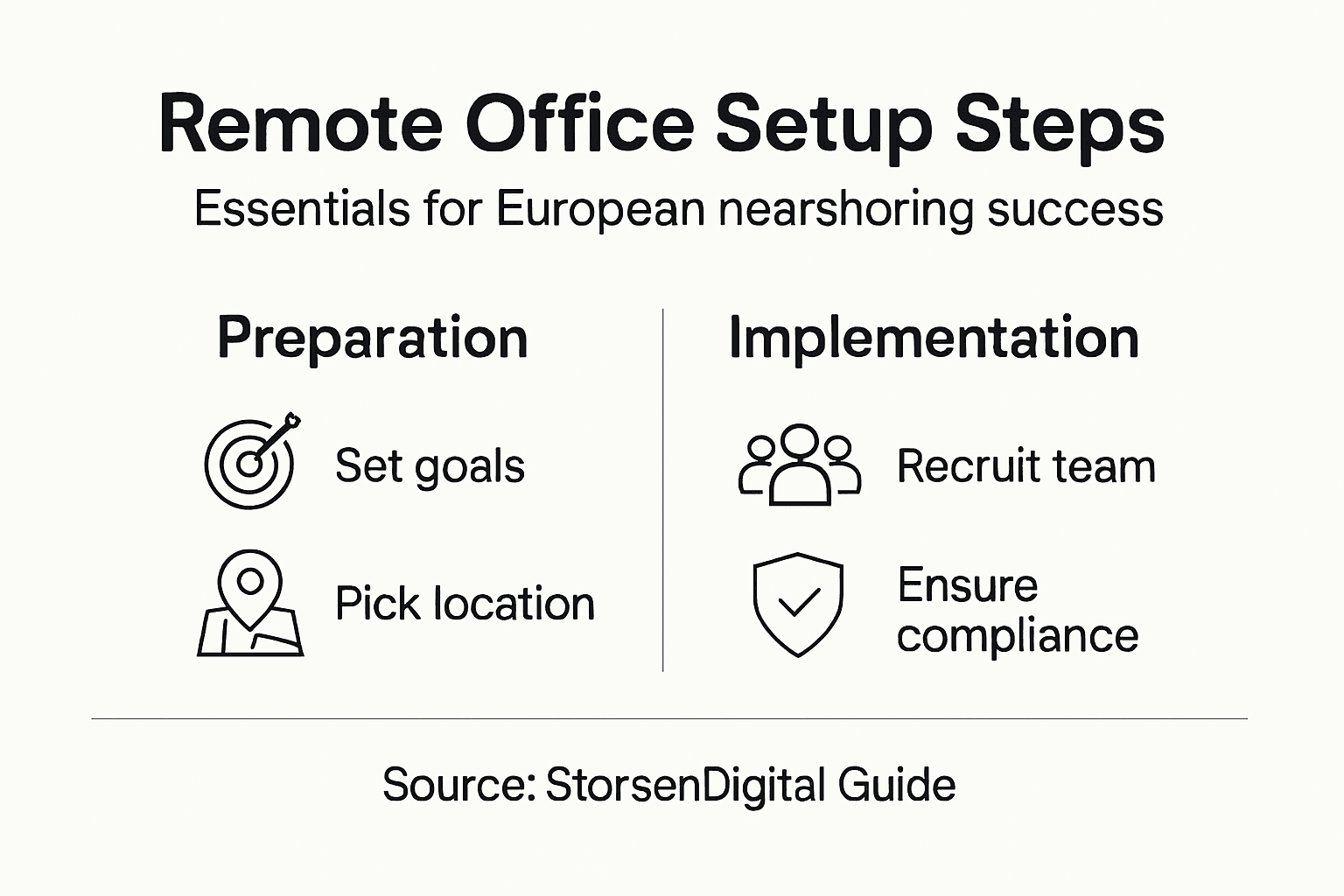
- Step 1: Define Remote Office Objectives And Requirements
- Step 2: Select Location And Secure Digital Infrastructure
- Step 3: Recruit And Onboard Local Talent Effectively
- Step 4: Implement Operational Processes And Compliance
- Step 5: Verify Performance And Optimize Remote Office Setup
Quick Summary
| Key Insight | Explanation |
|---|---|
| 1. Define remote office goals | Establish clear objectives to guide your nearshoring strategy. |
| 2. Choose strategic locations | Select locations based on stability, talent availability, and infrastructure. |
| 3. Recruit local talent effectively | Focus on cultural fit and technical skills during recruitment. |
| 4. Ensure robust compliance | Meet legal and regulatory standards to mitigate operational risks. |
| 5. Continuously optimize performance | Regularly assess and improve operational efficiency and team productivity. |
Step 1: Define remote office objectives and requirements
Establishing a successful remote office requires strategic planning and clear goal setting. You will need to develop a comprehensive framework that addresses operational needs, technological infrastructure, and performance expectations for your European nearshoring initiative.
Begin by outlining your core remote work objectives through a systematic approach. These typically include improving operational efficiency, accessing specialized talent pools, and reducing overall operational costs. When defining these objectives, government security guidelines recommend considering several critical factors:
- Operational Performance Metrics
- Information security protocols
- Compliance and legal requirements
- Technology and communication infrastructure
- Team productivity and collaboration standards
Your remote office requirements should encompass multiple dimensions. Based on federal telework recommendations, consider developing detailed frameworks that address:
- Employee eligibility criteria
- Performance measurement standards
- Technology access and security protocols
- Communication expectations
- Data protection mechanisms
A well-defined remote office strategy transforms potential challenges into strategic opportunities for global business expansion.
Remember that your objectives must align with both your company’s strategic vision and the specific capabilities of your chosen nearshoring location. StorsenDigital can help you craft these precise requirements, ensuring a smooth transition to a high-performing remote office environment.
Pro tip: Create a comprehensive checklist that covers technical, legal, and operational requirements before finalizing your remote office strategy.

Step 2: Select location and secure digital infrastructure
Choosing the right location and establishing a robust digital infrastructure are critical steps in creating a successful remote office for European nearshoring. This phase will determine your operational effectiveness, talent accessibility, and overall strategic positioning.
When selecting your nearshoring location, consider multiple strategic factors. Comprehensive European nearshoring research highlights key evaluation criteria for making an informed decision:
- Political and social stability
- Geographic proximity to headquarters
- Time zone alignment
- Cultural work compatibility
- Talent pool depth
Focus on countries with proven digital infrastructure and technical expertise. Based on strategic location analysis, several European nations stand out for remote office establishment:
The table below compares top European nearshoring destinations by key advantages:
| Country | Talent Depth | Digital Infrastructure | Cost Efficiency |
|---|---|---|---|
| Poland | Extensive IT pool | Advanced networks | Competitive salaries |
| Romania | Strong tech scene | Reliable connectivity | Affordable workforce |
| Bulgaria | Growing expertise | Modern data systems | Lower operational costs |
| Portugal | Multilingual talent | Fast broadband | Balanced expenses |
| Hungary | Skilled engineers | Secure infrastructure | Moderate labor costs |
- Poland
- Romania
- Bulgaria
- Portugal
- Hungary
Strategic location selection is not just about cost savings but about creating a sustainable, high-performance remote work ecosystem.
Securing a reliable digital infrastructure involves comprehensive planning. Your approach should encompass cybersecurity protocols, high-speed internet connectivity, data protection mechanisms, and compliance with local technological standards. StorsenDigital specializes in helping companies navigate these complex infrastructure requirements, ensuring seamless remote operations.
Pro tip: Conduct a comprehensive infrastructure audit and perform multiple connectivity tests before finalizing your remote office location.
Step 3: Recruit and onboard local talent effectively
Recruiting and integrating top-tier talent is a crucial step in establishing a successful remote office in Europe. Your goal is to build a high-performing team that seamlessly integrates with your global operations and delivers exceptional results.
Nearshore talent acquisition strategies reveal critical considerations for effective recruitment in European markets. Focus on developing a comprehensive approach that addresses both technical skills and cultural compatibility:
- Competitive compensation packages
- Robust training and development programs
- Language and cultural alignment
- Local market understanding
- Comprehensive benefits structure
Your recruitment process should incorporate multiple strategic elements:
- Develop targeted job descriptions
- Leverage local professional networks
- Conduct comprehensive skill assessments
- Implement thorough cultural fit interviews
- Create personalized onboarding experiences
Successful talent acquisition is about building relationships, not just filling positions.
The onboarding process is equally critical. Design a structured program that helps new team members quickly integrate into your organizational culture while providing clear expectations and support. StorsenDigital specializes in creating seamless talent integration strategies that bridge cultural and operational gaps.
Pro tip: Invest in a comprehensive onboarding program that balances professional development with cultural integration to maximize new hire success and retention.
Step 4: Implement operational processes and compliance
Establishing robust operational processes and ensuring comprehensive compliance are critical to creating a successful remote office in Europe. Your implementation strategy must balance operational efficiency with legal and regulatory requirements.
Nearshoring operational frameworks demand a comprehensive approach that addresses multiple critical dimensions:
- Cybersecurity protocols
- Data privacy standards
- Regulatory compliance mechanisms
- Risk assessment procedures
- Local legal partnership development
Your implementation strategy should include these key operational steps:
- Conduct comprehensive legal research
- Develop detailed compliance documentation
- Create standardized operational workflows
- Establish local legal partnerships
- Implement continuous monitoring systems
Successful operational processes transform compliance from a burden into a strategic advantage.
Effective implementation requires a nuanced understanding of local regulations and international business standards. StorsenDigital specializes in navigating complex operational landscapes, helping companies seamlessly integrate compliance requirements into their remote office strategies.
Pro tip: Invest in adaptable compliance management systems that can quickly evolve with changing regulatory environments.
Step 5: Verify performance and optimize remote office setup
Verifying and continuously optimizing your remote office performance is crucial for long-term success in European nearshoring. Your goal is to create a dynamic, adaptive operational environment that consistently delivers exceptional results.
Establishing a robust performance verification framework requires comprehensive and systematic approaches:
- Key performance indicator (KPI) tracking
- Regular team performance assessments
- Technology infrastructure evaluations
- Productivity and efficiency metrics
- Continuous improvement mechanisms
Implement a structured optimization process through these strategic steps:
- Conduct initial baseline performance measurements
- Design comprehensive performance dashboards
- Schedule regular performance review meetings
- Identify and address operational bottlenecks
- Develop targeted improvement strategies
Performance optimization is not a one-time event but a continuous journey of incremental enhancements.
StorsenDigital specializes in helping companies develop sophisticated performance monitoring and optimization strategies. By leveraging data-driven insights and advanced analytical tools, we help businesses transform their remote office operations into high-performing, adaptable ecosystems.
Pro tip: Implement quarterly performance reviews with clear, measurable objectives and create a culture of transparent, constructive feedback.
Here is a summary of critical success factors for establishing a high-performing remote office:
| Success Factor | Description | Business Impact |
|---|---|---|
| Strategic Objectives | Align with company vision and local context | Ensures relevant outcomes |
| Location Selection | Choose stable, skilled markets | Optimizes talent availability |
| Talent Integration | Blend technical skill with culture fit | Boosts team productivity |
| Robust Compliance | Meet all legal and regulatory standards | Reduces operational risk |
| Performance Monitoring | Track and optimize remote office KPIs | Drives continuous improvement |
Unlock the Full Potential of Your European Nearshoring Remote Office
Establishing a remote office for European nearshoring success comes with challenges such as defining clear operational objectives, selecting the ideal location, recruiting skilled talent, implementing strong compliance, and continuously optimizing performance. These critical pain points require expert guidance to transform your strategy into a competitive advantage with seamless execution and measurable results. Key concepts like cybersecurity protocols, cultural compatibility, and performance verification are essential to create a high-performing remote work ecosystem that truly supports your global business goals.

Ready to overcome these hurdles with confidence? Leverage StorsenDigital’s expertise to craft tailored remote office solutions that address technology infrastructure, talent acquisition, and compliance with local and international standards. Discover how our strategic consulting and managed services can simplify your transition and accelerate your nearshoring success. Connect with us today through our contact page and start building a resilient remote office that drives growth and operational excellence. Don’t wait to position your company at the forefront of digital transformation and European outsourcing innovation.
Frequently Asked Questions
What are the key objectives for establishing a remote office for European nearshoring?
Establishing a remote office should focus on improving operational efficiency, accessing specialized talent, and reducing costs. Outline specific goals to ensure your strategy aligns with your company’s vision and local capabilities.
How can I select the right location for my remote office?
Choose a location by evaluating political stability, cultural compatibility, and the depth of the local talent pool. Compare potential countries based on these criteria to find the best fit for your operational needs.
What recruitment strategies should I use for effective talent acquisition in nearshoring?
Develop targeted job descriptions and leverage local professional networks to attract top talent. Implement comprehensive skill assessments and cultural fit interviews to ensure new hires align with your company’s values and operational standards.
How can I ensure compliance with local regulations when setting up a remote office?
Conduct thorough legal research and develop compliance documentation tailored to local laws and data privacy standards. Integrate compliance mechanisms into your operational workflows to mitigate risks associated with legal non-compliance.
What performance metrics should I track to optimize my remote office setup?
Track key performance indicators (KPIs) such as team productivity, operational efficiency, and technology performance. Use these metrics to conduct regular reviews and make data-driven adjustments to enhance your remote office’s effectiveness.


