


Over 60 percent of american companies report measurable gains in efficiency after rethinking their business process outsourcing strategy. With more organizations relying on outsourcing to sharpen their competitive edge, knowing how to assess and improve internal workflows is no longer optional. This guide breaks down practical steps for evaluating your current operations, setting clear nearshoring goals, choosing the right partners, and building a process that truly supports growth and innovation.
Table of Contents
- Step 1: Assess Current Business Processes For Outsourcing
- Step 2: Define Clear Nearshoring And Scalability Goals
- Step 3: Select The Right Outsourcing Partner In Europe
- Step 4: Implement Tailored Managed Service Solutions
- Step 5: Monitor Performance And Optimize Cost Savings
- Step 6: Verify Continuous Improvement And Business Impact
Quick Summary
| Key Point | Explanation |
|---|---|
| 1. Assess Current Processes Thoroughly | Evaluate your existing workflows to identify outsourcing opportunities that enhance performance and efficiency. |
| 2. Set Clear Goals for Scalability | Define specific, measurable scalability goals aligned with business strategy to guide your outsourcing decisions. |
| 3. Choose the Right Outsourcing Partner | Look for partners with strong competencies, cultural fit, and proven success, rather than solely focusing on cost. |
| 4. Implement Tailored Service Solutions | Develop customized solutions that align with your needs and allow for flexibility in operations and integration. |
| 5. Continuously Monitor and Improve Performance | Establish a robust monitoring framework to track performance and optimize cost savings through ongoing evaluation and adjustments. |
Step 1: Assess Current Business Processes for Outsourcing
Improving business process outsourcing scalability begins with a comprehensive evaluation of your existing operational workflows. This critical initial step helps organizations identify which functions are prime candidates for strategic outsourcing.
To effectively assess your current business processes, start by conducting a detailed internal process mapping that thoroughly documents each operational task, workflow, and interdependency. Research indicates that organizations must meticulously analyze their service functions through rigorous market and cost assessments. Specifically, studies show that understanding internal processes enables companies to pinpoint which functions can be optimally outsourced to enhance organizational performance and efficiency.
Key evaluation criteria should include process complexity, resource intensity, strategic importance, and potential cost savings. Look for repetitive, standardized tasks that consume significant administrative time but do not directly contribute to core business strategy. These are typically ideal candidates for outsourcing. Pay special attention to functions like data entry, customer support, payroll processing, and routine administrative workflows that can be effectively managed by specialized external teams.
Warning: Not all processes are suitable for outsourcing. Critically evaluate each function’s strategic value and potential risk before making a decision. Some processes might be too complex, sensitive, or integral to your core competencies to be effectively managed externally.
Once you have mapped and analyzed your current processes, you will be prepared to move forward with selecting the right outsourcing partner and developing a strategic transition plan.
Step 2: Define Clear Nearshoring and Scalability Goals
Defining precise nearshoring and scalability goals is a critical step in transforming your business process outsourcing strategy. This phase involves creating a strategic roadmap that aligns your organizational objectives with potential outsourcing opportunities.
To establish effective goals, begin by conducting a comprehensive analysis of nearshoring potential that considers geographic, economic, and operational advantages. Research indicates that successful nearshoring depends on meticulously defining key performance indicators (KPIs) that reflect your specific business needs. These goals should encompass multiple dimensions including cost reduction, operational efficiency, talent access, and strategic flexibility.
Your scalability goals should be specific, measurable, and aligned with your broader business strategy. Focus on quantifiable outcomes such as percentage of cost savings, projected team expansion capabilities, response time improvements, and quality enhancement metrics. Consider creating a tiered goal structure that allows for adaptive scaling based on business growth and changing market conditions. Critical areas to address include workforce capacity, technological infrastructure, process standardization, and potential skill gap mitigation.
Warning: Avoid setting unrealistic or overly ambitious goals that could strain your outsourcing partnership. Scalability requires a balanced approach that considers both immediate needs and long term strategic objectives.
Once you have defined clear nearshoring and scalability goals, you will be prepared to evaluate potential outsourcing partners and develop a comprehensive implementation strategy.
Step 3: Select the Right Outsourcing Partner in Europe
Selecting the ideal outsourcing partner in Europe requires a strategic approach that goes beyond simple cost considerations. This crucial step will determine the success of your business process outsourcing initiative and directly impact your organization’s operational efficiency.

Begin by conducting a comprehensive evaluation of potential partners using a structured framework for assessing supplier competencies. Research indicates that successful outsourcing relationships depend on thoroughly examining a partner’s technical capabilities, industry expertise, cultural alignment, and proven track record. Your assessment should include deep dive investigations into their technological infrastructure, quality management systems, talent pool, and previous client success stories. Pay special attention to their ability to scale operations, adapt to changing business needs, and maintain consistent performance standards.
Key evaluation criteria should encompass multiple dimensions beyond basic service offerings. Examine the potential partner’s innovation capabilities, communication protocols, data security practices, and alignment with your organizational culture. Look for partners who demonstrate not just technical proficiency but also strategic thinking and proactive problem solving skills. Consider factors such as language proficiency, time zone compatibility, economic stability of their region, and their experience working with businesses similar to yours in size and complexity.
Warning: Avoid making decisions based solely on cost. The cheapest option rarely translates to the most effective outsourcing partnership. Instead, focus on value creation, long term potential, and strategic alignment.
Once you have thoroughly evaluated potential partners, you will be ready to initiate detailed negotiations and develop a comprehensive outsourcing collaboration strategy.
Step 4: Implement Tailored Managed Service Solutions
Implementing tailored managed service solutions represents a critical phase in transforming your business process outsourcing strategy. This step involves creating a customized approach that precisely aligns with your organization’s unique operational requirements and strategic objectives.
Begin by developing a model driven process design that bridges the critical gap between business expertise and technological implementation. Research indicates that successful managed service solutions require a comprehensive approach that integrates domain specific knowledge with flexible technological frameworks. Your implementation strategy should focus on creating adaptable service models that can quickly respond to changing business needs, incorporating detailed process mapping, performance metrics, and continuous improvement mechanisms.
Key implementation considerations should include establishing clear governance structures, defining precise service level agreements, and creating robust communication protocols. Focus on developing a dynamic service framework that allows for ongoing optimization and scalability. This involves creating detailed documentation of current processes, identifying potential improvement areas, and designing flexible integration points that enable seamless collaboration between your internal teams and the outsourcing partner. Pay special attention to technology integration, data security protocols, and mechanisms for ongoing performance evaluation and adjustment.
Warning: Avoid rigid implementation approaches that do not allow for future adaptation. Successful managed service solutions require built in flexibility and continuous learning mechanisms that can evolve with your business landscape.
Once you have implemented your tailored managed service solutions, you will be prepared to monitor performance and drive continuous improvement in your outsourcing strategy.
Step 5: Monitor Performance and Optimize Cost Savings
Monitoring performance and optimizing cost savings is the critical final stage of your business process outsourcing strategy. This phase transforms your outsourcing initiative from a theoretical plan into a measurable, continually improving operational framework.
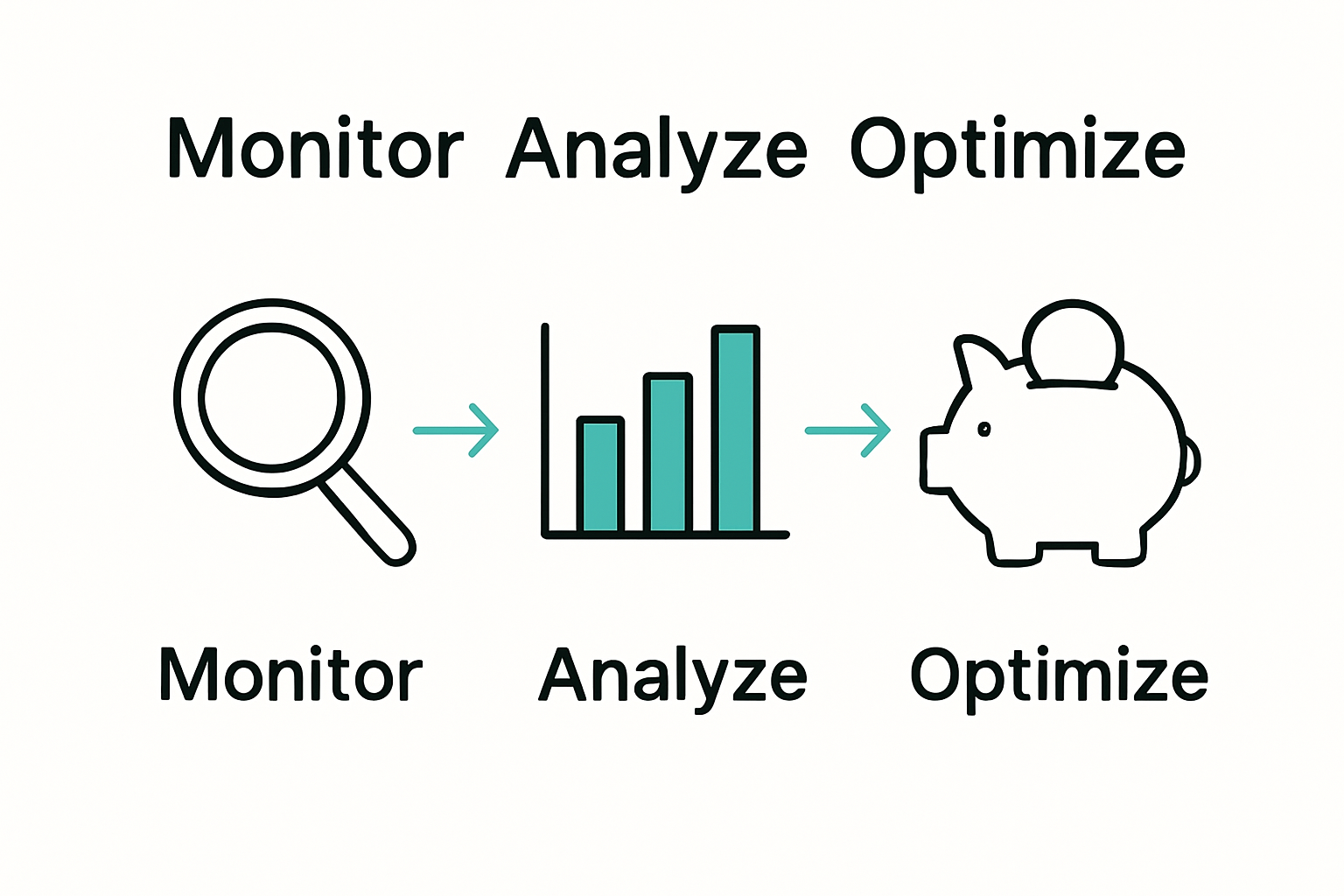
Begin by implementing process oriented data analytics that provide comprehensive insights into your outsourcing performance. Research indicates that successful cost optimization requires systematic tracking of key performance indicators, leveraging execution data to extract actionable knowledge and drive continuous improvement. Develop a robust monitoring system that captures granular metrics across multiple dimensions including operational efficiency, cost per transaction, quality standards, response times, and strategic alignment.
Key monitoring strategies should include establishing a comprehensive benchmarking approach that compares your outsourcing performance against industry standards and best practices. Create a dynamic evaluation framework that goes beyond simple cost metrics to assess overall value creation. This involves developing nuanced performance dashboards, conducting regular comprehensive reviews, and maintaining open communication channels with your outsourcing partner. Pay special attention to identifying potential efficiency improvements, technological innovations, and opportunities for process streamlining that can generate incremental cost savings and operational enhancements.
Warning: Avoid treating performance monitoring as a static exercise. Successful cost optimization requires a proactive, adaptive approach that continuously reassesses and refines your outsourcing strategy.
Once you have established a robust performance monitoring and cost optimization framework, you will have transformed your business process outsourcing from a tactical solution into a strategic competitive advantage.
Step 6: Verify Continuous Improvement and Business Impact
Verifying continuous improvement and assessing the true business impact of your outsourcing strategy represents the ultimate validation of your transformation efforts. This critical phase transforms performance metrics into meaningful strategic insights that drive long term organizational success.
Begin by implementing a collaborative evaluation framework that empowers both internal teams and outsourcing partners to contribute to performance assessment. Research indicates that successful continuous improvement requires creating win win relationships that go beyond traditional transactional models. Develop a comprehensive assessment approach that measures not just operational efficiency but also strategic value creation, innovation potential, and adaptive capabilities.
Key verification strategies should include establishing multidimensional performance indicators that capture both quantitative and qualitative improvements. Create a holistic evaluation model that examines financial metrics, operational efficiency, technological innovation, workforce productivity, and strategic alignment. This involves conducting regular in depth reviews, gathering feedback from multiple stakeholders, and maintaining transparent communication channels that facilitate ongoing refinement. Focus on identifying emerging opportunities for process optimization, technological integration, and strategic collaboration that can generate incremental value beyond initial outsourcing objectives.
Warning: Avoid treating continuous improvement as a compliance exercise. Successful verification requires a genuine commitment to collaborative learning and adaptive strategic development.
Once you have established a robust continuous improvement verification process, you will have transformed your outsourcing strategy into a dynamic engine of organizational growth and innovation.
Unlock Scalable Success With Expert BPO and Nearshoring Solutions
If you are struggling to improve business process outsourcing scalability you are not alone. Many companies face challenges like identifying which processes to outsource, setting clear nearshoring goals, and selecting the right partner that aligns with their strategic objectives. Key pain points often include managing complex workflows, ensuring cost efficiency, and maintaining continuous improvement while adapting to growth. The detailed steps in the article like process mapping, defining scalability goals, and monitoring performance reflect common hurdles businesses must overcome to unlock true operational flexibility.
At StorsenDigital.com, we specialize in turning these challenges into opportunities. Our comprehensive outsourcing and nearshoring services provide tailored solutions designed to support scalable growth through:
- Strategic partner selection across Europe
- Managed BPO services including HR, finance, IT, and customer support
- Talent acquisition and office establishment

Don’t let uncertainty slow your scaling efforts. Take control now by partnering with a proven expert that understands the nuances of scalable outsourcing and nearshoring. Visit StorsenDigital.com and explore how our customized strategies and managed services can help you achieve measurable cost savings and long-term impact. Your next level of business process outsourcing success starts here.
Frequently Asked Questions
How do I assess my current business processes for outsourcing scalability?
To assess your current business processes, conduct thorough internal process mapping that documents all operational tasks and workflows. Focus on identifying repetitive tasks that can be outsourced to enhance efficiency, aiming for a complete evaluation within 30 days.
What are effective goals to set for nearshoring and scalability?
Set specific, measurable goals that align with your organization’s overall objectives, focusing on areas like cost reduction and operational flexibility. For example, aim to achieve a 15% cost savings within the first year of outsourcing.
What criteria should I use to select the right outsourcing partner?
Evaluate potential partners based on their technical capabilities, industry expertise, and cultural fit with your organization. Create a checklist that includes factors like communication protocols and innovation capabilities to assist in your decision-making process.
How can I implement a tailored managed service solution?
Develop a model-driven process design that aligns with your unique operational needs. Prioritize establishing clear service level agreements and governance structures, striving for implementation within 60-90 days to ensure smooth transitions.
What methods can I use to monitor performance and optimize cost savings?
Implement process-oriented data analytics to track key performance indicators regularly. For example, set up monthly reviews to assess cost per transaction and operational efficiency, aiming for continuous optimization of your outsourcing strategy.
How do I verify continuous improvement and business impact?
Conduct regular evaluations using multidimensional performance indicators that capture both quantitative and qualitative improvements. Establish a feedback loop with your outsourcing partner to identify areas for growth and adaptation, reviewing progress at least quarterly.


