


Scaling a cross-border team often means balancing technical skills with cultural compatibility. For HR and operations leaders at European enterprises, overlooking the nuances of team alignment, digital frameworks, and communication can stall even the most promising growth plans. This guide breaks down key strategies for managing remote collaboration and optimizing workflows so you can build high-performing teams that thrive across borders and cultures.
Table of Contents
- Step 1: Assess Talent Needs And Cultural Fit
- Step 2: Establish Digital Collaboration Frameworks
- Step 3: Align Project Goals And Workflows
- Step 4: Implement Clear Communication Protocols
- Step 5: Monitor Progress And Optimize Performance
Quick Summary
| Key Insight | Explanation |
|---|---|
| 1. Assess cultural fit diligently | Evaluate both technical skills and cultural competencies to ensure team cohesion and performance. |
| 2. Implement effective digital collaboration | Choose tools that support seamless communication and foster a shared workspace across diverse cultures. |
| 3. Utilize SMART goals for alignment | Clearly define project objectives using the SMART framework to ensure all team members understand expectations. |
| 4. Establish clear communication protocols | Create guidelines that accommodate different cultural communication styles to enhance understanding. |
| 5. Monitor performance with real-time insights | Use comprehensive dashboards and metrics to track team progress and facilitate continuous improvement. |
Step 1: Assess talent needs and cultural fit
Successfully managing cross-border teams starts with strategic talent evaluation and understanding cultural nuances. In this step, you will learn how to identify the right talent profile and assess cultural compatibility that ensures team cohesion and performance.
Building an effective cross-border team requires a systematic approach to talent selection. Begin by conducting a comprehensive skills assessment that goes beyond traditional resume screening. Carefully evaluate cultural competencies to understand how potential team members might interact and collaborate.
Key strategies for assessing talent needs and cultural fit include:
- Develop comprehensive candidate profiles that capture both technical skills and soft skills
- Create assessment frameworks that measure cross-cultural communication abilities
- Use structured interviews with culturally sensitive questioning techniques
- Implement psychometric testing that reveals communication and collaboration styles
- Design practical scenarios that test problem-solving in multicultural contexts
Understanding cultural dimensions is crucial. Look beyond technical qualifications to evaluate how candidates might integrate into your team’s dynamic. Research indicates that cultural diversity significantly influences team communication and can either enhance or hinder project success.
Trust and cultural understanding are the foundational elements of high-performance cross-border teams.
Additionally, consider utilizing technology-enhanced selection methods that can help standardize your recruitment process across different cultural contexts. These might include video interviews, collaborative online assessments, and AI-driven personality matching tools.
Here’s a summary comparing traditional recruitment with technology-enhanced recruitment for cross-border teams:
| Approach | Key Strengths | Limitations | Best Use Case |
|---|---|---|---|
| Traditional Recruitment | Deep personal interaction, flexible | Hard to standardize globally | Small, local teams |
| Technology-Enhanced Recruitment | Scalable, reduces bias, consistent | May miss cultural subtleties | Large, diverse global teams |
Pro tip: Always allocate extra time for cultural alignment discussions during the recruitment process to prevent potential misunderstandings and ensure smoother team integration.
Step 2: Establish digital collaboration frameworks
Building effective digital collaboration frameworks is crucial for connecting cross-border teams and ensuring seamless communication. Your goal is to create a robust digital infrastructure that enables smooth information sharing, project management, and team interaction across different geographic locations.

Digital collaboration frameworks require strategic planning and thoughtful technology integration. Start by identifying the right set of digital tools that support your team’s specific workflow and communication needs.
Key components of an effective digital collaboration framework include:
- Select cloud-based project management platforms that offer real-time tracking and transparent workflows
- Implement secure communication channels with end-to-end encryption
- Choose collaboration tools with multilingual support and cultural adaptability
- Develop clear digital communication protocols and etiquette guidelines
- Integrate time zone management features for global team coordination
Cross-level collaboration frameworks emphasize the importance of cultural intelligence and inclusive technology solutions. Consider tools that support not just technical collaboration but also foster understanding and respect across cultural boundaries.
Effective digital collaboration transcends technology – it’s about creating a shared digital workspace that bridges cultural and geographic divides.
Ensure your digital framework includes robust onboarding processes that help team members understand and effectively use the selected collaboration tools. Provide comprehensive training and continuous support to maximize technological adoption and team efficiency.
The following table summarizes top digital collaboration tools and their impact on cross-border teamwork:
| Tool Type | Primary Benefit | Business Impact | Cultural Adaptability |
|---|---|---|---|
| Cloud Project Platform | Real-time task management | Faster project delivery | High |
| Secure Messaging App | Confidential communication | Boosts trust and compliance | Moderate |
| Multilingual Video Chat | Interactive remote meetings | Improves engagement and clarity | High |
Pro tip: Regularly audit and update your digital collaboration tools to ensure they continue meeting your team’s evolving communication and project management needs.
Step 3: Align project goals and workflows
Successfully managing cross-border teams requires creating a unified vision and synchronized workflow that transcends geographic and cultural boundaries. Your primary objective is to establish clear, consistent project goals that resonate with every team member, regardless of their location or background.
Effective team alignment demands a strategic approach to setting and communicating project objectives. Implement the SMART goal framework to ensure your project targets are Specific, Measurable, Achievable, Relevant, and Time-bound.
Key strategies for aligning project goals and workflows include:
- Develop comprehensive project charters that clearly define objectives and expectations
- Create visual workflow maps that illustrate processes across different team locations
- Establish regular cross-team communication checkpoints
- Define role-specific responsibilities with clear accountability metrics
- Design collaborative goal-setting sessions that involve team members from all regions
Cross-boundary team collaboration requires bringing together diverse knowledge holders and providing them with appropriate tools and methods. Focus on creating transparent communication channels that enable seamless information sharing and collective problem-solving.
Successful project alignment is less about control and more about creating a shared understanding of collective objectives.
Implement robust tracking mechanisms that allow real-time visibility into project progress. Utilize digital platforms that provide transparent metrics and enable team members to understand how their individual contributions connect to broader project goals.
Pro tip: Schedule quarterly alignment workshops that allow team members from different regions to recalibrate goals, share insights, and realign project strategies collaboratively.
Step 4: Implement clear communication protocols
Establishing robust communication protocols is critical for bridging cultural gaps and ensuring smooth collaboration across cross-border teams. Your goal is to create a comprehensive communication framework that reduces misunderstandings, promotes transparency, and supports effective interaction among team members from diverse backgrounds.
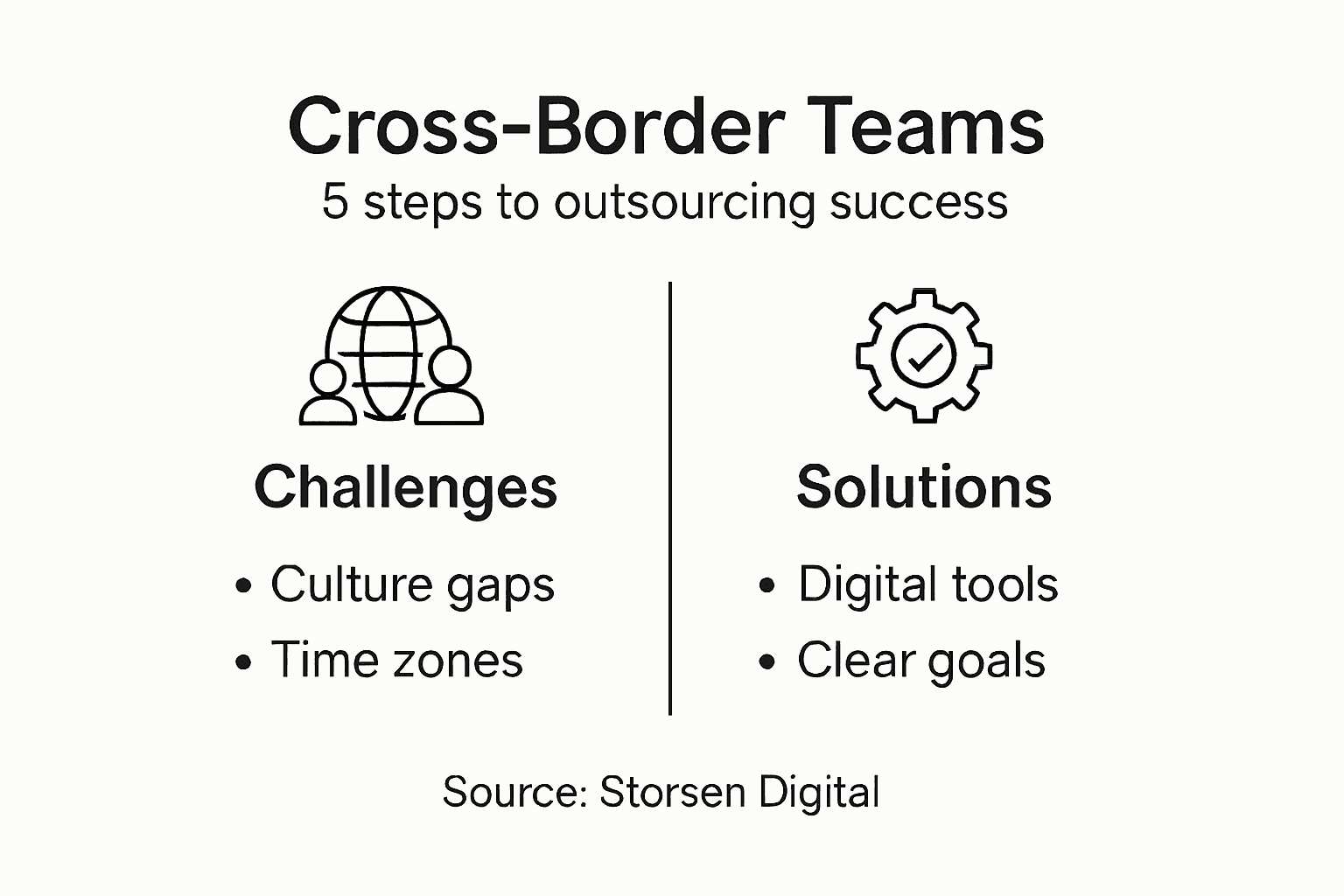
Cross-cultural communication strategies demand a systematic approach to overcoming language barriers and workplace communication challenges. Begin by developing a standardized communication framework that accommodates different cultural communication styles and preferences.
Key elements of effective communication protocols include:
- Create a comprehensive communication guide that outlines preferred communication channels
- Define response time expectations for different types of messages
- Establish clear guidelines for synchronous and asynchronous communication
- Implement language-neutral communication templates
- Design cultural sensitivity training programs for all team members
Global team communication techniques emphasize the importance of leveraging supportive technologies and creating dedicated relationship-building opportunities. Choose communication platforms that offer translation features, real-time collaboration tools, and multi-language support.
Effective communication is not about speaking, but about being understood across cultural boundaries.
Develop a feedback mechanism that allows team members to continuously improve communication protocols. Regularly review and adapt your communication strategies to address emerging challenges and incorporate team insights.
Pro tip: Conduct periodic communication audits and create safe spaces for team members to share their communication preferences and potential barriers.
Step 5: Monitor progress and optimize performance
Successfully managing cross-border teams requires establishing a robust performance monitoring system that provides real-time insights and enables continuous improvement. Your objective is to create a dynamic framework that tracks team progress, identifies potential bottlenecks, and supports data-driven decision making.
Global teamwork strategies emphasize the importance of establishing clear goals and implementing transparent reporting mechanisms. Develop a comprehensive monitoring approach that balances quantitative metrics with qualitative insights across different cultural and operational contexts.
Key strategies for monitoring and optimizing team performance include:
- Develop comprehensive performance dashboards that track key project metrics
- Establish regular check-in meetings with clear accountability structures
- Implement data-driven key performance indicators (KPIs)
- Create cross-cultural feedback mechanisms
- Design adaptive performance improvement processes
Project team performance measurement requires a holistic approach that goes beyond traditional evaluation methods. Utilize advanced analytics tools that can capture nuanced performance data and provide actionable insights for team optimization.
Performance monitoring is not about micromanagement, but about empowering teams to achieve their full potential.
Foster a culture of continuous improvement by creating safe spaces for team members to share challenges, propose solutions, and collaborate on performance enhancement strategies. Regularly review and adjust your monitoring protocols to ensure they remain relevant and effective.
Pro tip: Implement a rotating peer review system that allows team members from different regions to provide balanced, constructive feedback and share best practices.
Unlock Seamless Cross-Border Team Management with Storsen Digital
Managing cross-border teams comes with unique challenges like ensuring cultural fit, establishing digital collaboration, aligning project goals, and maintaining clear communication. If you are looking to overcome these obstacles and drive outsourcing success, Storsen Digital offers tailored solutions that address these critical pain points. With expertise in talent acquisition, managed Business Process Outsourcing, and strategic consulting, we help your business build cohesive teams that perform across borders.

Take control of your global workforce today by partnering with a trusted provider that understands the nuances of cross-border collaboration. Connect with our experts to explore scalable outsourcing strategies and digital frameworks that empower your teams to excel. Get started now by visiting our contact page and turn your international vision into a successful reality.
Frequently Asked Questions
How can I assess cultural fit when managing cross-border teams?
To assess cultural fit, develop comprehensive candidate profiles that include both technical and soft skills. Implement structured interviews and psychometric testing to gauge communication styles and collaboration abilities.
What are effective digital collaboration frameworks for cross-border teams?
Effective digital collaboration frameworks include cloud-based project management platforms for real-time tracking and secure communication channels with multilingual support. Choose tools that enhance project visibility and team engagement.
How do I align project goals across diverse team members?
To align project goals, utilize the SMART goal framework to ensure objectives are clear and measurable. Conduct collaborative goal-setting sessions with team members from different locations to promote understanding and buy-in.
What communication protocols should I implement for cross-border teams?
Implement a comprehensive communication guide that outlines preferred channels and response time expectations. Establish guidelines for synchronous and asynchronous communication to accommodate various cultural preferences.
How can I effectively monitor performance in a cross-border team?
To monitor performance, create comprehensive performance dashboards that track key metrics and implement regular check-in meetings. Utilize data-driven key performance indicators (KPIs) to identify areas for improvement and refine strategies accordingly.


