


Over 55 percent of American businesses rely on outsourcing to drive growth and stay competitive. As companies expand globally, the pressure to optimize costs while accessing specialized talent becomes more intense. Knowing how to set clear goals and choose the right partners means the difference between success and wasted resources. This guide shows practical steps that help American organizations capitalize on outsourcing while minimizing risk and maximizing long term value.
Table of Contents
- Step 1: Define Outsourcing Goals And Requirements
- Step 2: Identify And Evaluate Potential Partners
- Step 3: Develop A Clear Contract And Communication Plan
- Step 4: Implement Outsourcing Strategies And Processes
- Step 5: Monitor Performance And Optimize Outcomes
Quick Summary
| Key Insight | Explanation |
|---|---|
| 1. Define Outsourcing Goals | Clearly outlining goals aligns external resources with organizational needs. |
| 2. Evaluate Potential Partners | Assess partners based on technical capabilities, financial health, and cultural fit. |
| 3. Draft a Comprehensive Contract | A detailed agreement clarifies roles, performance metrics, and expectations. |
| 4. Implement a Phased Strategy | Start with a pilot project to test and refine outsourcing processes effectively. |
| 5. Monitor and Optimize Continuously | Use performance metrics and feedback to enhance collaboration and outcomes. |
Step 1: Define Outsourcing Goals and Requirements
Defining clear outsourcing goals is the strategic foundation for successful global business expansion. This critical first step helps you align external resources with your organization’s core objectives and operational needs.
To effectively define your outsourcing requirements, start by conducting a comprehensive internal assessment of your current business processes. Outsourcing strategies focus on enhancing competitiveness by concentrating resources on core competencies, so identify which functions are non-essential yet necessary for overall business performance. These might include customer support, software development, data processing, or administrative tasks that consume significant time and resources.
Begin by mapping out specific metrics and expected outcomes. Determine precise goals such as cost reduction percentages, performance improvements, scalability targets, and quality benchmarks. Consider both quantitative metrics (like reducing operational expenses by 30%) and qualitative objectives (enhancing customer satisfaction, accessing specialized talent). Engage key stakeholders from different departments to ensure a holistic understanding of organizational needs and potential outsourcing opportunities.
Pro tip: Create a detailed requirements document that outlines technical specifications, performance expectations, compliance requirements, and cultural alignment criteria before initiating outsourcing discussions. This preparation will help you select the most suitable external partner and establish clear expectations from the beginning.
Step 2: Identify and Evaluate Potential Partners
Identifying the right outsourcing partners is a strategic process that can significantly impact your business performance and growth trajectory. In this critical step, you will systematically assess potential external collaborators who can support your organizational objectives.
Selecting appropriate outsourcing partners is crucial, involving evaluation of multiple criteria to ensure alignment with strategic goals and optimal performance. Start by creating a comprehensive evaluation matrix that considers technical capabilities, financial stability, cultural compatibility, industry reputation, and proven track record. Research potential partners through multiple channels including industry recommendations, professional networks, online platforms, and targeted business conferences. Request detailed portfolios, case studies, and client references that demonstrate their expertise in your specific domain.
Develop a structured assessment framework that goes beyond basic cost considerations. Evaluate potential partners on dimensions such as technological infrastructure, quality management systems, scalability, compliance standards, communication protocols, and long term strategic alignment. Conduct thorough due diligence by organizing initial discovery calls, requesting formal presentations, and potentially arranging site visits or pilot projects to validate their capabilities. Pay special attention to their adaptability, innovation potential, and commitment to continuous improvement.
Pro tip: Create a weighted scoring system during partner evaluation that assigns specific point values to critical selection criteria, enabling a more objective and comprehensive assessment of potential outsourcing collaborators.
Here is a summary of key outsourcing partner evaluation criteria and why they matter:
| Evaluation Criteria | Business Impact | Example Consideration |
|---|---|---|
| Technical Competence | Ensures delivery quality and expertise | Relevant certifications |
| Financial Stability | Reduces risk of service interruption | Years in business, solvency |
| Cultural Alignment | Improves communication and collaboration | Time zone compatibility |
| Industry Reputation | Indicates past reliability and results | Awards, client testimonials |
| Innovation Potential | Drives process improvement and efficiency | Investment in new technologies |
Step 3: Develop a Clear Contract and Communication Plan
Establishing a robust contract and communication strategy is fundamental to successful outsourcing partnerships. This step transforms your collaboration from a theoretical concept into a structured, actionable framework that protects both parties’ interests and ensures smooth operational execution.

Outsourcing requires legally bound contracts that define each party’s rights, duties, and responsibilities, facilitating proper exchange of services and preventing misunderstandings. Begin by drafting a comprehensive agreement that covers all critical aspects of your partnership. This contract should include detailed scope of work, performance metrics, quality standards, confidentiality clauses, intellectual property protections, payment terms, and dispute resolution mechanisms. Specify exact deliverables, timelines, expected outcomes, and key performance indicators that will be used to measure success.
Develop a multilayered communication plan that establishes clear channels, frequency, and protocols for interaction. Create a communication matrix that defines primary and secondary contacts, preferred communication tools, reporting schedules, and escalation procedures for potential issues. Schedule regular check-ins including weekly operational meetings, monthly strategic reviews, and quarterly comprehensive performance assessments. Implement collaborative tools that enable real time tracking, transparent reporting, and seamless information exchange. Ensure your communication strategy includes mechanisms for providing constructive feedback, addressing concerns promptly, and maintaining an open dialogue that supports continuous improvement and mutual understanding.
Pro tip: Include a flexible amendment clause in your contract that allows periodic review and adjustment of terms, enabling your partnership to adapt to changing business environments while maintaining clear expectations and mutual accountability.
Step 4: Implement Outsourcing Strategies and Processes
Implementing your carefully developed outsourcing strategy marks the critical transition from planning to execution. This phase demands precision, strategic coordination, and a systematic approach to transforming your organizational objectives into tangible operational realities.
Implementing outsourcing strategies involves taking a risk-intelligent approach to mitigate potential failures and ensure intended value delivery. Begin by creating a phased implementation roadmap that breaks down the entire process into manageable stages. Start with a pilot project that allows you to test your strategy with minimal organizational risk. This approach enables you to identify potential challenges, refine processes, and validate your initial assumptions before full scale deployment. Assign dedicated implementation teams with clear roles and responsibilities, ensuring cross functional representation from relevant departments such as operations, finance, legal, and technology.
Develop comprehensive onboarding and integration protocols that facilitate smooth knowledge transfer and alignment between your internal teams and outsourcing partners. Implement robust monitoring and performance tracking mechanisms that provide real time visibility into key operational metrics. Establish regular review checkpoints to assess progress, address emerging challenges, and make data driven adjustments to your strategy. Create standardized documentation processes, develop training materials, and design communication protocols that ensure consistency and minimize potential misunderstandings during the transition.
Pro tip: Create a flexible change management framework that anticipates potential adaptation challenges and provides structured mechanisms for addressing unexpected complexities during the outsourcing implementation process.
Step 5: Monitor Performance and Optimize Outcomes
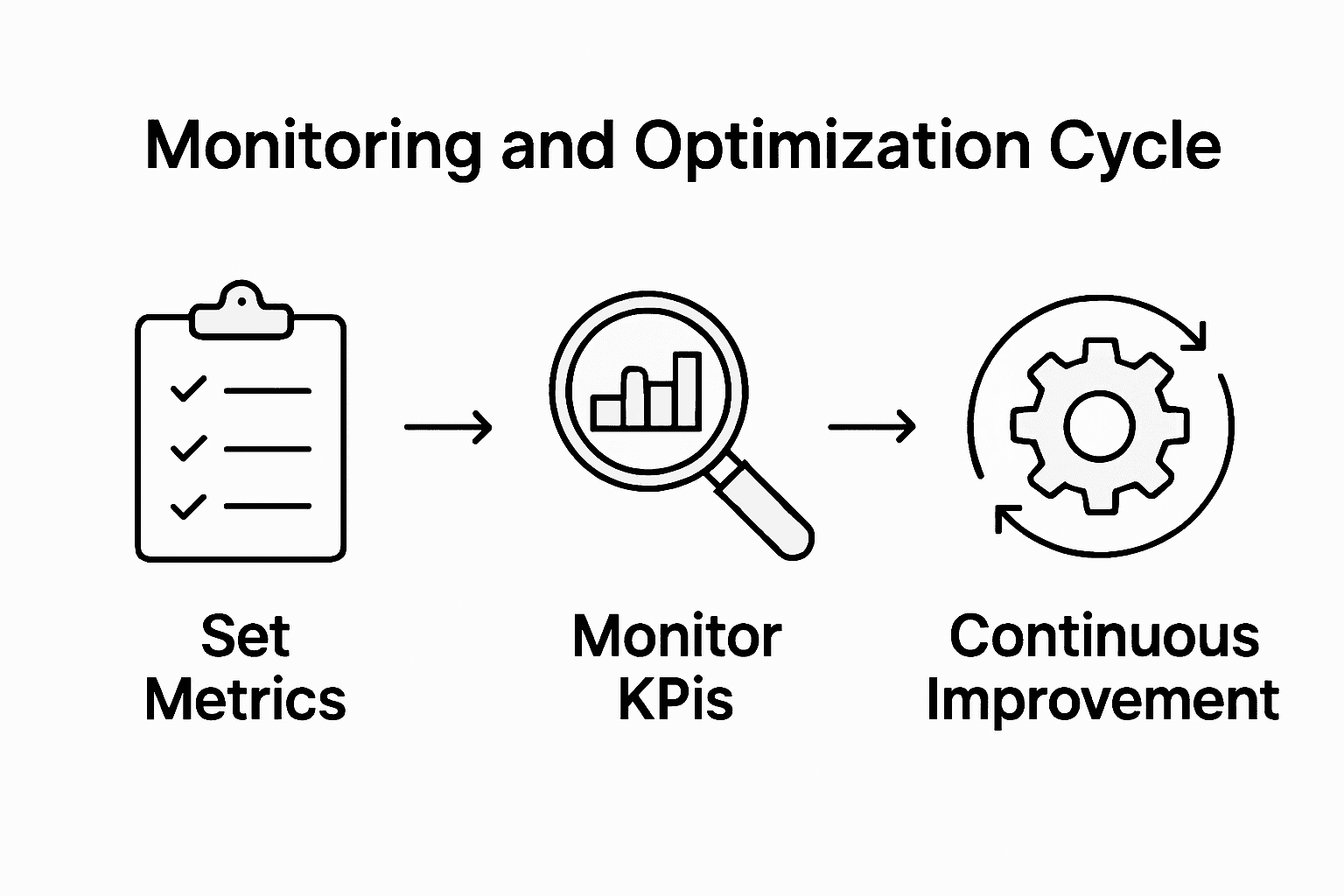
Monitoring and optimizing your outsourcing partnership represents the ongoing refinement process that transforms initial strategies into sustained business value. This critical phase ensures continuous alignment between your organizational objectives and the performance of your external collaborators.
Benchmarking supplier capabilities against strategic and operational intent helps establish relationships that support business objectives and optimize outcomes. Implement a comprehensive performance measurement framework that goes beyond traditional metrics. Develop a balanced scorecard approach that evaluates quantitative performance indicators such as cost savings, productivity improvements, and turnaround times alongside qualitative assessments like innovation potential, cultural compatibility, and strategic alignment. Establish clear key performance indicators (KPIs) that are specific, measurable, achievable, relevant, and time bound. Utilize advanced analytics and reporting tools that provide real time insights into operational effectiveness and potential improvement areas.
Create a dynamic feedback and continuous improvement mechanism that transforms performance monitoring from a passive observation process to an active optimization strategy. Schedule regular strategic review meetings that involve both leadership and operational teams from your organization and the outsourcing partner. Use these sessions to discuss performance data, address emerging challenges, identify optimization opportunities, and collaboratively develop action plans for enhanced collaboration. Implement a transparent and constructive performance improvement framework that incentivizes innovation, rewards exceptional performance, and provides structured pathways for addressing any performance gaps or emerging operational complexities.
Pro tip: Develop a dynamic performance optimization matrix that allows for agile adjustments to your outsourcing strategy, enabling you to rapidly respond to changing business environments and emerging technological advancements.
This table highlights common outsourcing metrics for performance monitoring:
| Metric Type | What It Measures | Benefit to Organization |
|---|---|---|
| Cost Savings | Reduction in operating cost | Frees resources for core growth |
| Service Quality | Error rates, satisfaction | Enhances customer experience |
| Turnaround Time | Delivery speed | Increases market responsiveness |
| Scalability | Ability to handle volume | Supports business expansion |
Unlock Global Success with Expert Outsourcing Solutions
If defining clear outsourcing goals and selecting the right partners feels overwhelming, you are not alone. Many businesses struggle to translate strategic plans into seamless execution while ensuring continuous performance optimization. This article highlights pain points such as aligning external services with business objectives, navigating cultural compatibility, and building effective communication plans — challenges that can stall your global expansion efforts.
At StorsenDigital.com, we specialize in solving these exact challenges. Our comprehensive outsourcing and nearshoring services across Europe provide tailored talent recruitment, managed BPO, and strategic consulting that connect directly to your operational goals. With our expertise in crafting clear contracts and ongoing performance monitoring, we make managing cross-border partnerships simple and effective.
Discover how our skilled teams support your journey from goal-setting to full implementation and optimization. Don’t let complexity hold you back from competitive advantage. Learn more about our proven process by visiting StorsenDigital Contact.

Ready to turn your outsourcing strategy into a growth engine? Reach out today at StorsenDigital Contact and start building partnerships that deliver measurable results. Our experts are here to guide you every step of the way with tailored solutions that reduce risk and maximize value. Take the first step toward global business success now by contacting us.
Frequently Asked Questions
How do I define clear outsourcing goals for my business?
To define clear outsourcing goals, conduct an internal assessment of your business processes to identify non-essential functions that can be outsourced. Map out specific metrics, like reducing operational expenses by 30%, and engage key stakeholders for a holistic understanding of your needs.
What criteria should I use to evaluate potential outsourcing partners?
When evaluating potential outsourcing partners, create a comprehensive matrix that assesses technical capabilities, financial stability, and cultural compatibility. Focus on their industry reputation and proven track record to ensure they align with your strategic goals.
How can I develop an effective contract for outsourcing?
To develop an effective contract, draft a comprehensive agreement outlining the scope of work, performance metrics, and payment terms. Include clear deliverables and timelines to ensure both parties have aligned expectations and responsibilities.
What steps should I take to implement my outsourcing strategy?
Begin your outsourcing strategy implementation with a phased roadmap and start with a pilot project to test your assumptions. Assign dedicated teams with clear roles and responsibilities to facilitate smooth onboarding and integration between internal teams and partners.
How should I monitor the performance of my outsourcing partners?
Monitor performance by establishing a comprehensive measurement framework that includes both quantitative and qualitative metrics. Schedule regular strategic review meetings to discuss performance data and collaboratively identify optimization opportunities to improve outcomes.
What does an effective communication plan look like for outsourcing?
An effective communication plan should establish clear channels and protocols for interaction, including a communication matrix with defined contacts and reporting schedules. Implement regular check-ins, such as weekly operational meetings, to maintain open dialogue and address any concerns promptly.


