


Most European tech firms now look beyond their borders as they reshape HR strategies to compete with American giants. For HR decision-makers, every move toward outsourcing could unlock significant cost reductions or open much-needed access to rare technical talent. Clarity on your true objectives makes all the difference, and this guide reveals practical steps to define goals, ensure process transparency, and select the right partners for measurable HR success.
Table of Contents
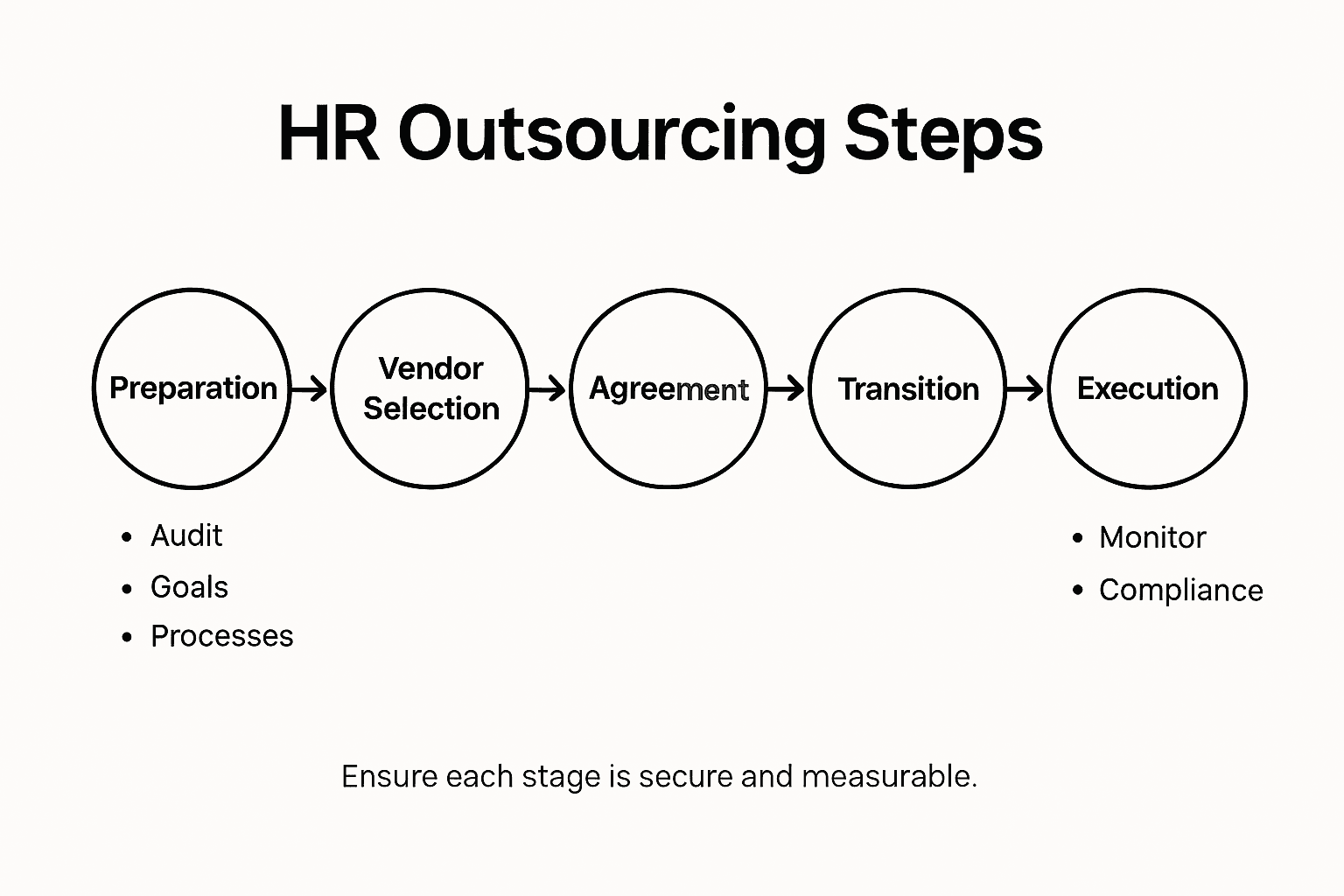
- Step 1: Define Your HR Outsourcing Goals
- Step 2: Assess and Document Current HR Processes
- Step 3: Select and Evaluate Outsourcing Partners
- Step 4: Transition HR Processes to the Provider
- Step 5: Verify Compliance and Monitor Performance
Quick Summary
| Important Insight | Explanation |
|---|---|
| 1. Define Clear Goals | Establish specific HR outsourcing goals that align with business objectives to enhance operational efficiency and expertise access. |
| 2. Assess Current HR Processes | Conduct a detailed audit of existing HR functions to identify inefficiencies and determine which processes to outsource. |
| 3. Evaluate Potential Partners | Thoroughly research HR outsourcing candidates, assessing their expertise, technological capabilities, and cultural fit for your organization. |
| 4. Manage Transition Effectively | Plan a structured transition strategy with clear communication and designated managers to ensure a smooth handover of HR functions. |
| 5. Monitor Compliance and Performance | Develop a framework for ongoing evaluation of compliance and performance through regular audits and metric tracking. |
Step 1: Define your HR Outsourcing Goals
Successful HR outsourcing begins with crystal-clear goal setting that aligns strategic business objectives with potential external partnerships. Your initial focus should be identifying precise outcomes that will transform your human resources operations and deliver tangible organizational value.
When defining HR outsourcing goals, organizations typically aim to improve operational efficiency and access specialized expertise. This means critically analyzing your current HR processes and determining which functions could benefit most from external management. Consider goals such as reducing administrative overhead, accessing global talent pools, cutting operational costs, or gaining advanced technological capabilities that your current internal team cannot provide. Key objectives might include streamlining recruitment processes, enhancing employee onboarding, implementing more sophisticated performance management systems, or developing more strategic workforce planning capabilities.
Developing these goals requires a comprehensive internal assessment. Conduct a thorough audit of your existing HR infrastructure, identifying pain points, inefficiencies, and areas where external expertise could provide significant improvements. Engage stakeholders across different departments to understand their specific HR-related challenges and expectations. This collaborative approach ensures that your outsourcing strategy addresses real organizational needs and creates measurable value.
Pro Tip: Create a prioritized scorecard that objectively ranks potential HR outsourcing goals based on expected impact, implementation difficulty, and alignment with broader organizational strategy.
Step 2: Assess and Document Current HR Processes
Successfully preparing for HR outsourcing requires a comprehensive audit of your existing human resources infrastructure, allowing you to pinpoint exactly which functions are prime candidates for external management. This critical step will help you understand your current operational landscape and identify opportunities for strategic improvement.

To effectively document your current HR processes, start by conducting a meticulous workflow analysis. Map out each HR function in detail, including recruitment, onboarding, performance management, training, payroll, and compliance reporting. Capture the nuances of how these processes currently operate, noting pain points, redundancies, and potential inefficiencies. Pay special attention to document management, tracking how HR information is currently stored, accessed, and secured. Create detailed process maps that illustrate each step, decision point, and interaction within your existing HR ecosystem.
A thorough assessment involves more than just documenting workflows. Engage stakeholders across departments to gather qualitative insights about current HR performance. Conduct interviews with team members who interact with HR processes regularly, soliciting their perspectives on challenges, bottlenecks, and areas where external expertise could drive meaningful improvements. Analyze workforce composition, skill gaps, and compliance risks to understand the full scope of your current HR capabilities. This comprehensive approach ensures that your outsourcing strategy is grounded in real organizational needs and potential transformation opportunities.
Pro Tip: Use visual process mapping tools and create a standardized template that captures process steps, responsible parties, current technologies, and potential optimization opportunities.
Here’s a summary of key HR processes frequently evaluated for outsourcing and their strategic impact:
| HR Process | Potential Outsourcing Benefits | Strategic Impact |
|---|---|---|
| Recruitment | Faster hiring, broader talent access | Supports growth, reduces bottlenecks |
| Payroll | Streamlined payments, compliance | Reduces errors, saves costs |
| Onboarding | Consistent training, automated setup | Accelerates productivity |
| Performance Management | Expert system implementation | Enhances accountability |
| Compliance Reporting | Improved risk mitigation | Prevents costly violations |
Step 3: Select and Evaluate Outsourcing Partners
Selecting the right HR outsourcing partner is a critical decision that can dramatically impact your organization’s operational effectiveness and strategic capabilities. This step requires a systematic and comprehensive approach to ensure you choose a partner who not only meets your current needs but can also support your long-term business objectives.
Conducting thorough due diligence on potential HR outsourcing partners involves a multifaceted evaluation process. Begin by examining each potential partner’s industry expertise, technological capabilities, and service models. Assess their track record of compliance, data security protocols, and ability to customize services to your specific organizational requirements. Look beyond surface-level marketing materials and dig deep into their operational capabilities. Request detailed case studies, client references, and evidence of successful implementations in your industry or similar organizational contexts.
Beyond technical capabilities, prioritize partners who demonstrate strong cultural alignment and communication practices. Evaluate their responsiveness, transparency, and commitment to understanding your unique business challenges. Conduct in-depth interviews, request comprehensive proposals, and consider arranging site visits or pilot programs to gain firsthand insights into their operational approach. Pay close attention to their technological infrastructure, compliance knowledge, and ability to scale services as your organization grows. Your goal is to identify a partner who can seamlessly integrate with your existing processes while bringing innovative solutions that drive strategic value.
Pro Tip: Create a weighted scoring matrix that objectively evaluates potential partners across key dimensions such as technological capability, industry expertise, cultural fit, and cost effectiveness.
Below is a comparison of key criteria to consider when evaluating HR outsourcing partners:
| Evaluation Factor | Why It Matters | What to Look For |
|---|---|---|
| Industry Expertise | Ensures relevant solutions | Proven track record, references |
| Technological Capability | Supports integration and growth | Modern platforms, scalability |
| Cultural Alignment | Aids collaboration and adoption | Communication style, responsiveness |
| Compliance Know-how | Reduces legal and data risks | Strong security, audit history |
Step 4: Transition HR Processes to the Provider
Transitioning your HR processes to an external provider represents a critical moment that will define the success of your outsourcing strategy. This phase demands meticulous planning, clear communication, and a structured approach to ensure a smooth transfer of responsibilities without disrupting your organizational operations.
Executing a comprehensive HR function transition involves several strategic steps. Begin by developing a detailed migration plan that outlines every process, data point, and workflow to be transferred. Create a comprehensive inventory of existing HR documents, digital records, and operational protocols. Schedule multiple collaborative working sessions with your new outsourcing partner to map out precise transfer mechanisms, ensuring no critical information or institutional knowledge is lost during the transition. Establish clear communication channels and designate specific transition managers from both your internal team and the outsourcing provider who will oversee the entire process.
Effective transition management requires proactive change leadership and employee engagement. Develop a robust communication strategy that transparently explains the outsourcing rationale, expected benefits, and potential impacts to your workforce. Conduct comprehensive training sessions that help your internal staff understand how the new partnership will function and address potential concerns about job security or process changes. Implement a phased transition approach that allows for incremental knowledge transfer, system integration, and performance validation. This approach minimizes disruption and provides opportunities for real-time adjustments, ensuring that your HR functions continue to operate smoothly throughout the transition period.
Pro Tip: Create a transition dashboard that tracks key migration metrics, documents handover progress, and provides real-time visibility into the outsourcing implementation process.
Step 5: Verify Compliance and Monitor Performance
Verifying compliance and monitoring performance are critical final steps in ensuring your HR outsourcing strategy delivers sustained value and meets organizational standards. These ongoing processes will help you validate the effectiveness of your partnership and proactively address any emerging challenges or opportunities for optimization.
Establish a comprehensive performance monitoring framework that includes quantitative and qualitative metrics specifically tailored to your organization’s unique HR requirements. Create a detailed scorecard that tracks key performance indicators such as recruitment efficiency, employee satisfaction, process turnaround times, compliance adherence, and overall service quality. Schedule regular performance review meetings with your outsourcing partner, using these metrics to conduct objective assessments. Implement a transparent reporting mechanism that provides real-time insights into HR operational performance, enabling swift interventions and continuous improvement.
Developing a robust compliance verification process requires a multilayered approach. Conduct periodic comprehensive audits that assess the outsourcing provider’s adherence to regulatory requirements, data protection standards, and internal governance protocols. Utilize both internal review mechanisms and potentially independent third-party compliance assessments to ensure comprehensive oversight. Create a structured feedback loop that allows for immediate communication and resolution of any identified compliance gaps or performance discrepancies. This proactive approach not only mitigates potential risks but also fosters a collaborative partnership focused on continuous enhancement and operational excellence.
Pro Tip: Develop an automated dashboard that integrates real-time compliance and performance data, allowing for immediate visibility and rapid decision making.
Optimize Your HR Outsourcing with Expert Support from Storsen Digital
Outsourcing HR processes can unlock efficiency and bring expert capabilities to your business but managing the transition and ensuring compliance can feel overwhelming. You may be facing challenges like defining clear outsourcing goals, assessing current workflows, and selecting a partner that fits your company culture and long-term vision. At Storsen Digital, we understand the critical importance of seamless transitions, rigorous compliance monitoring, and performance tracking to help you achieve measurable value and reduce operational risks.
Why partner with us
- Tailored solutions in HR outsourcing, nearshoring, and managed BPO that align with your strategic objectives
- Proven expertise supporting medium and large enterprises across Europe with scalable talent acquisition and operational management
- Transparent communication and collaborative onboarding that keep your teams engaged and productive throughout the transition
Discover how we can help you overcome the complexities outlined in “How to Outsource HR Processes Effectively and Securely” by visiting our contact page.

Ready to transform your HR operations and secure a reliable outsourcing partner who prioritizes compliance and performance? Connect with Storsen Digital today on our Contact page to discuss your unique needs and start building a powerful, scalable HR function that drives your business forward.
Frequently Asked Questions
What are the first steps to outsource HR processes effectively?
To outsource HR processes effectively, start by defining your HR outsourcing goals that align with your business objectives. Conduct an audit of your current HR processes to identify inefficiencies and areas for improvement. Prioritize your findings to ensure strategic alignment.
How can I assess my current HR processes before outsourcing?
You can assess your current HR processes by performing a thorough workflow analysis that documents each function, such as recruitment and performance management. Map out the current operations, noting pain points and inefficiencies, and engage stakeholders for their insights.
What criteria should I use to evaluate HR outsourcing partners?
Evaluate potential HR outsourcing partners based on their industry expertise, technological capabilities, and cultural alignment with your organization. Create a scoring matrix to objectively assess these factors alongside compliance knowledge and cost-effectiveness.
How should I manage the transition of HR processes to an outsourcing provider?
To manage the transition, develop a detailed migration plan that outlines all processes and data to be transferred. Schedule collaborative sessions with the outsourcing partner to ensure a smooth handover and designate transition managers to oversee the process.
What metrics should I monitor to ensure compliance and performance after outsourcing?
Monitor key performance indicators such as recruitment efficiency, employee satisfaction, and compliance adherence to evaluate your outsourcing partner’s effectiveness. Establish a scorecard to track these metrics and schedule regular review meetings for ongoing assessment.
How can I prevent data breaches when outsourcing HR processes?
Prevent data breaches by thoroughly vetting your outsourcing partner’s data security protocols and compliance measures. Conduct periodic audits and ensure a comprehensive agreement outlining security responsibilities is in place before the partnership begins.


