


Most American companies find that nearly 60 percent of operational costs can be trimmed with smart outsourcing. As competitive pressures rise, defining exact business goals and pinpointing what to outsource has become a critical step for growing organizations. This guide breaks down how American businesses can transform efficiency by mapping priorities, choosing the right partners, and building resilient outsourcing strategies designed for real results.
Table of Contents
- Step 1: Define Business Goals And Identify Outsourcing Needs
- Step 2: Select The Right Bpo Partner And Region
- Step 3: Establish Operational Frameworks And Compliance
- Step 4: Build And Onboard Your Dedicated Bpo Team
- Step 5: Monitor Performance And Optimize Processes
Quick Summary
| Key Insight | Explanation |
|---|---|
| 1. Define clear business goals | Begin with a thorough assessment of current operations to identify outsourcing needs. Align goals with potential outsourcing solutions. |
| 2. Choose the right BPO partner | Evaluate potential partners based on experience, service quality, and regional factors like talent and cost effectiveness. |
| 3. Establish operational frameworks | Create detailed service level agreements (SLAs) and compliance strategies to align internal standards with your BPO partner’s capabilities. |
| 4. Develop a dedicated team | Prioritize cultural fit and technical skills in recruitment, and implement a robust onboarding program for seamless integration. |
| 5. Monitor and optimize processes | Regularly assess performance using KPIs, encourage feedback, and implement continuous improvement to enhance operational efficiency. |
Step 1: Define business goals and identify outsourcing needs
Defining your business goals and precisely identifying outsourcing needs represents the foundational stage of building a successful Business Process Outsourcing (BPO) strategy. This critical initial phase helps organizations align their operational requirements with potential outsourcing solutions.
The process begins with conducting a comprehensive internal assessment of your current business operations. You will want to analyze existing workflows, identify potential bottlenecks, and determine which specific business processes could benefit from external management. Business analysis involves identifying business needs and determining strategic solutions that might include process improvements, systems development, or organizational restructuring.
Start by mapping out your organization’s core functions and evaluate each department’s performance. Look for areas with high operational costs, repetitive tasks, or processes that require specialized skills but do not constitute your primary business value. Typical candidates for outsourcing include customer support, human resources administration, accounting functions, IT services, and data management. Create a detailed inventory of these potential outsourcing candidates, noting specific pain points, resource requirements, and expected outcomes.
While developing your outsourcing strategy, consider both quantitative and qualitative metrics. Quantitative metrics might include cost reduction percentages, productivity improvements, and efficiency gains. Qualitative metrics could involve enhanced service quality, access to specialized talent, and the ability to focus internal resources on core business objectives.
Here is a summary of key metrics for evaluating outsourcing opportunities:
| Metric Type | Example Metrics | Business Impact |
|---|---|---|
| Quantitative | Cost savings, efficiency gains | Lower expenses, higher operational effectiveness |
| Qualitative | Service quality, talent access | Improved outcomes, focus on core activities |
Pro tip: Create a prioritized matrix of potential outsourcing opportunities, ranking them by potential impact, complexity, and strategic importance to ensure you focus on the most transformative opportunities first.
Step 2: Select the right BPO partner and region
Selecting the right Business Process Outsourcing (BPO) partner and strategic region is crucial for establishing scalable and efficient operations. This step requires careful evaluation of potential providers across multiple dimensions to ensure alignment with your organization’s specific needs and long term growth objectives.
Begin by conducting comprehensive due diligence on potential BPO partners. When choosing a BPO company, carefully evaluate their experience, quality of work, infrastructure, and range of services to determine their capability to meet your organizational requirements. Look beyond surface level metrics and examine their track record of delivering consistent results for businesses similar to yours.
Consider multiple factors when assessing potential regions for your BPO partnership. Key evaluation criteria should include talent pool quality, language proficiency, technological infrastructure, geopolitical stability, cost effectiveness, and cultural compatibility. Western Balkan countries like Bosnia and Herzegovina offer unique advantages such as high skilled workforces, competitive pricing, strong English language capabilities, and cultural alignment with European and American business practices.

Below is a comparison of regional factors influencing BPO partner selection:
| Factor | Western Balkans Example | Southeast Asia Example |
|---|---|---|
| Talent Pool Quality | Highly educated, multilingual | Large, diverse, cost-focused |
| Cultural Compatibility | Strong EU/US alignment | Varies; less Western alignment |
| Infrastructure | Modern, growing capabilities | Established, mature options |
| Cost Effectiveness | Competitive, emerging | Highly competitive, established |
Develop a structured evaluation framework that allows you to score potential BPO partners objectively. This framework should include weighted criteria such as technical expertise, scalability, communication capabilities, data security protocols, compliance standards, and demonstrated success in your specific industry vertical. Request comprehensive proposals, conduct thorough reference checks, and consider arranging site visits or pilot projects to validate potential partnerships.
Pro tip: Create a comprehensive scoring matrix with multiple evaluation dimensions, allowing you to compare potential BPO partners systematically and make data driven partnership decisions.
Step 3: Establish operational frameworks and compliance
Establishing robust operational frameworks and ensuring comprehensive compliance represents a critical phase in successful Business Process Outsourcing (BPO) implementation. This step involves creating structured processes that align your organization’s standards with your chosen BPO partner’s operational capabilities.
When selecting your BPO provider, carefully assess their technology, innovation, and security measures to ensure robust compliance with employment laws and data protection protocols. Develop a detailed framework that encompasses multiple dimensions of operational governance, including performance metrics, quality control standards, communication protocols, and legal compliance requirements.
Begin by documenting comprehensive service level agreements (SLAs) that clearly define expected performance indicators, reporting mechanisms, and accountability standards. These agreements should cover key areas such as response times, error rates, data accuracy, confidentiality requirements, and key performance indicators (KPIs) specific to your industry and organizational needs. Include precise mechanisms for monitoring and enforcing these standards, with clearly defined consequences for non compliance.
Implement a multilayered compliance strategy that addresses technological, legal, and operational risk management. This should include rigorous data protection protocols, comprehensive cybersecurity measures, regular third party audits, and continuous training programs for both your internal team and the BPO partner. Develop a structured approach to managing intellectual property rights, ensuring transparent communication channels, and maintaining alignment with international regulatory standards relevant to your industry.
Pro tip: Create a dynamic compliance dashboard that provides real time visibility into operational performance, enabling proactive management and immediate identification of potential risk areas or performance gaps.
Step 4: Build and onboard your dedicated BPO team
Building and onboarding a dedicated BPO team represents a critical milestone in establishing scalable and efficient business operations. This phase requires strategic recruitment, comprehensive training, and thoughtful integration to ensure your external team becomes a seamless extension of your organizational capabilities.
When developing your BPO team, focus on creating a sound business proposal that aligns with your technology infrastructure and meets both current and future operational requirements. Start by developing a detailed recruitment strategy that goes beyond traditional hiring practices, emphasizing cultural fit, technical competence, and adaptability.
Design a comprehensive onboarding program that systematically introduces your organizational culture, specific operational protocols, quality standards, and performance expectations. This program should include multiple engagement layers such as initial training modules, shadowing experienced team members, hands on practical sessions, and periodic performance assessments. Create clear documentation that outlines role specific responsibilities, communication channels, escalation procedures, and key performance indicators that will guide team members toward successful integration.
Establish robust communication infrastructure that facilitates seamless interaction between your internal teams and the BPO team. Implement collaborative technologies, scheduling regular video conferences, and create shared digital workspaces that enable real time collaboration. Develop a continuous feedback mechanism that allows for ongoing performance optimization, skill development, and cultural alignment.
Pro tip: Develop a comprehensive onboarding playbook that serves as a living document, allowing continuous refinement of your team integration process and capturing institutional knowledge for future recruitment efforts.
Step 5: Monitor performance and optimize processes
Monitoring performance and continuously optimizing processes are essential strategies for maintaining the effectiveness and efficiency of your Business Process Outsourcing (BPO) operations. This phase requires a systematic approach to tracking key performance indicators, identifying improvement opportunities, and implementing data driven enhancements.
Establish a comprehensive performance monitoring framework that includes quantitative and qualitative metrics across multiple dimensions. Define clear key performance indicators (KPIs) that align with your organizational objectives, such as productivity rates, error reduction percentages, customer satisfaction scores, and operational cost efficiency. Implement advanced analytics tools that provide real time insights into team performance, enabling you to track progress, identify potential bottlenecks, and make informed strategic decisions.
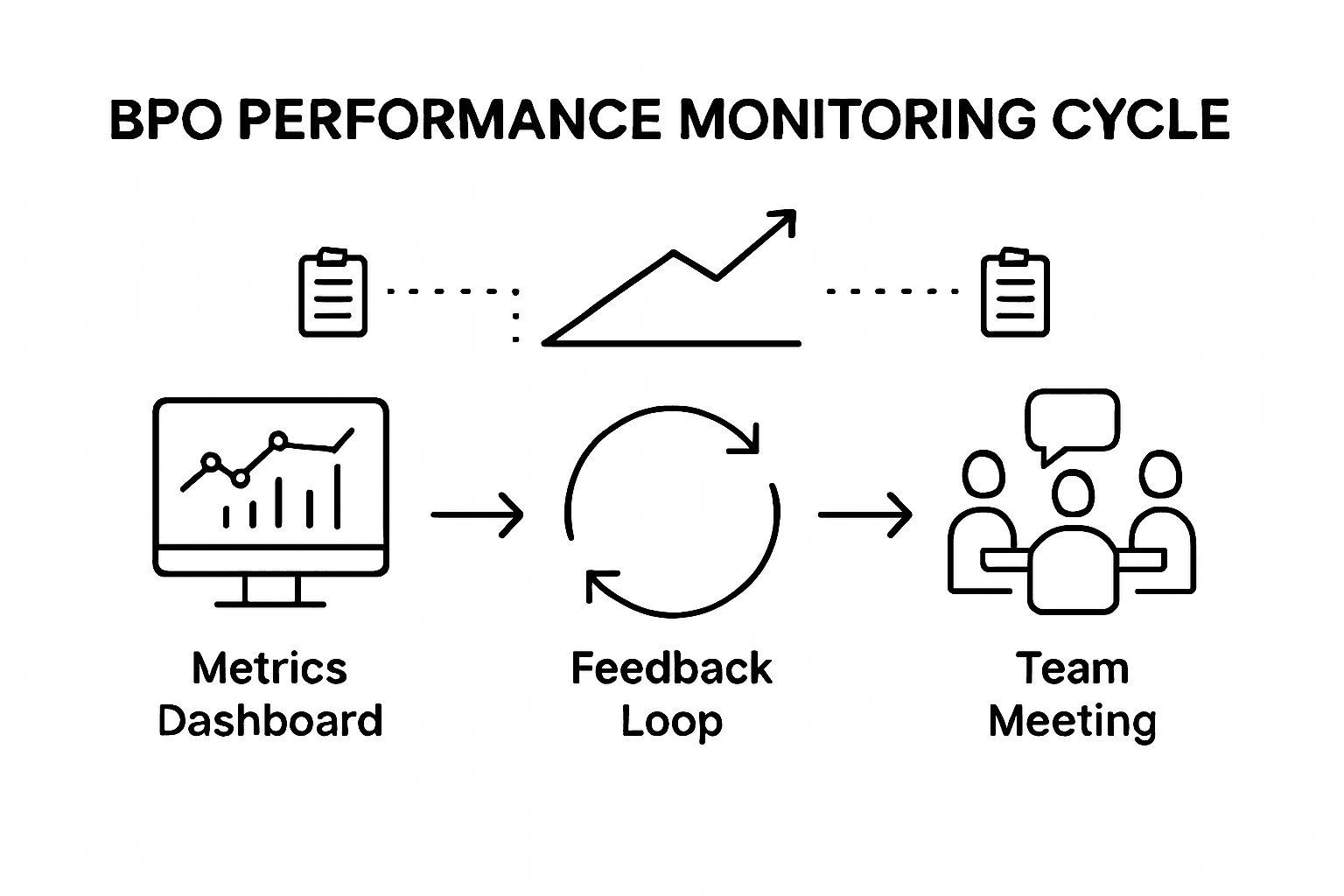
Create a structured feedback and continuous improvement mechanism that encourages ongoing learning and adaptation. Schedule regular performance review sessions with your BPO team, providing constructive feedback, recognizing achievements, and collaboratively developing strategies for process enhancement. Develop a transparent performance improvement plan that includes specific goals, actionable recommendations, and clear timelines for implementation. Leverage data analytics to identify patterns, trends, and potential areas of optimization that can drive incremental and transformative improvements in operational efficiency.
Develop a culture of continuous learning and adaptability within your BPO team. Implement ongoing training programs, skill development initiatives, and knowledge sharing platforms that empower team members to enhance their capabilities and contribute innovative solutions. Encourage a proactive approach to problem solving, where team members are motivated to identify and propose process improvements, creating a dynamic and responsive operational environment.
Pro tip: Implement a quarterly performance review cycle with structured evaluation metrics, creating a systematic approach to tracking progress, identifying improvement opportunities, and maintaining continuous organizational growth.
Unlock Scalable BPO Success with StorsenDigital
Setting up Business Process Outsourcing for scalable operations involves overcoming key challenges like selecting the right partner, ensuring operational compliance, and building a dedicated team aligned with your company goals. If you want to avoid costly mistakes and achieve measurable efficiency gains while tapping into Europe’s top talent pools, expert guidance can make all the difference. Leveraging proven frameworks for partner evaluation and performance monitoring will empower your business to thrive.

Take control of your BPO journey today by partnering with StorsenDigital. Our tailored solutions in talent recruitment, managed services, and strategic consulting are built to help you realize your outsourcing goals quickly and sustainably. Do not wait to optimize operations and reduce costs. Connect with our team now at Contact StorsenDigital to start your transformation. Explore how our expertise in nearshoring and digital infrastructure can elevate your scalable BPO setup. Begin your growth path with confidence.
Frequently Asked Questions
What are the first steps in setting up a Business Process Outsourcing (BPO) strategy?
Begin by defining your business goals and identifying your outsourcing needs. Conduct a comprehensive assessment of your current operations, looking for processes that can be optimized or that require specialized skills.
How can I select the right BPO partner for my organization?
To choose the right BPO partner, conduct thorough due diligence on potential providers. Evaluate their experience, quality of work, and infrastructure, and develop a structured scoring matrix to objectively compare various partners based on your specific criteria.
What should I include in a service level agreement (SLA) with my BPO provider?
An SLA should clearly define expected performance indicators, accountability standards, and reporting mechanisms. Include metrics such as response times, error rates, and confidentiality requirements to ensure alignment with your operational goals.
How do I monitor the performance of my BPO team?
Establish a comprehensive performance monitoring framework that includes both quantitative and qualitative metrics. Define key performance indicators (KPIs) related to productivity, error reduction, and customer satisfaction, and conduct regular performance reviews to encourage continuous improvement.
What should my onboarding process for the BPO team include?
Your onboarding process should systematically introduce your organizational culture, operational protocols, and performance expectations. Incorporate training modules, hands-on sessions, and clear documentation outlining roles and key performance indicators to ensure a smooth integration.
How can I ensure compliance in my BPO operations?
Implement a multilayered compliance strategy that includes data protection protocols and cybersecurity measures. Regularly conduct third-party audits and provide continuous training to both your internal and BPO teams to maintain compliance with all relevant regulations.


