


Nearly 60 percent of European businesses are now turning to nearshore strategies to drive growth and improve efficiency. The choices you make during this process set the stage for your entire expansion. From defining clear objectives to assessing talent and keeping operations on track, each decision carries real weight. This guide walks you through the essential steps for building a resilient nearshore presence and avoiding costly mistakes along the way.
Table of Contents
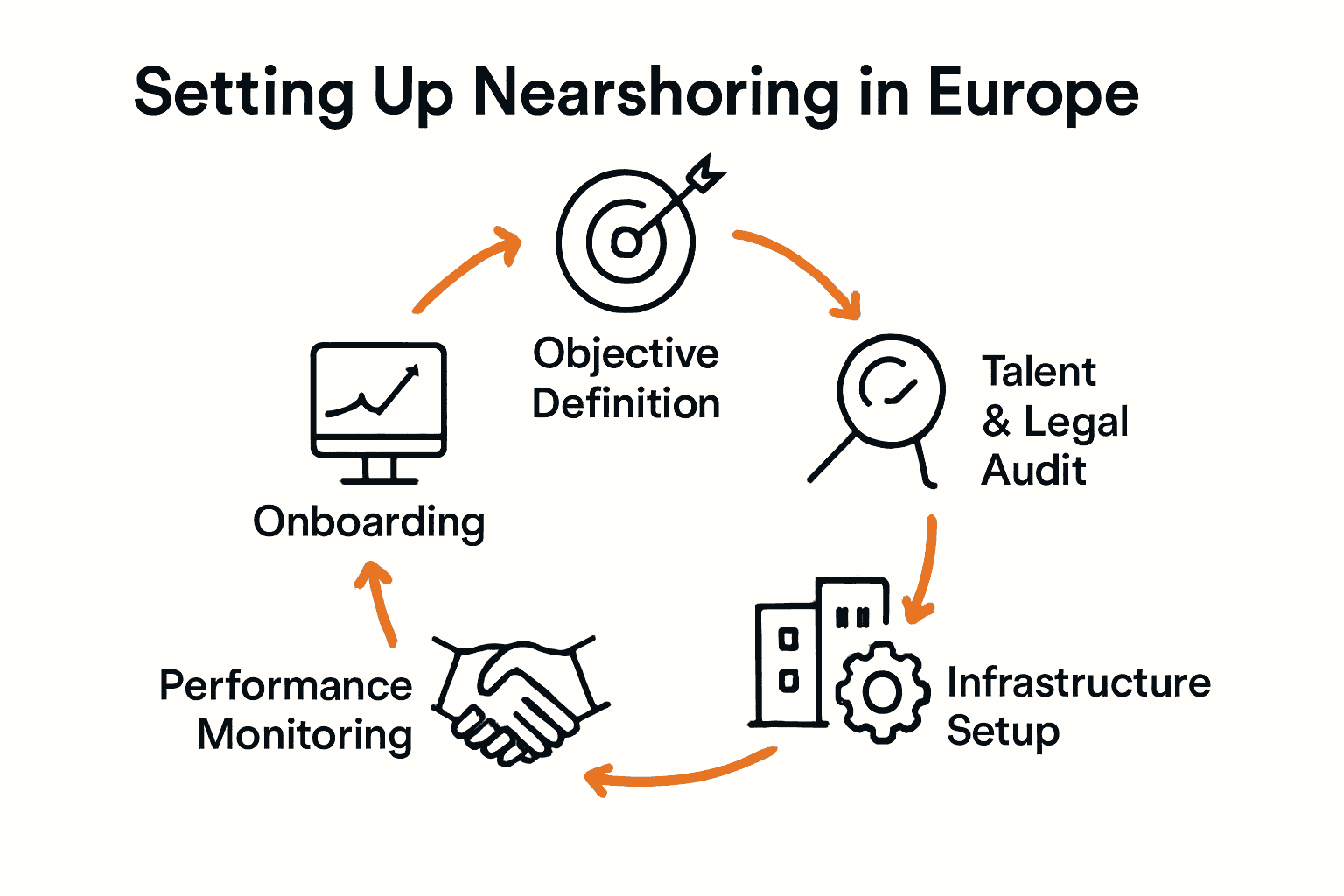
- Step 1: Define Business Objectives And Select A Nearshore Location
- Step 2: Assess Talent Availability And Legal Frameworks
- Step 3: Establish Infrastructure And Secure Partnerships
- Step 4: Build And Onboard Your Nearshore Team
- Step 5: Monitor Performance And Optimize Operations
Quick Summary
| Key Point | Explanation |
|---|---|
| 1. Define business objectives clearly | Articulate specific needs such as talent acquisition, scalability, and cost reduction for effective nearshore planning. |
| 2. Assess talent and legal frameworks | Conduct a skills audit to match local talent availability and understand local employment regulations for successful hiring. |
| 3. Establish necessary infrastructure | Identify required technology and office space to ensure smooth operations and reliable communication in the nearshore location. |
| 4. Develop a strategic onboarding process | Create detailed job descriptions and a comprehensive orientation program to facilitate team integration and cultural alignment. |
| 5. Monitor performance actively | Implement systems to track key performance metrics and encourage continuous improvement for maintaining operational efficiency. |
Step 1: Define business objectives and select a nearshore location
Defining your business objectives and selecting the right nearshore location represents the critical foundation for successful European expansion. According to arxiv.org, an automated site selection process should meticulously analyze factors that align with your strategic goals.
Start by clearly articulating your specific business needs. Are you seeking talent in software development, customer support, or specialized technical roles? Your objectives might include reducing operational costs, accessing specialized skills, improving scalability, or accelerating product development timelines. As research from arxiv.org indicates, geographical proximity and technological compatibility play significant roles in successful cross region collaborations.
When evaluating potential nearshore locations, consider these strategic factors:
- Technical talent pool depth and quality
- Language proficiency and cultural alignment
- Time zone compatibility with your primary operations
- Cost structures and economic stability
- Technology infrastructure and digital readiness
- Legal and regulatory environment
Consider conducting detailed research or working with specialized nearshoring consultants who can provide nuanced insights into different European markets. How to Optimize Outsourcing Costs can offer additional guidance on making financially sound decisions during this critical selection phase.
Your next step will involve creating a comprehensive shortlist of potential locations and performing deeper due diligence to validate your initial research and strategic objectives.
Step 2: Assess talent availability and legal frameworks
Assessing talent availability and understanding the legal frameworks are critical steps in establishing a successful nearshore operation. According to European Parliament, identifying and matching talent with specific employer needs is essential for addressing labor market challenges.
Begin by conducting a comprehensive skills audit that maps your specific talent requirements against the available workforce in potential nearshore locations. Research from the Migration Partnership Facility highlights the importance of understanding local talent attraction strategies and legal frameworks that support international workforce integration.
Key areas to evaluate during your talent and legal assessment include:
- Technical skill availability in your industry
- Educational background and professional certifications
- Local employment regulations and work permit requirements
- Intellectual property protection standards
- Labor contract frameworks
- Taxation implications for international hiring
Pay special attention to the legal nuances of employment contracts, data protection regulations, and compliance requirements specific to each potential nearshore country. Consider engaging local legal experts who can provide detailed insights into employment laws and talent acquisition regulations.
What Is IT Outsourcing can provide additional context on navigating these complex considerations. Your next step will involve creating a detailed talent acquisition strategy that aligns with your identified legal and workforce parameters.

Step 3: Establish infrastructure and secure partnerships
Establishing robust infrastructure and strategic partnerships forms the backbone of a successful nearshoring strategy. While no specific research data is available for this section, the process requires careful planning and deliberate execution to create a solid operational foundation.
Begin by identifying the physical and technological infrastructure requirements for your nearshore operation. This includes selecting appropriate office spaces, ensuring reliable internet connectivity, setting up secure communication channels, and implementing necessary hardware and software systems. Focus on creating an environment that supports seamless collaboration between your primary business location and the nearshore team.
Key considerations for infrastructure and partnership development include:
- Identifying local technology service providers
- Establishing reliable telecommunications infrastructure
- Creating secure data transfer and communication protocols
- Developing robust cybersecurity measures
- Building relationships with local business support services
- Establishing clear communication channels and reporting structures
Prioritize building strong local partnerships that can provide ongoing support and guidance.
This might include connections with local chambers of commerce, technology parks, business associations, and professional networking groups. These relationships can offer valuable insights into the local business landscape and help smooth your operational integration.
How to Optimize Outsourcing Costs can provide additional strategies for managing your infrastructure investments efficiently. Your next step will involve developing detailed operational protocols and onboarding processes for your new nearshore team.
Step 4: Build and onboard your nearshore team
Building and onboarding a successful nearshore team requires strategic planning and thoughtful integration. According to thinkbeyond.cloud, cultural alignment and language proficiency are critical factors in creating an effective collaborative workforce.
Start your recruitment process by developing comprehensive job descriptions that clearly outline role expectations, technical requirements, and cultural fit. As insights from solulab.com suggest, legal compliance and thorough vetting are essential when establishing your nearshore team. Implement a multi stage recruitment process that includes:
- Detailed technical skill assessments
- Language proficiency evaluations
- Cultural compatibility interviews
- Background and reference checks
- Specialized skills testing relevant to your industry
Design an onboarding program that goes beyond traditional training methods. Create a comprehensive orientation that introduces your company culture, communication protocols, project methodologies, and performance expectations. Develop mentorship programs that pair new nearshore team members with experienced team leads to facilitate smoother integration and knowledge transfer.
What Is IT Outsourcing can provide additional context on building effective remote teams. Your next step will involve establishing clear performance metrics and creating ongoing professional development strategies for your new nearshore workforce.
Step 5: Monitor performance and optimize operations
Monitoring performance and continuously optimizing operations are critical for maintaining the effectiveness of your nearshore strategy. According to the International Labour Organization, establishing robust cooperation frameworks is essential to prevent talent drainage and ensure sustainable partnerships.
Implement a comprehensive performance monitoring system that tracks both quantitative and qualitative metrics. The OECD recommends developing a centralized platform to enhance transparency and efficiency in talent management. Your monitoring approach should include:
- Key performance indicators (KPIs) aligned with business objectives
- Regular performance reviews and feedback sessions
- Productivity and quality assessment metrics
- Individual and team performance tracking
- Skills development and learning progress evaluation
- Client satisfaction and project outcome measurements
Create a continuous improvement framework that allows for real time adjustments and strategic refinements. This means establishing open communication channels, conducting quarterly performance reviews, and developing personalized professional development plans for team members.
How to Optimize Outsourcing Costs can provide additional insights into maintaining operational efficiency. Your final step will involve long term strategic planning and potential expansion of your nearshore operations.
Unlock Seamless European Expansion with Expert Nearshoring Support
Expanding your business across Europe brings exciting opportunities but also complex challenges like selecting the right nearshore location, navigating legal frameworks, and building a skilled, aligned team. If you feel overwhelmed by these critical steps that can make or break your expansion success you are not alone. Companies must balance cost optimization with quality talent acquisition while ensuring robust infrastructure and ongoing performance monitoring for sustainable growth.
At StorsenDigital.com, we specialize in guiding businesses through every phase of their nearshoring journey. From strategic consulting on site selection to expert talent recruitment, office setup, and managed services in HR, finance, IT, and customer support, we provide tailored solutions built for your goals. Let us help you reduce operational risks and accelerate your European footprint with a proven partner who understands your challenges.

Ready to transform your nearshoring strategy into measurable business growth Visit StorsenDigital.com today to explore how our outsourcing and BPO services can support your European expansion. Discover actionable insights on How to Optimize Outsourcing Costs and deepen your understanding of What Is IT Outsourcing. Take the decisive step now toward scalable success with nearshoring by partnering with experts who deliver results.
Frequently Asked Questions
What are the key steps to define business objectives for nearshoring?
To define business objectives for nearshoring, clearly identify what you seek to achieve, such as cost reduction, talent acquisition, or faster product development. Start by listing specific needs and prioritize based on your overall strategy.
How can I assess talent availability in potential nearshore locations?
Assessing talent availability involves conducting a skills audit that aligns your needs with the local workforce. Research the educational background and certifications of candidates in your chosen locations to ensure a good match with your requirements.
What legal frameworks should I be aware of when setting up nearshoring?
Understanding local employment regulations, work permit requirements, and intellectual property protection standards is crucial. Evaluate these legal frameworks in each potential nearshore location to ensure compliance and smooth integration of your workforce.
How do I establish effective infrastructure for my nearshore team?
Establishing effective infrastructure includes selecting appropriate office spaces, ensuring high-speed internet, and implementing secure communication systems. Begin by creating a checklist of your technological and physical needs to ensure seamless operations between your primary location and the nearshore team.
What are key metrics to monitor the performance of a nearshore team?
Key performance indicators (KPIs) such as productivity, quality of work, and client satisfaction are essential for monitoring a nearshore team’s performance.
 Regularly review these metrics and provide feedback to facilitate continuous improvement and alignment with business goals.
How can I effectively onboard my nearshore team?
To effectively onboard a nearshore team, create a comprehensive orientation program that includes training on your company culture and processes. Pair new members with experienced team leads for mentorship to enhance integration and knowledge sharing.


