


Most american companies looking to expand operations are discovering that nearshoring can save up to 30 percent on costs compared to traditional offshore models. The challenge is not just about moving jobs closer to home. It is about making smart choices that shape long term growth and resilience. By following a strategic approach, you will learn how to assess your organization’s readiness, select the right locations, and build strong partnerships to unlock lasting value.
Table of Contents
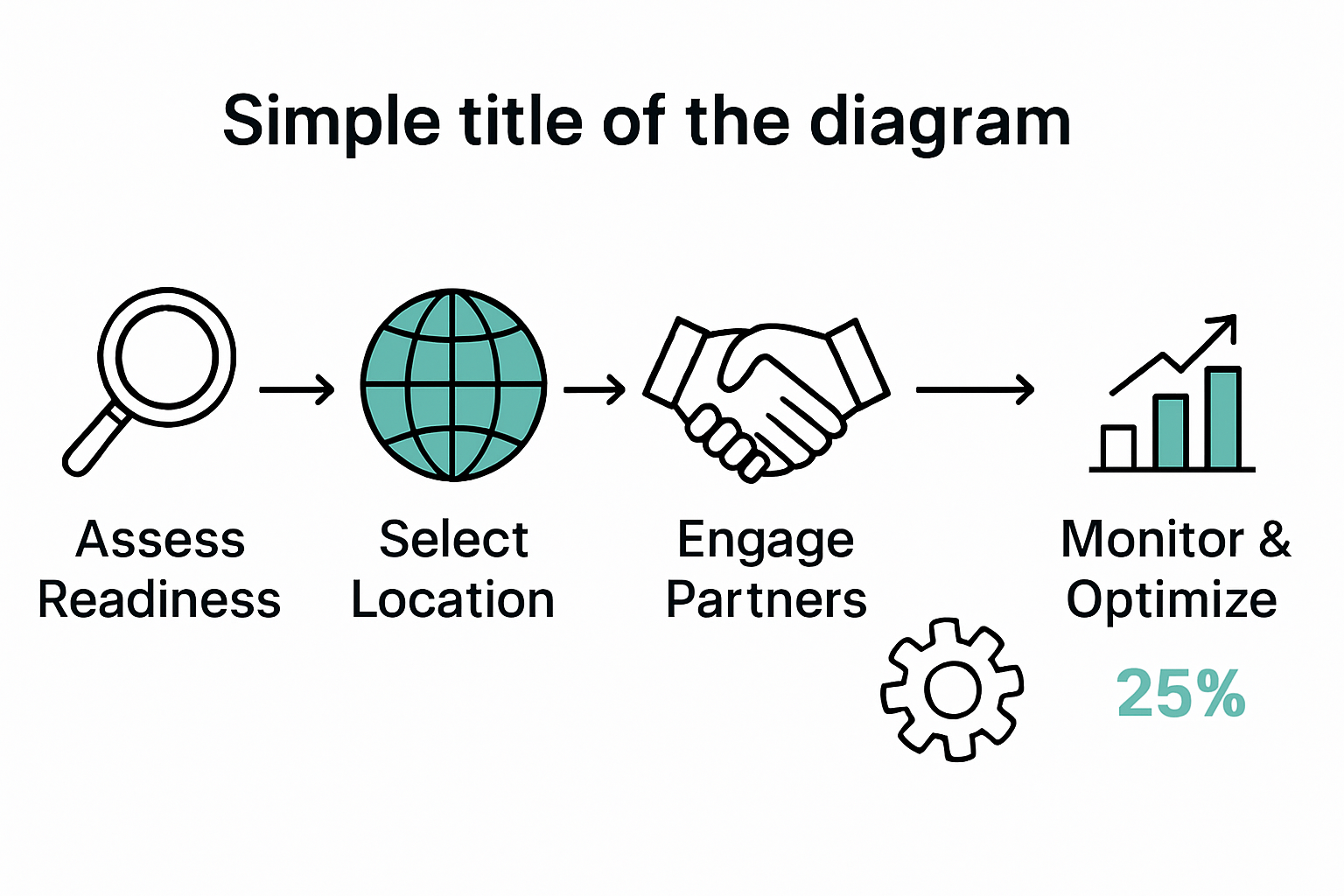
- Step 1: Assess Business Needs And Readiness
- Step 2: Select Optimal Nearshoring Locations
- Step 3: Engage Nearshoring Partners For Scalability
- Step 4: Implement Tailored Operational Solutions
- Step 5: Monitor Progress And Optimize Costs
Quick Summary
| Key Takeaway | Explanation |
|---|---|
| 1. Assess Organizational Readiness | Evaluate current operational capabilities to identify gaps and opportunities before starting your nearshoring strategy. |
| 2. Select Suitable Nearshoring Locations | Use a weighted scoring matrix to choose locations based on workforce skills, economic stability, and technological advantages. |
| 3. Engage Effective Nearshoring Partners | Build strong partnerships with clear communication and shared objectives to support long-term growth and scalability. |
| 4. Implement Tailored Operational Solutions | Develop flexible operational frameworks that adapt to local strengths while maintaining quality standards during implementation. |
| 5. Monitor Progress for Cost Optimization | Establish regular quality audits and performance metrics to continuously improve operations and manage costs effectively. |
Step 1: Assess Business Needs and Readiness
Understanding your organization’s readiness for nearshoring is a critical first step in developing a strategic workforce expansion strategy. This assessment will help you identify potential gaps, opportunities, and infrastructure requirements before launching your nearshoring initiative.
Begin by conducting a comprehensive internal audit that evaluates your current operational capabilities, workforce skills, and technological infrastructure. Workforce development strategies play a crucial role in attracting and sustaining nearshoring opportunities. Your evaluation should include detailed analysis of key areas such as human capital availability, technological readiness, budget constraints, and scalability potential.
Specifically, focus on examining several core dimensions of organizational preparedness: talent pool requirements, technological compatibility, financial resources, and strategic alignment. Look beyond surface level metrics and dig into nuanced aspects like team communication protocols, potential skill transfers, and long term integration strategies. When assessing local infrastructure conditions, pay special attention to energy supply stability, security environments, and technological connectivity.
Pro Tip: Create a structured scorecard that objectively measures your organization’s nearshoring readiness across multiple dimensions.
The outcome of this assessment will provide a clear roadmap for your nearshoring strategy, highlighting areas of strength and potential improvement. By thoroughly understanding your current capabilities and limitations, you can design a more targeted and effective workforce expansion approach.
Step 2: Select Optimal Nearshoring Locations
Selecting the right nearshoring location is a strategic decision that can significantly impact your organization’s operational efficiency and cost effectiveness. This step requires a nuanced approach that goes beyond simple geographical considerations.
Start by conducting a comprehensive evaluation of potential nearshoring destinations. Strategic location analysis involves examining multiple critical factors that extend well beyond basic cost comparisons. Evaluate potential regions through a multifaceted lens that includes workforce skills, technological infrastructure, economic stability, and productivity enhancement opportunities.
Key considerations should include talent pool quality, education system alignment with industry needs, language compatibility, time zone proximity, cultural similarities, and legal frameworks supporting international business operations. Pay special attention to emerging markets with robust technology ecosystems and skilled professional networks. Analyze the total cost of ownership beyond simple labor rates, factoring in technological infrastructure, training requirements, communication efficiency, and potential long term scalability.
Pro Tip: Create a weighted scoring matrix that objectively ranks potential nearshoring locations across multiple dimensions, allowing for data driven decision making.
Your location selection process should ultimately balance technical capabilities, economic advantages, and strategic alignment with your organization’s long term growth objectives. By approaching this step methodically, you can identify a nearshoring destination that offers not just cost savings, but meaningful competitive advantages.
Step 3: Engage Nearshoring Partners for Scalability
Engaging the right nearshoring partners is a critical step in building a successful and scalable operational strategy. Your goal is to establish a collaborative relationship that supports long term growth and seamless integration of external talent and resources.

Successful nearshoring partnerships require a strategic approach that prioritizes clear communication, shared objectives, and mutual understanding. Begin by conducting thorough due diligence on potential partners, evaluating their technological capabilities, talent pool, cultural alignment, and technological infrastructure investments. Focus on identifying partners who demonstrate not just current competencies, but also a commitment to continuous learning and technological adaptation.
When engaging potential nearshoring partners, prioritize transparent communication channels, establish clear performance metrics, and develop robust knowledge transfer mechanisms. Consider appointing a dedicated local team lead who can bridge cultural and operational differences, ensuring smooth collaboration. Develop comprehensive onboarding processes that integrate external teams seamlessly, focusing on shared goals, communication protocols, and mutual understanding of expected outcomes.
Pro Tip: Create a collaborative framework that includes regular performance reviews, knowledge sharing sessions, and mechanisms for continuous improvement.
Your partnership engagement strategy should ultimately create a symbiotic relationship that enables scalable growth, technological innovation, and operational flexibility. By investing time in selecting and nurturing the right nearshoring partners, you can transform potential challenges into strategic opportunities for organizational expansion.
Step 4: Implement Tailored Operational Solutions
Implementing tailored operational solutions is the critical phase where your nearshoring strategy transforms from theoretical planning to practical execution. This step requires a nuanced approach that adapts your organizational processes to leverage local strengths and address potential challenges.
Strategic sector specific implementation demands a granular understanding of regional capabilities and potential. Begin by mapping your operational requirements against local talent pools, technological infrastructure, and industry specific expertise. Focus on creating flexible frameworks that can accommodate unique regional operational conditions while maintaining consistent quality standards across different geographic environments.
Develop comprehensive integration protocols that address potential cultural communication barriers, technological compatibility issues, and workflow alignment challenges. This involves creating detailed documentation, establishing clear communication channels, and implementing robust training programs that bridge knowledge gaps. Pay special attention to developing standardized processes that can be easily replicated across different operational contexts, ensuring consistency and scalability.
Pro Tip: Develop a phased implementation strategy that allows for incremental adaptation and continuous performance monitoring.
Your operational solution implementation should be viewed as a dynamic process of continuous refinement. By maintaining flexibility, investing in ongoing training, and creating adaptive operational frameworks, you can transform potential geographical and cultural differences into strategic advantages for your organization.
Step 5: Monitor Progress and Optimize Costs
Monitoring progress and optimizing costs represent the crucial final stage of your nearshoring strategy where theoretical planning transforms into measurable financial and operational outcomes. Your goal is to create a systematic approach that continuously evaluates performance while identifying opportunities for efficiency and cost reduction.
Regular quality audits are fundamental to maintaining high operational standards and driving cost optimization. Implement a comprehensive monitoring framework that includes quantitative performance metrics, financial benchmarking, and detailed analytics tracking. Focus on developing technology driven infrastructure investments that enable real time performance assessment and proactive cost management strategies.
Establish clear key performance indicators that go beyond traditional financial metrics. These should encompass productivity rates, quality consistency, talent retention, technological efficiency, and overall strategic alignment. Create automated reporting systems that provide transparent insights into operational performance, allowing for rapid identification of potential improvement areas. Develop a feedback loop that enables continuous learning and incremental optimization, transforming data into actionable strategic insights.
Pro Tip: Use predictive analytics and machine learning tools to anticipate potential cost inefficiencies before they become significant financial challenges.
Your monitoring and optimization strategy should be viewed as a dynamic, iterative process. By maintaining a commitment to data driven decision making and continuous improvement, you can ensure that your nearshoring approach remains agile, competitive, and strategically aligned with your organization’s evolving business objectives.
Drive Scalable Cost Savings with Expert Nearshoring Support
Navigating the complexities of nearshoring requires a strategic partner who understands your need to assess readiness, choose the right location, and engage reliable partners for seamless operational growth. The article highlights how tailored operational solutions and continuous cost optimization are essential to overcoming challenges like infrastructure gaps, cultural integration, and performance monitoring. At StorsenDigital, we specialize in empowering medium to large enterprises to expand efficiently by harnessing European talent and cutting-edge digital infrastructure.

Take control of your nearshoring journey today by partnering with experts who deliver customized outsourcing, talent acquisition, and managed services aligned with your business goals. Start optimizing costs and scaling your workforce effectively with StorsenDigital. Explore how our nearshoring solutions can transform challenges into competitive advantages. Visit us now and unlock your organization’s full growth potential.
Frequently Asked Questions
What is the first step in developing a nearshoring strategy for cost savings?
Understanding your organization’s readiness for nearshoring is the first step. Conduct a comprehensive internal audit to evaluate operational capabilities, workforce skills, and technological infrastructure to identify gaps and opportunities.
How do I assess potential nearshoring locations effectively?
Evaluate potential nearshoring destinations by examining workforce skills, technological infrastructure, and economic stability. Create a weighted scoring matrix to objectively rank each location based on these critical factors.
What should I look for in nearshoring partners?
Focus on potential partners’ technological capabilities, talent pool quality, and cultural alignment. Conduct thorough due diligence to determine their commitment to continuous learning and technological adaptation.
How can I implement operational solutions tailored to my nearshoring strategy?
Implement tailored operational solutions by mapping your operational requirements against local talents and technological capabilities. Develop comprehensive integration protocols and establish clear communication channels to ensure a smooth transition.
What performance metrics should I monitor for optimizing costs in nearshoring?
Establish key performance indicators that include productivity rates and quality consistency, in addition to financial metrics. Develop automated reporting systems to track these metrics and identify areas for continuous improvement.


