


Over 60 percent of European C-suite leaders see office establishment as a make-or-break factor for performance, yet american firms set the standard with bold, agile planning. For technology executives managing expansion, every decision about space, systems, and talent acquisition shapes market success. This guide delivers proven, actionable strategies to define requirements, pinpoint locations, and assemble high-impact teams while ensuring you stay ahead in a highly competitive environment.
Table of Contents
- Step 1: Define Office Requirements And Goals
- Step 2: Select Optimal Location And Secure Space
- Step 3: Setup Infrastructure And Digital Systems
- Step 4: Recruit Talent And Build Your Team
- Step 5: Verify Operations And Ensure Compliance
Quick Summary
| Key Insight | Explanation |
|---|---|
| 1. Define SMART Goals | Establish clear, specific objectives to guide workspace planning and ensure alignment with broader organizational goals. |
| 2. Conduct Stakeholder Analysis | Engage team members across departments to identify and prioritize workspace requirements based on their needs and future growth. |
| 3. Evaluate Location Criteria | Assess potential office locations based on talent access, transport links, and infrastructure to support business performance. |
| 4. Implement Robust Digital Systems | Set up comprehensive IT infrastructure and cybersecurity measures to ensure productivity and protect business data. |
| 5. Ensure Compliance Protocols | Develop and maintain safety protocols and quality management systems to meet legal standards and enhance operational reliability. |
Step 1: Define office requirements and goals
Defining clear office requirements and goals is your strategic foundation for successful business expansion. This critical step helps you create a targeted roadmap that aligns your physical workspace with your organization’s broader objectives.
Start by creating SMART goals that articulate exactly what you want to achieve. The SMART framework ensures your objectives are Specific, Measurable, Achievable, Relevant, and Time-bound. For example, instead of saying “We want a nice office,” specify “We need a 500 square meter workspace in downtown Zagreb that can accommodate 35 employees within the next 3 months.”
Next, conduct a comprehensive stakeholder analysis to capture critical organizational needs. Engage with key team members from different departments like HR, IT, operations, and finance to understand their specific workspace requirements. Consider factors such as team size, technological infrastructure, collaboration needs, client meeting spaces, and potential future growth. Document these requirements systematically, prioritizing them based on strategic importance and immediate operational needs.
Professional Recommendation: Create a detailed requirements matrix that tracks each stakeholder’s input, allowing you to visualize and compare workspace needs across different organizational segments.
Step 2: Select optimal location and secure space
Selecting the right location is crucial for your office establishment strategy. This step determines your workspace functionality, accessibility, and potential for future growth while aligning with your organizational objectives.
When evaluating potential locations, consider multiple critical factors that impact your business performance. Analyze the proximity to talent pools, transportation infrastructure, local business ecosystem, and cost effectiveness. Evaluate commercial real estate options that offer flexible lease terms and match your team size requirements. Prioritize areas with strong technological infrastructure, reliable internet connectivity, and suitable office building amenities.
During your location search, create a comprehensive scoring matrix that ranks potential spaces based on specific criteria. Weight factors like rental costs, square footage, proximity to public transportation, parking availability, and neighborhood professional environment. Schedule site visits to personally assess each potential location, ensuring the space supports your team’s workflow and cultural needs.
Reach out to local commercial real estate agents who specialize in business districts relevant to your industry. These professionals can provide insider information about upcoming available spaces, negotiate favorable lease terms, and help you navigate local real estate regulations.
Here’s a quick overview of essential factors to consider when selecting an office location:
| Factor | Why It Matters | Example Impact |
|---|---|---|
| Proximity to talent pool | Attracts skilled employees | Increases hiring success |
| Transportation accessibility | Eases employee and client commutes | Reduces lateness and turnover |
| Technological infrastructure | Supports daily operations | Ensures reliable connectivity |
| Cost effectiveness | Controls operational expenses | Maximizes budget allocation |
| Local business ecosystem | Facilitates partnerships and networking | Spurs business growth |
Professional Recommendation: Always negotiate lease terms that include flexibility for potential future expansion and include clear exit clauses to protect your business interests.
Step 3: Setup infrastructure and digital systems
Setting up robust digital infrastructure is a critical foundation for your new office space. This phase involves creating a secure technological ecosystem that supports your team’s productivity and protects your business assets.
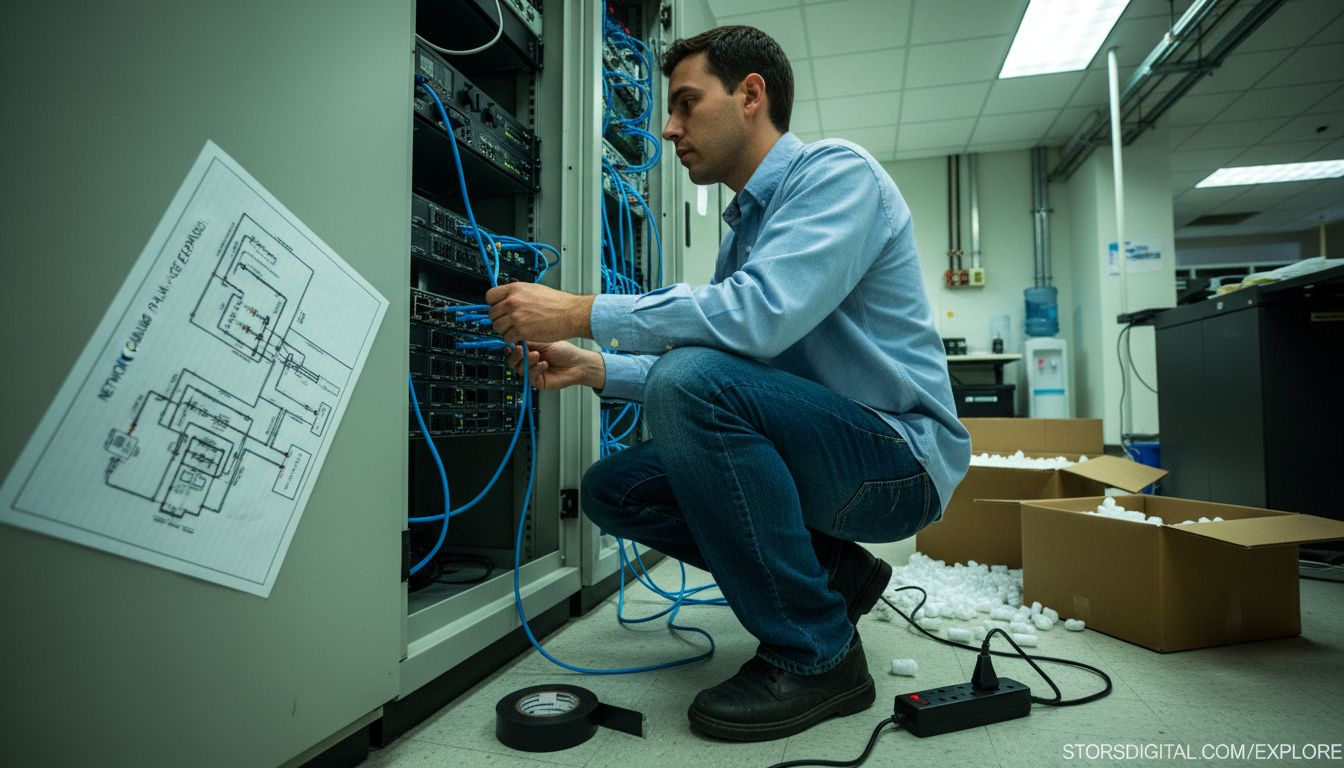
Begin by implementing comprehensive information security standards that safeguard your digital operations. Select enterprise grade networking equipment, secure high speed internet connections, and establish a comprehensive IT infrastructure that includes reliable servers, cloud storage solutions, and secure communication platforms. Focus on creating redundant systems that ensure business continuity and minimize potential technological disruptions.
Consider working with specialized IT consultants who can help design a scalable digital environment tailored to your specific business needs. This includes setting up virtual private networks (VPNs), implementing multi factor authentication protocols, configuring secure email systems, and establishing comprehensive data backup and recovery mechanisms. Prioritize solutions that offer flexibility and can grow alongside your organization.
Ensure your technological setup includes comprehensive cybersecurity measures. This means installing advanced firewall protection, endpoint security software, and developing clear protocols for data access and management. Train your team on best practices for digital security and create a culture of technological awareness and responsibility.
Below is a summary of key roles in effective digital infrastructure setup and their main responsibilities:
| Role | Primary Responsibility | Business Benefit |
|---|---|---|
| IT Consultant | Designs scalable IT environment | Supports growth, mitigates risks |
| Network Engineer | Ensures secure connectivity | Maintains data flow and security |
| Cybersecurity Lead | Implements security protocols | Reduces cyber threats |
| System Admin | Manages IT operations | Minimizes downtime |
Professional Recommendation: Document all your digital infrastructure configurations and create a comprehensive technology onboarding guide that helps new team members understand your specific technological ecosystem and security protocols.
Step 4: Recruit talent and build your team
Recruiting the right talent is fundamental to establishing a successful and dynamic office environment. This critical phase transforms your organizational vision into a living workforce that will drive your business forward.
Begin by developing comprehensive recruitment strategies that align with your organizational goals. Create detailed job descriptions that clearly outline role expectations, required skills, and potential growth opportunities. Leverage multiple recruitment channels including professional networking platforms, industry specific job boards, university partnerships, and specialized recruitment agencies to cast a wide net for top talent.
Implement a rigorous yet engaging interview process that evaluates candidates holistically. Beyond technical skills, assess cultural fit, adaptability, and potential for long term contribution. Develop structured interview protocols that include multiple assessment stages such as initial screening, technical evaluations, behavioral interviews, and team interaction sessions. Pay special attention to diversity and inclusion principles to build a well rounded and innovative team.
Establish onboarding programs that quickly integrate new team members into your organizational culture. Create mentorship opportunities, provide comprehensive training resources, and design clear performance expectations. Develop transparent communication channels that help new employees understand their role within the broader organizational ecosystem.
Professional Recommendation: Create a talent pipeline strategy that continuously identifies and cultivates potential candidates, ensuring you have a steady stream of qualified professionals ready to join your team.
Step 5: Verify operations and ensure compliance
Verifying operational compliance is a critical phase that protects your organization from potential legal risks and establishes a foundation of reliability and professionalism. This step ensures your new office meets all regulatory standards and operates with integrity.

Start by implementing comprehensive workplace safety protocols that protect your employees and organization. Conduct thorough initial assessments of your workspace to identify potential safety hazards, ergonomic challenges, and regulatory requirements. Develop detailed documentation that demonstrates your commitment to maintaining high standards of workplace health and operational safety.
Adopt quality management systems that provide systematic frameworks for ongoing operational verification. This includes creating standard operating procedures, establishing regular internal audit processes, and developing clear metrics for measuring performance and compliance. Implement robust documentation practices that track every aspect of your operational processes, enabling transparent and accountable management.
Establish a continuous improvement cycle that goes beyond basic compliance. Regularly review your operational procedures, solicit feedback from team members, and stay updated on changing regulatory requirements in your industry. Create a culture of proactive risk management where compliance is seen not as a burden but as an opportunity to enhance organizational effectiveness.
Professional Recommendation: Develop a centralized compliance management system that integrates all regulatory requirements, allowing real time tracking and immediate response to any potential compliance issues.
Simplify Your Office Setup with Expert Support
Establishing a new office involves defining clear goals, selecting the ideal location, building robust infrastructure, recruiting top talent, and ensuring full compliance. These critical steps can overwhelm your team and drain valuable resources. If streamlining this complex process while aligning with your strategic objectives is your goal this year, you are not alone. Businesses often face challenges balancing operational demands with rapid expansion needs and technology integration.
Let StorsenDigital be your strategic partner in this journey. We specialize in providing tailored solutions across talent recruitment, digital infrastructure setup, and operational support to help you build a scalable and compliant office environment. Our deep expertise in nearshoring and Business Process Outsourcing empowers you to optimize costs and unlock European talent pools seamlessly. From guiding you on workspace requirements to implementing secure IT systems and assembling your ideal workforce, our services cover every critical piece of your office establishment puzzle.
Take the next step with confidence. Explore how our office establishment services can transform your expansion plans into measurable success today.

Start your seamless office setup now by reaching out through our contact page. Our experts are ready to craft a customized roadmap that turns your business vision into operational reality.
Frequently Asked Questions
How can I define my office requirements and goals effectively?
Defining your office requirements and goals starts by creating SMART goals that clearly outline your objectives. For example, specify the exact workspace size and location needed within a specific timeframe to align with your organization’s growth.
What factors should I consider when selecting an office location?
When selecting an office location, prioritize proximity to talent pools, transportation infrastructure, and cost effectiveness. Create a scoring matrix to evaluate potential locations based on these factors and conduct site visits to assess each space personally.
How do I set up infrastructure and digital systems for my new office?
Setting up infrastructure involves implementing secure technology and robust digital systems that support operations. Focus on creating a comprehensive IT environment with secure connections and data protection measures to enhance business continuity.
What are the best practices for recruiting talent for my office?
To recruit effectively, develop comprehensive recruitment strategies that include clear job descriptions and leverage various recruitment channels. Conduct engaging interviews that assess both technical skills and cultural fit to build a talented and cohesive team.
How can I verify operations and ensure compliance in my new office?
Verify your operations by implementing detailed workplace safety protocols and quality management systems. Regularly conduct internal audits and gather team feedback to maintain compliance and continuously improve operational processes.


