


Every global expansion plan hits a crucial moment where vision must meet precise strategic assessment and clear resource planning. For C-suite executives in European tech companies, defining operational objectives and resource needs is not just the first item on a checklist but the start of building a sustainable international presence. Aligning your ambitions with actionable requirements sets the stage for confident decision making, streamlined resource allocation, and successful talent acquisition that supports real operational growth.
Table of Contents
- Step 1: Define Operational Objectives And Resource Needs
- Step 2: Select Optimal Location And Legal Structure
- Step 3: Secure Workspace And Address Infrastructure Needs
- Step 4: Recruit And Onboard Critical Talent
- Step 5: Implement Compliance And Process Verification
Quick Summary
| Key Takeaway | Explanation |
|---|---|
| 1. Define Clear Operational Objectives | Establish measurable goals aligned with global expansion to ensure efficient resource allocation and strategic direction. |
| 2. Choose the Right Location and Structure | Assess location options and legal entities based on compliance, tax implications, and operational needs for optimal international operations. |
| 3. Secure a Functional Workspace | Invest in a workspace that enhances functionality, employee comfort, and supports technology needs to drive productivity. |
| 4. Implement Comprehensive Talent Strategies | Develop a targeted recruitment and onboarding process to attract and integrate skilled professionals effectively. |
| 5. Establish Strong Compliance Mechanisms | Create a dynamic compliance framework to ensure operational integrity and adapt to local legal requirements efficiently. |
Step 1: Define operational objectives and resource needs
Defining operational objectives and resource needs is the strategic foundation for establishing a seamless international office. This critical step will help you align your global expansion goals with precise organizational requirements.
To effectively outline your operational objectives, start by conducting a comprehensive strategic assessment of your organization’s international ambitions. Research on strategic internationalization highlights the importance of involving key stakeholders to develop clear, measurable goals. Consider these essential components:
- Market expansion targets
- Talent acquisition requirements
- Technological infrastructure needs
- Financial resource allocations
Next, map out your resource requirements by conducting a detailed capacity evaluation. The UNHCR resource planning approach suggests a systematic method for linking objectives directly to resource needs. This involves:
- Identifying precise personnel requirements
- Calculating infrastructure and technology investments
- Determining budget allocations
- Assessing potential talent recruitment strategies
Strategic resource planning transforms international expansion from a complex challenge into a structured, achievable initiative.
These initial steps create a robust framework for your international office establishment, ensuring that every operational decision is purposeful and aligned with your broader organizational strategy.
Pro tip: Develop flexible objectives that can adapt to unexpected market dynamics while maintaining a clear strategic vision.
Step 2: Select optimal location and legal structure
Selecting the right location and legal structure is a critical decision that will shape your international business strategy and operational framework. This step requires careful analysis of multiple factors to ensure your organization establishes a solid foundation for global expansion.
Start by evaluating potential locations through a comprehensive lens of talent availability, regulatory environment, and economic incentives. Comparing business establishment options reveals several legal structures that can support your international objectives:
- Representative office: Limited operational scope
- Branch office: Direct extension of parent company
- Subsidiary: Independent legal entity
- Joint venture: Collaborative business arrangement
Carefully assess the pros and cons of each structure by examining critical aspects such as:
- Local compliance requirements
- Tax implications
- Operational flexibility
- Liability protection
- Investment regulations
Legal considerations for international expansion emphasize the importance of collaborating with local legal experts who understand nuanced regulatory landscapes. These professionals can help you navigate complex legal frameworks and recommend the most strategic approach for your specific business model.
Choosing the right location and legal structure is not just a bureaucratic step, but a strategic decision that can significantly impact your long-term international success.
Your selection should align with your organization’s growth objectives, risk tolerance, and operational requirements, creating a robust platform for sustainable international development.
Here is a comparison of the main legal structures for international offices:
| Legal Structure | Control Level | Liability | Suitable For |
|---|---|---|---|
| Representative Office | Minimal; no direct business | Parent company | Market research, early presence |
| Branch Office | Moderate; extension of HQ | Parent company | Direct operations without full setup |
| Subsidiary | Full; separate legal entity | Separate entity | Long-term growth, local investment |
| Joint Venture | Shared with partner(s) | Shared per agreement | Entering new markets collaboratively |
Pro tip: Consult multiple local legal and tax professionals to gain comprehensive insights before finalizing your international business structure.
Step 3: Secure workspace and address infrastructure needs
Securing an appropriate workspace and addressing critical infrastructure needs are fundamental to establishing a successful international office. This step requires a strategic approach that balances functionality, technology, and employee comfort with operational efficiency.
Government workplace design principles emphasize the importance of creating a workspace that supports your organizational goals. Begin by evaluating your infrastructure requirements across several key dimensions:
- Physical workspace configuration
- Technology and connectivity infrastructure
- Security and access control systems
- Scalability and flexibility potential
- Compliance with local building regulations
Prioritize your infrastructure needs by following these systematic steps:
- Conduct a comprehensive space assessment
- Evaluate technological requirements
- Design flexible work environments
- Implement robust security protocols
- Plan for future growth and adaptation
Office space standards for hybrid workplaces recommend creating adaptable environments that support both in-person and remote work models. This approach ensures your infrastructure can accommodate evolving workforce dynamics and technological advancements.
An intelligent workspace is more than just a physical location – it’s a strategic asset that drives productivity and employee engagement.
Ensure your workspace design reflects your company culture while providing the technological and physical infrastructure necessary for seamless operations.

Pro tip: Invest in modular furniture and scalable technology solutions that can easily adapt to your organization’s changing needs.
Step 4: Recruit and onboard critical talent
Recruiting and onboarding critical talent represents a pivotal moment in your international office establishment strategy. This step demands a sophisticated approach that combines strategic talent acquisition with comprehensive integration practices.
Global talent recruitment initiatives demonstrate the importance of creating targeted strategies for attracting top-tier professionals. Design your recruitment process around these fundamental components:
- Precise candidate profile development
- Comprehensive skills assessment framework
- Cultural fit evaluation
- Competitive compensation strategies
- Long-term professional development pathways
Execute your talent acquisition strategy through these systematic steps:
- Define explicit role requirements
- Develop multichannel recruitment approaches
- Implement rigorous screening processes
- Conduct comprehensive candidate interviews
- Create personalized onboarding experiences
Strategic talent acquisition frameworks underscore the significance of creating integrated support structures that facilitate smooth professional transitions and foster immediate productivity.
Exceptional talent acquisition is not about filling positions, but about building a dynamic, innovative workforce that can drive organizational transformation.
Ensure your recruitment and onboarding processes reflect your company’s unique culture while providing clear pathways for professional growth and meaningful contribution.
Pro tip: Develop a comprehensive onboarding program that balances professional integration with personal connection to accelerate new team member engagement.
Step 5: Implement compliance and process verification
Implementing robust compliance and process verification mechanisms is crucial for establishing a reliable and legally sound international office. This step requires meticulous attention to detail and a systematic approach to ensuring organizational integrity across all operational domains.
Compliance best practices for internal controls emphasize developing comprehensive strategies that protect your organization. Design your compliance framework around these critical elements:
- Detailed standard operating procedures
- Clear regulatory mapping
- Regular audit mechanisms
- Stakeholder accountability protocols
- Continuous improvement processes
Execute your compliance verification strategy through these systematic steps:
- Document all operational processes
- Establish clear compliance benchmarks
- Create monitoring and reporting systems
- Implement regular internal audits
- Develop corrective action protocols
International compliance management guidelines underscore the significance of adapting to diverse regulatory landscapes and maintaining flexible verification processes that can quickly respond to changing legal requirements.
Effective compliance is not about rigid rule enforcement, but about creating a culture of transparency, accountability, and continuous learning.
Ensure your compliance framework is dynamic, transparent, and aligned with both local regulations and your organization’s core values and operational objectives.
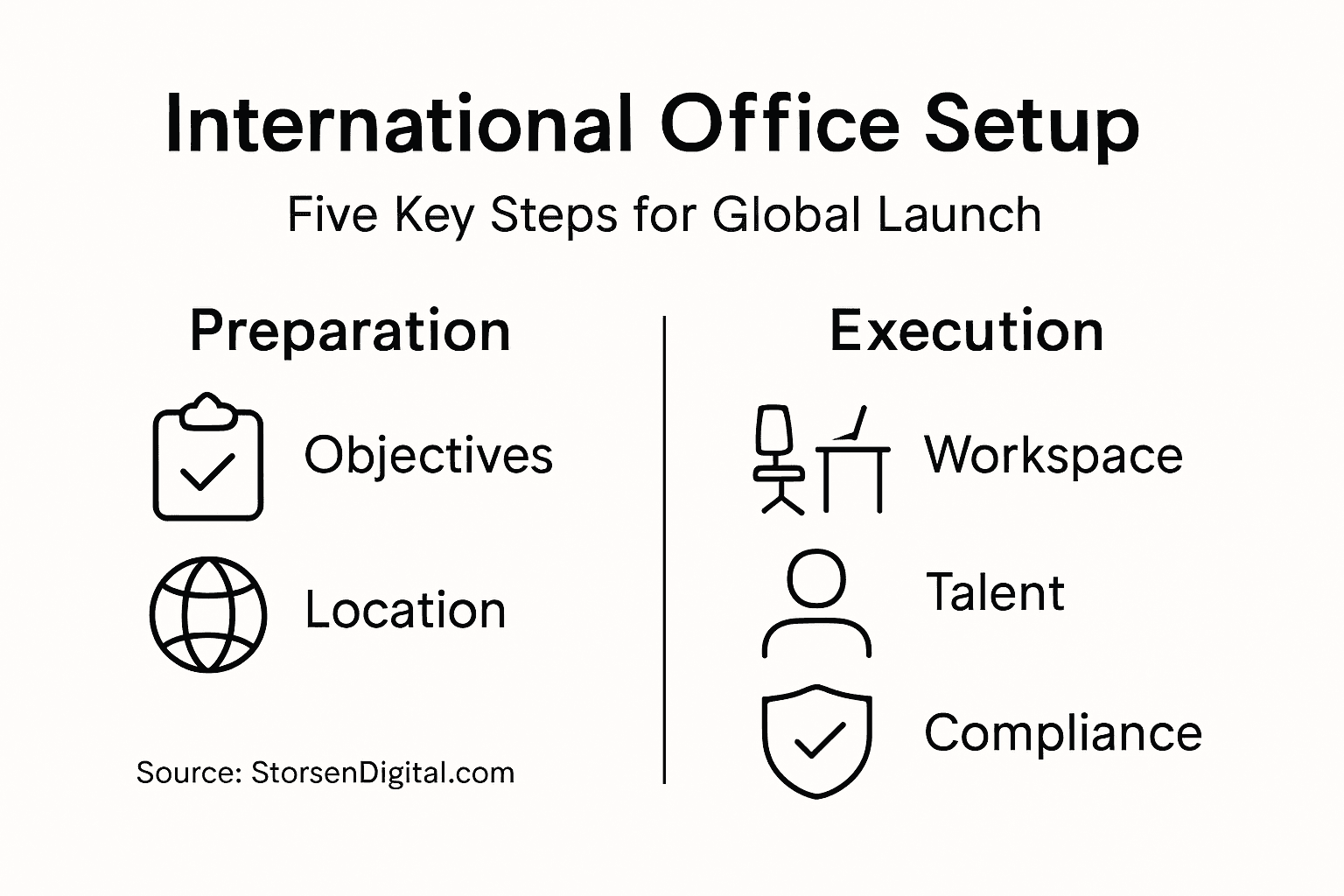
The following table summarizes key steps for aligning operations and compliance:
| Step | Main Objective | Critical Output |
|---|---|---|
| Define Operational Objectives | Align goals with expansion plan | Strategic priorities identified |
| Select Location & Legal Structure | Optimal setup for market entry | Chosen country and legal entity |
| Secure Workspace & Infrastructure | Enable effective daily operations | Fit-out and technology sourced |
| Recruit & Onboard Talent | Build skilled, integrated team | Productive international staff |
| Implement Compliance & Verification | Ensure legal and process integrity | Monitored, accountable systems |
Pro tip: Develop a centralized compliance dashboard that provides real-time insights and enables proactive risk management across your international operations.
Streamline Your Global Expansion With Expert Support
Launching an international office involves complex challenges like defining operational objectives, selecting the right legal structure, securing workspaces, recruiting talent, and ensuring compliance. These critical steps demand expert guidance to avoid costly delays and missteps. When your growth depends on seamless coordination and strategic decision-making, you need a trusted partner who understands these nuances.

At StorsenDigital.com, we specialize in bridging these gaps with our comprehensive outsourcing, nearshoring, and BPO services across Europe. Gain access to tailored talent acquisition, scalable managed services, and strategic consulting designed to align perfectly with your international office establishment goals. Don’t let operational hurdles stall your expansion — empower your global launch today by connecting with our experts at Contact StorsenDigital. Let us help you turn your plans into impactful results without sacrificing time or quality.
Frequently Asked Questions
What are the initial steps to define operational objectives for international office establishment?
Start by conducting a strategic assessment of your organization’s global ambitions. Identify specific market expansion targets, talent acquisition needs, technological infrastructure requirements, and financial resource allocations to align with your international objectives.
How do I choose the right location and legal structure for my international office?
Evaluate potential locations based on talent availability, regulatory environment, and economic incentives. Assess various legal structures, such as a subsidiary or branch office, to find the option that best supports your organization’s growth and compliance needs.
What factors should I consider when securing workspace for my international office?
Focus on physical workspace configuration, technology and connectivity infrastructure, and compliance with local building regulations. Conduct a comprehensive space assessment to ensure the environment is efficient, secure, and adaptable to future growth.
How can I effectively recruit and onboard talent for my international office?
Define clear role requirements and utilize multichannel recruitment approaches to attract top candidates. Implement a structured onboarding process that fosters employee engagement and accelerates productivity from the start.
What compliance considerations should I address when establishing an international office?
Create detailed standard operating procedures and establish clear compliance benchmarks. Regularly document processes, perform internal audits, and ensure that your compliance framework adapts to local regulations while promoting accountability throughout the organization.
How can I ensure that my office establishment process remains aligned with operational goals?
Implement a centralized compliance dashboard to track compliance and process verification across your international operations. This will provide real-time insights that help identify areas for improvement, aiming for a more streamlined and accountable establishment process.


