


Remote team management presents unique challenges for C-suite leaders at European tech firms working with international partners. Clear organization, precise objectives, and the right digital tools create the foundation for productive outsourcing relationships. Defining your team’s roles and establishing communication protocols are key steps to reducing confusion and protecting operational efficiency in a global setting.
Table of Contents
- Step 1: Define Team Structure And Objectives
- Step 2: Select And Integrate The Right Digital Tools
- Step 3: Establish Effective Communication Protocols
- Step 4: Implement Goal-Driven Workflows And Standards
- Step 5: Monitor Performance And Optimize Processes
Quick Summary
| Key Point | Explanation |
|---|---|
| 1. Define roles and objectives clearly | Establishing specific roles and measurable objectives enhances alignment and performance in remote teams. |
| 2. Choose effective digital tools | Use digital tools that support communication, project management, and productivity, ensuring they fit your team’s workflow. |
| 3. Set structured communication protocols | Implement clear communication strategies to enhance collaboration and avoid misunderstandings among remote team members. |
| 4. Create goal-driven workflows | Develop workflows based on SMART goals, ensuring tasks are broken down and accountability is maintained throughout the team. |
| 5. Monitor performance regularly | Establish ongoing performance tracking and feedback mechanisms to facilitate continuous improvement and support team development. |
Step 1: Define team structure and objectives
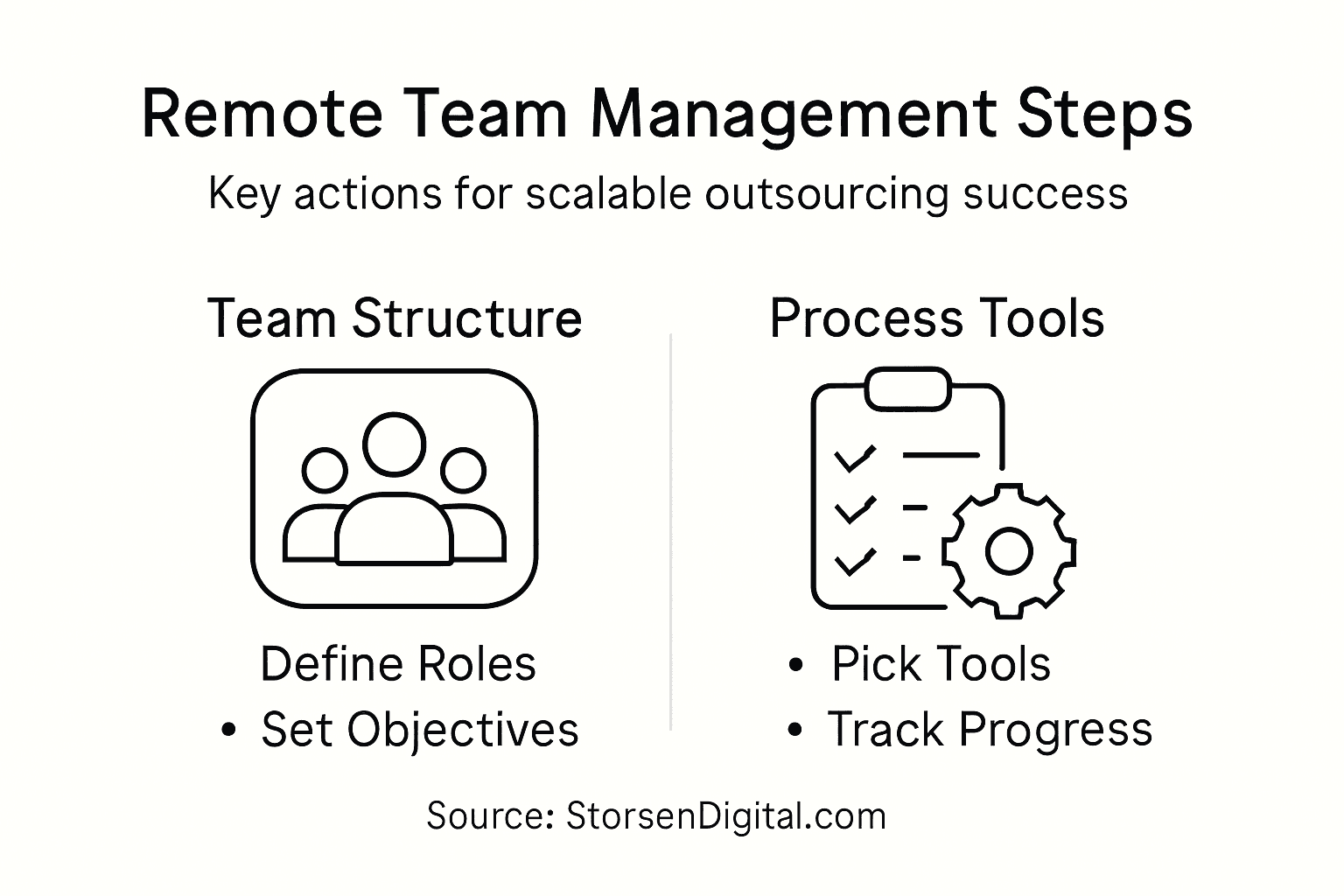
Defining your remote team’s structure and objectives is the critical foundation for successful outsourcing and collaboration. When you establish clear guidelines and expectations upfront, you dramatically improve team performance and alignment.
To create an effective remote team structure, start by mapping out specific roles and responsibilities with precision. Building strong remote teams requires understanding unique communication dynamics. This means identifying:
- Core team member roles
- Individual accountability zones
- Reporting hierarchies
- Communication protocols
Next, develop quantifiable objectives that provide clear direction. Break down larger organizational goals into measurable, team-specific targets. These should be:
- Specific and well-defined
- Trackable through key performance indicators
- Aligned with overall business strategy
- Realistic and achievable
Clarity in team structure eliminates confusion and builds a strong foundation for remote collaboration.
Documenting these structures formally helps prevent misunderstandings and creates a transparent framework for your international team.

Pro tip: Use collaborative digital tools that allow real-time tracking and visualization of team roles and objectives to maintain transparency and accountability.
Step 2: Select and integrate the right digital tools
Selecting and integrating the right digital tools is a game-changing strategy for creating seamless remote team collaboration. Your goal is to build a comprehensive technological ecosystem that supports communication, project management, and team productivity.
Successful remote work requires strategic digital collaboration tools across multiple functional areas. When building your digital toolkit, focus on platforms that offer:
- Robust project management capabilities
- Real-time communication channels
- Secure file sharing and collaboration
- Time tracking and productivity monitoring
- Integration between different software platforms
Prioritize tools that offer smooth cross-platform compatibility and intuitive user interfaces. Consider popular solutions like:
- Slack or Microsoft Teams for communication
- Asana or Trello for project tracking
- Zoom or Google Meet for video conferencing
- Dropbox or Google Drive for file sharing
Integrated digital tools are the backbone of effective remote team performance.
Evaluate each tool’s specific features against your team’s unique workflow requirements, ensuring they address communication, collaboration, and productivity challenges.
Pro tip: Always conduct a brief trial period with your team to validate tool effectiveness and gather user feedback before full implementation.
Here’s how common digital tool categories impact remote team performance:
| Tool Category | Main Benefit | Business Impact |
|---|---|---|
| Communication | Enables fast information flow | Reduces delays, boosts engagement |
| Project Management | Tracks tasks and deadlines | Improves accountability and delivery |
| File Sharing | Centralizes document access | Minimizes version errors, saves time |
| Video Conferencing | Facilitates real-time discussions | Enhances collaboration and trust |
| Time Tracking | Monitors work hours and output | Supports productivity improvement |
Step 3: Establish effective communication protocols
Creating robust communication protocols is essential for maintaining clarity, productivity, and team cohesion in remote work environments. Your primary goal is to develop a comprehensive communication strategy that bridges geographical and cultural gaps.
Effective communication protocols provide a shared framework that prevents misunderstandings and streamlines information exchange. Design your communication strategy around these critical elements:
- Designated communication channels for different purposes
- Clear response time expectations
- Synchronous and asynchronous communication guidelines
- Preferred communication tools for specific interactions
- Cultural sensitivity and inclusion protocols
Implement a structured approach to team communication by establishing:
- Instant messaging for quick questions
- Email for formal documentation
- Video calls for complex discussions
- Project management tools for task updates
Communication protocols transform potential disconnection into collaborative opportunity.
Regularly review and adapt your communication guidelines to ensure they remain effective and responsive to your team’s evolving needs.
Pro tip: Create a comprehensive communication handbook that outlines all protocols, expectations, and best practices to serve as a definitive reference for your remote team.
Compare communication methods for remote teams:
| Method | Typical Use Case | Best For |
|---|---|---|
| Instant Message | Quick informal questions | Fast problem solving |
| Formal or complex updates | Detailed documentation | |
| Video Call | Group discussions or reviews | Building team rapport |
| Project Tools | Task and progress updates | Workflow transparency |
Step 4: Implement goal-driven workflows and standards
Developing goal-driven workflows transforms remote team performance from disconnected efforts to synchronized achievement. Your mission is to create a structured approach that empowers team members to work independently while maintaining collective alignment.
SMART goals enable distributed teams to break down objectives into actionable, measurable tasks. Design your workflow framework around these key principles:
- Clear performance metrics
- Transparent progress tracking
- Individual and team accountability
- Consistent reporting standards
- Regular performance evaluation cycles
Implement your workflow strategy through these essential steps:
- Define specific, measurable objectives
- Break complex goals into granular tasks
- Establish weekly and monthly review checkpoints
- Create visual progress dashboards
- Develop standardized reporting templates
Effective workflows transform individual efforts into collective success.
Remember that workflows are living systems. Continuously refine your approach based on team feedback and changing organizational needs.
Pro tip: Use collaborative project management tools that automatically track progress and generate performance insights to minimize manual reporting overhead.
Step 5: Monitor performance and optimize processes
Performance monitoring is the critical backbone of successful remote team management, transforming raw data into actionable insights that drive continuous improvement. Your objective is to create a dynamic system that tracks progress, identifies bottlenecks, and enables proactive optimization.
Performance management practices adapt to remote environments by focusing on transparency, communication, and trust. Design your monitoring approach with these fundamental strategies:
- Real-time performance tracking
- Objective and measurable metrics
- Regular feedback mechanisms
- Continuous skill development opportunities
- Data-driven performance analysis
Implement a comprehensive monitoring strategy through these key actions:
- Select appropriate performance tracking tools
- Establish clear, quantifiable performance indicators
- Schedule consistent performance review meetings
- Create personalized improvement plans
- Develop transparent reporting dashboards
Effective performance monitoring turns potential challenges into opportunities for growth.
Remember that monitoring is not about micromanagement but about supporting your team’s professional development and organizational success.
Pro tip: Invest in advanced analytics tools that provide contextual insights, allowing you to understand performance patterns beyond simple numerical metrics.
Accelerate Your Remote Team Success with Expert Outsourcing Support
Managing remote teams effectively demands precise team structures, seamless digital workflows, and constant performance monitoring as highlighted in the “Remote Team Management Guide for Scalable Outsourcing Success.” If you struggle with aligning objectives, integrating the right tools, or maintaining clear communication, you are not alone. Many businesses face these exact challenges when scaling outsourcing ventures.
At StorsenDigital.com, we specialize in transforming these pain points into competitive advantages. Our tailored solutions in Talent Recruitment, managed BPO services, and strategic consulting empower your remote teams to operate with clarity and agility. Whether you need assistance in office establishment or building goal-driven workflows, our European nearshoring expertise ensures you optimize costs while accessing top talent.

Don’t let remote team complexities hold back your growth. Take decisive action now by connecting with us at StorsenDigital.com to design scalable remote team frameworks and leverage managed outsourcing services that elevate your performance. Your next breakthrough in remote team management is one confident step away.
Frequently Asked Questions
How can I define a clear team structure for my remote team?
Defining a clear team structure involves mapping out specific roles, responsibilities, and communication protocols. Start by documenting these details to establish individual accountability zones and reporting hierarchies. This structure will help improve overall team performance.
What digital tools should I integrate for successful remote collaboration?
Integrate digital tools that include robust project management capabilities, real-time communication channels, and secure file sharing. Evaluate options like project tracking and communication platforms that can enhance productivity and maintain transparency in workflow.
How do I establish effective communication protocols for my remote team?
Establishing effective communication protocols requires creating designated channels for different purposes and setting response time expectations. Draft a communication handbook that outlines these protocols to ensure clarity and consistency within the team.
What are goal-driven workflows, and how can I implement them?
Goal-driven workflows are structured processes that align team efforts towards measurable objectives. Break down complex goals into granular tasks, and establish regular review checkpoints to keep your team on track. Implementing visual dashboards can also enhance tracking and accountability.
How should I monitor my remote team’s performance effectively?
Monitor your remote team’s performance by implementing real-time tracking and setting objective metrics. Schedule consistent performance reviews to provide constructive feedback and develop personalized improvement plans based on data-driven analysis.
What steps can I take to optimize remote team processes?
To optimize remote team processes, collect data on current workflows and identify bottlenecks. Regularly review and refine these processes based on team feedback and performance metrics, aiming to enhance efficiency within 30–60 days.


