


More than 60 percent of American companies say nearshoring is now their top strategy for supply chain resilience. For any American business leader, the path to successful nearshoring starts with clear objectives and a solid plan. Without a sharp focus on requirements, even the most promising initiatives can fall short. This guide lays out practical steps and expert tips to help you maximize the benefits of European nearshoring and build a high-performing international team.
Table of Contents
- Step 1: Define Your Nearshoring Objectives And Requirements
- Step 2: Select The Right European Nearshore Destination
- Step 3: Build Your Local Team And Partnerships
- Step 4: Establish Secure Operational Frameworks
- Step 5: Monitor Performance And Optimize Outcomes
Quick Summary
| Key Insight | Explanation |
|---|---|
| 1. Clearly Define Objectives | Outline specific goals for nearshoring to optimize resources and improve operations. |
| 2. Systematically Assess Destinations | Use comprehensive evaluation criteria to select the best nearshore location in Europe. |
| 3. Build Strong Local Teams | Foster organizational culture and effective communication for successful integration with remote teams. |
| 4. Establish Secure Frameworks | Implement robust security and operational protocols to safeguard collaboration and mitigate risks. |
| 5. Monitor and Optimize Performance | Utilize performance metrics and feedback to continuously improve nearshoring effectiveness and strategic alignment. |
Step 1: Define your nearshoring objectives and requirements
Defining clear nearshoring objectives is the strategic foundation that determines your entire outsourcing approach. Without precise goals, businesses risk wasting resources and missing critical opportunities for operational improvement. Your objectives should comprehensively address cost efficiency, talent acquisition, and strategic business expansion.
Start by conducting a thorough internal assessment of your current operational challenges and future growth targets. Companies must evaluate specific requirements like skill sets needed, budget constraints, and desired scalability. Businesses can enhance supply chain resilience and meet critical environmental standards by developing a structured nearshoring strategy that aligns with their long-term organizational goals.
When mapping out objectives, consider multiple dimensions beyond immediate cost savings. Analyze potential talent pools, infrastructure quality, language compatibility, and cultural alignment. Research indicates that successful nearshoring depends on identifying sectors with high export potential and skilled labor availability. Look beyond surface-level metrics to understand how nearshoring can provide strategic advantages in innovation, flexibility, and competitive positioning.
Pro Tip: Create a detailed scoring matrix that objectively evaluates potential nearshoring destinations across multiple dimensions, including talent quality, cost efficiency, geopolitical stability, and technological infrastructure.
Step 2: Select the right European nearshore destination
Selecting the optimal European nearshore destination is a critical decision that can significantly impact your business performance and growth strategy. This step requires a comprehensive evaluation of multiple factors that go beyond simple cost considerations.
Begin by developing a systematic approach to destination assessment. The European Nearshoring Index provides a robust framework for evaluating potential regions, analyzing critical dimensions such as economic stability, labor market quality, institutional infrastructure, social compatibility, and geographic positioning. Look beyond immediate financial metrics to understand the long term strategic potential of each potential nearshore location.
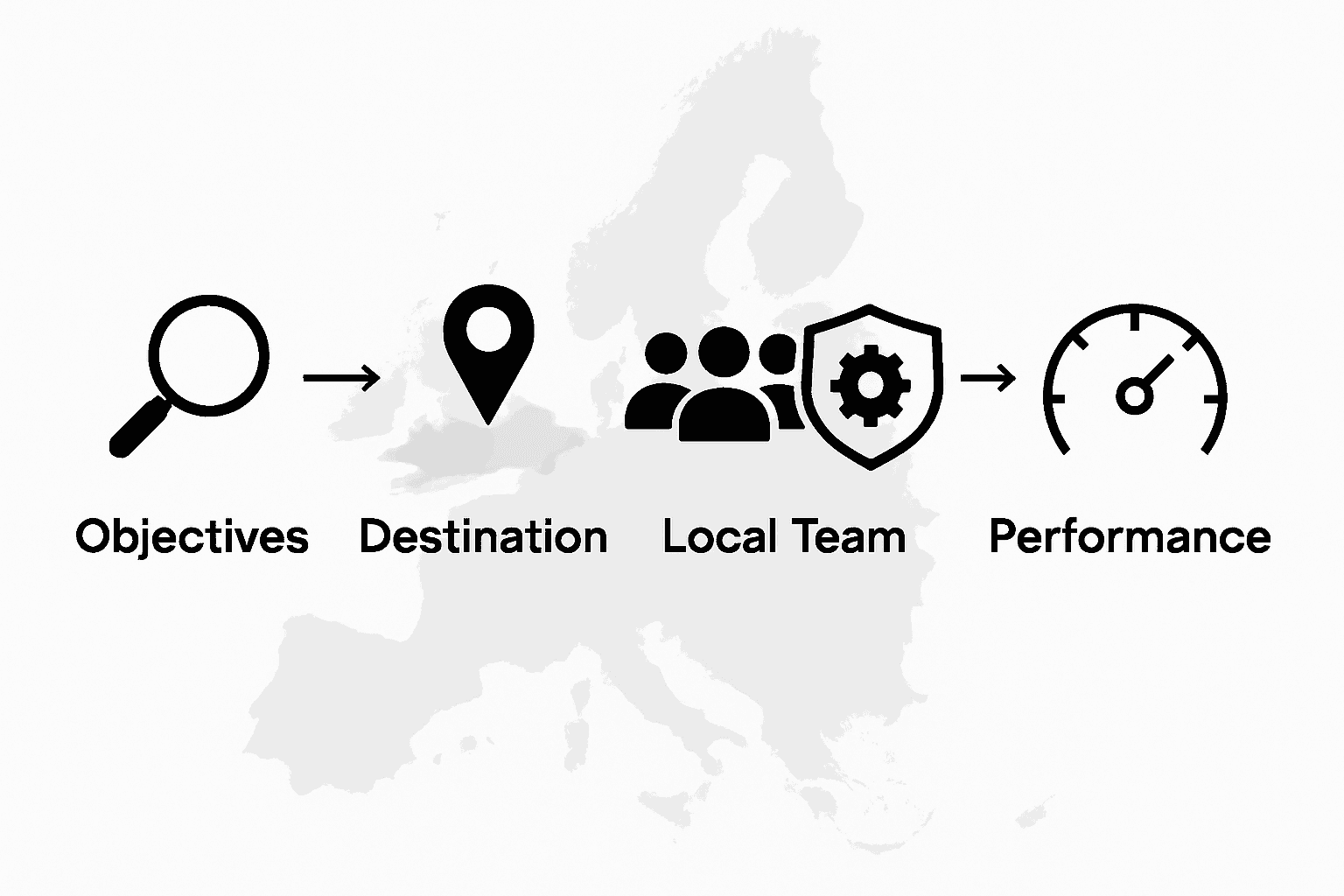
Carefully analyze key differentiators like talent pool depth, technological infrastructure, language proficiency, educational system quality, and cultural alignment. Each European region offers unique advantages. The Western Balkans, for instance, provide exceptional technical talent with strong English language skills, competitive costs, and growing technological ecosystems. Countries like Bosnia and Herzegovina, Serbia, and North Macedonia have emerged as particularly attractive destinations for software development, IT services, and business process outsourcing. Consider creating a weighted scoring matrix that objectively ranks potential destinations across multiple strategic dimensions.
Pro Tip: Develop a comprehensive evaluation scorecard that includes both quantitative metrics and qualitative factors, allowing you to make a nuanced and data driven nearshore destination selection.
The following table summarizes critical criteria for selecting a European nearshore destination:
| Selection Criteria | Description | Business Impact |
|---|---|---|
| Talent Pool Depth | Availability of skilled professionals | Enables innovation and scaling |
| Technological Infrastructure | Quality of digital connectivity | Supports secure operations |
| Language Proficiency | English and other language skills | Improves collaboration |
| Socio-cultural Alignment | Compatibility with core company values | Smooths integration and teamwork |
| Economic Stability | Level of economic predictability | Reduces risk of disruptions |
Step 3: Build your local team and partnerships
Building a successful local team and establishing strong partnerships are crucial elements of an effective nearshoring strategy. This step transforms your theoretical plan into a practical operational reality by creating robust human connections and organizational infrastructure.

Successful nearshoring requires implementing strategic communication protocols and appointing dedicated local leadership who can bridge cultural and operational gaps. Focus on creating a collaborative environment that integrates your remote team seamlessly with your existing organizational structure. This means developing clear communication channels, establishing regular virtual and in person meetings, and creating shared performance metrics that align with your overall business objectives.
Carefully navigate the complex landscape of local employment dynamics by understanding regional labor regulations, compensation structures, and talent acquisition strategies. The Western Balkans offer a particularly attractive environment for building high performing teams, with countries like Bosnia and Herzegovina providing exceptional technical talent, competitive labor costs, and a robust educational system producing skilled professionals. Pay special attention to legal compliance, cultural integration, and creating a workplace environment that motivates and retains top talent. Invest time in developing comprehensive onboarding processes, ongoing training programs, and career development opportunities that make your local team feel valued and connected to your broader organizational mission.
Pro Tip: Create a detailed cultural integration playbook that goes beyond standard HR protocols, providing specific guidance on communication styles, work expectations, and collaborative practices unique to your organization and the local regional context.
Step 4: Establish secure operational frameworks
Establishing secure operational frameworks is a critical step in ensuring the long term success and reliability of your nearshoring strategy. This process involves creating comprehensive systems that protect your business interests while enabling seamless collaboration and productivity.
Robust institutional frameworks are essential for supporting secure and efficient operational processes in nearshoring environments. Begin by developing a multilayered security approach that encompasses technological infrastructure, data protection protocols, compliance mechanisms, and risk management strategies. Focus on creating standardized operating procedures that align with international best practices and your specific organizational requirements. This includes implementing rigorous cybersecurity measures, establishing clear communication protocols, and developing comprehensive backup and continuity plans that mitigate potential operational disruptions.
Pay special attention to developing frameworks that address both technological and human elements of security. In the Western Balkans particularly, this means creating systems that leverage local talent while maintaining global standards of operational excellence. Develop detailed documentation for every operational process, implement regular security audits, and create transparent performance tracking mechanisms. Invest in ongoing training programs that keep your team updated on the latest security protocols and technological advancements. Consider implementing advanced technological solutions like secure cloud infrastructure, encrypted communication channels, and sophisticated access management systems that provide both flexibility and robust protection.
Pro Tip: Develop a comprehensive risk assessment matrix that dynamically evaluates potential operational vulnerabilities and creates adaptive security protocols that can evolve with changing technological and business landscapes.
Step 5: Monitor performance and optimize outcomes
Monitoring performance and optimizing outcomes represents the critical final stage of your nearshoring strategy where data driven insights transform theoretical plans into measurable business value. This step is about creating a dynamic feedback loop that continuously improves your operational effectiveness and strategic alignment.
Businesses must implement comprehensive mechanisms to track performance and optimize strategic outcomes by establishing clear key performance indicators and sophisticated tracking systems. Develop a multidimensional performance assessment framework that goes beyond traditional metrics like cost savings and productivity. Consider evaluating dimensions such as talent retention rates, innovation potential, cultural integration, technological adaptability, and long term strategic value. This holistic approach ensures that your nearshoring strategy delivers comprehensive benefits rather than narrow operational improvements.
In the Western Balkans context, performance monitoring requires a nuanced approach that balances quantitative metrics with qualitative insights. Implement regular review cycles that include detailed performance assessments, feedback sessions with local teams, and strategic alignment workshops. Utilize advanced analytics tools to track real time performance data, identify potential bottlenecks, and create predictive models for continuous improvement. Pay special attention to creating transparent reporting mechanisms that provide clear visibility into operational performance while maintaining a collaborative and supportive environment that motivates your nearshore team to consistently exceed expectations.
Pro Tip: Create a dynamic performance optimization dashboard that integrates multiple data sources and provides real time insights, enabling quick strategic adjustments and maintaining a competitive edge in your nearshoring strategy.
Here’s a quick reference for key post-nearshoring performance metrics and their strategic significance:
| Performance Metric | Why It Matters | Example Indicator |
|---|---|---|
| Cost Optimization | Measures overall financial efficiency | Year-on-year spend savings |
| Talent Retention | Reflects team stability | Annual employee turnover rate |
| Innovation Capacity | Gauges potential for improvement | Number of new solutions launched |
| Cultural Integration | Ensures alignment and productivity | Employee satisfaction survey |
| Technological Adaptability | Demonstrates flexibility in operations | Adoption of new tech solutions |
Unlock Seamless European Nearshoring with Expert Support
Navigating the complex process of nearshoring in Europe demands clear objectives, strategic location choices, and robust local teams. If you are striving to overcome challenges like talent acquisition, operational security, and cultural integration mentioned in the Step by Step Nearshoring Guide for European Businesses, our tailored outsourcing and Business Process Outsourcing services are designed to accelerate your success. By leveraging our deep expertise in European markets, including the Western Balkans, we help you build scalable and secure nearshore operations that align perfectly with your strategic goals.
Partner with StorsenDigital.com to Experience:
- Customized talent recruitment ensuring skilled professionals matched to your needs
- Reliable office establishment and local leadership bridging cultural and operational gaps
- Managed BPO services covering HR, finance, IT, customer support, and software development
- Strategic consulting to optimize costs while boosting innovation and flexibility
Take the next step toward transforming your nearshoring strategy today.
Are you ready to unlock real business value through expert nearshoring solutions and start building your local team with confidence

Contact us now at StorsenDigital Contact and let our professionals guide you through a seamless transition to a competitive European nearshore presence.
Frequently Asked Questions
What are the initial steps to define my nearshoring objectives?
To define your nearshoring objectives, conduct an internal assessment of your operational challenges and future growth targets. Identify specific requirements like skill sets needed, budget constraints, and scalability goals to create a comprehensive strategy.
How can I select the right European nearshore destination?
Begin by developing a systematic evaluation approach using criteria such as economic stability, labor market quality, and language proficiency. Create a weighted scoring matrix to objectively rank potential destinations based on these factors and their long-term strategic advantages.
What should I consider when building a local team for nearshoring?
Focus on creating a collaborative environment by developing clear communication channels and appointing dedicated local leadership. Understand regional labor regulations and compensation structures to effectively navigate local employment dynamics and ensure legal compliance.
How do I establish secure operational frameworks for my nearshoring strategy?
Develop a multilayered security approach that includes technological infrastructure, data protection protocols, and risk management strategies. Implement standardized operating procedures that align with international best practices to ensure reliable operations.
What key performance metrics should I monitor after nearshoring?
Monitor metrics such as cost optimization, talent retention, and innovation capacity to evaluate the effectiveness of your nearshoring strategy. Establish clear key performance indicators and a dynamic performance optimization dashboard to track these metrics for continuous improvement.


