


Every decision-maker at a growing tech organization knows that setting up an international office is more than just finding space abroad. For European executives, aligning every detail from strategic office planning to legal compliance can be daunting without a structured roadmap. This guide provides clear steps covering legal structure options, technology needs, staffing approaches, and critical operational checks, ensuring your company builds an office that is both efficient and compliant, with costs and risks managed from the outset.
Table of Contents
- Step 1: Define Office Requirements And Goals
- Step 2: Select Location And Secure Legal Compliance
- Step 3: Develop Infrastructure And Tech Setup
- Step 4: Recruit Key Personnel And Assign Roles
- Step 5: Review Setup And Verify Operational Readiness
Quick Summary
| Key Point | Explanation |
|---|---|
| 1. Define clear office goals | Establish organizational objectives and operational expectations to guide your global expansion strategy effectively. |
| 2. Choose the right location | Consider business environment, talent availability, and regulatory factors to ensure operational efficiency and compliance. |
| 3. Build robust tech infrastructure | Create a secure digital ecosystem that supports seamless communication and scalability for international operations. |
| 4. Recruit suitable personnel | Focus on hiring individuals aligned with your strategic vision and cultural dynamics for effective team performance. |
| 5. Verify operational readiness | Conduct comprehensive assessments of systems and processes to ensure everything is aligned for launch success. |
Step 1: Define office requirements and goals
Establishing a successful international office begins with crystal-clear strategic planning. Your goal is to outline precise organizational objectives, infrastructure needs, and operational expectations before investing significant resources into global expansion.
Start by conducting a comprehensive strategic assessment of your current business landscape. This involves mapping out specific requirements across multiple dimensions:
- Talent acquisition needs for your target market
- Operational infrastructure demands
- Compliance and legal framework considerations
- Technology and communication infrastructure requirements
- Cost projection and budget allocation
The most effective approach involves creating a detailed matrix that breaks down each requirement with measurable criteria. This helps transform abstract goals into concrete, actionable strategies. Strategic office planning becomes significantly more straightforward when you systematically document your expectations.
Here’s a summary of how each planning dimension influences office setup decisions:
| Planning Dimension | Strategic Impact | Example Consideration |
|---|---|---|
| Talent Needs | Determines local hiring strategy | Sourcing specialized roles |
| Infrastructure | Impacts operational efficiency | Office space and bandwidth |
| Compliance & Legal | Affects risk and setup speed | Adhering to labor laws |
| Technology | Enables collaboration and security | Cloud adoption policies |
| Cost Structure | Guides resource allocation | Budgeting for recurring expenses |
Your office establishment strategy must align precisely with your company’s broader international growth objectives.
Consider engaging professional nearshoring consultants who can provide nuanced insights into regional specifics. They can help you navigate complex considerations like local workforce dynamics, regulatory environments, and potential scalability challenges.
Professional tip: Create a living document that remains flexible and can be adjusted as your international expansion strategy evolves, ensuring your initial planning doesn’t become a rigid constraint.
Step 2: Select location and secure legal compliance
Selecting the right location and ensuring comprehensive legal compliance are critical steps in establishing an international office. Your primary objective is to strategically choose a jurisdiction that balances operational efficiency, talent availability, and regulatory simplicity.
When evaluating potential locations, consider these key factors:
- Business environment and economic stability
- Talent pool quality and availability
- Tax incentives and regulatory frameworks
- Infrastructure and technological readiness
- Cost of doing business
Global legal compliance strategies require meticulous research into local regulations. You’ll need to decide whether to establish a branch office or a standalone legal entity, each with distinct legal and tax implications.
Compare the two primary office legal structures:
| Structure Type | Typical Setup Complexity | Tax Flexibility | Control Level |
|---|---|---|---|
| Branch Office | Low to moderate | Tied to parent company | Less autonomy |
| Standalone Entity | Higher | Local tax advantages possible | Full local control |
Comprehensive understanding of local regulatory requirements is not optional – it’s a fundamental prerequisite for successful international expansion.
Consult with foreign legal presence experts who can provide nuanced guidance on obtaining necessary licenses, understanding tax obligations, and navigating complex regulatory landscapes.
Professional tip: Engage local legal and tax professionals early in the process to create a comprehensive compliance roadmap that anticipates potential regulatory challenges.
Step 3: Develop infrastructure and tech setup
Building a robust technological infrastructure is the backbone of your international office expansion. Your goal is to create a seamless, secure, and scalable digital ecosystem that supports your operational requirements and enables smooth communication across global teams.
When developing your tech infrastructure, focus on these critical components:
- Network architecture and connectivity solutions
- Hardware procurement and device standardization
- Security protocols and data protection systems
- Cloud and communication platforms
- Backup and disaster recovery mechanisms
Infrastructure setup strategies require comprehensive planning that addresses both immediate operational needs and future scalability. Consider implementing dedicated private networks that provide enhanced security and performance for your international teams.
A well-designed technological infrastructure is not just a support system – it’s a strategic asset that can significantly impact your organization’s efficiency and competitiveness.
Utilize electronic infrastructure design principles to optimize your network configuration, ensuring high-performance connectivity, robust document management systems, and streamlined operational workflows.

Professional tip: Invest in flexible technological solutions that can easily adapt to changing business needs and emerging technological trends.
Step 4: Recruit key personnel and assign roles
Recruiting the right talent is crucial for successfully establishing your international office. Your objective is to build a team that not only possesses the necessary technical skills but also aligns with your organization’s strategic vision and cultural dynamics.
When developing your recruitment strategy, focus on these critical aspects:
- Leadership positions with strategic vision
- Technical experts matching your operational needs
- Cultural compatibility and adaptability
- Communication and interpersonal skills
- Language proficiency and global mindset
International staffing strategies require a systematic approach to identifying and attracting top talent. Develop comprehensive role descriptions that clearly outline expectations, qualifications, and potential career progression.
The right team is not just about individual skills – it’s about creating a cohesive unit that can drive your international expansion forward.
Utilize key personnel recruitment techniques to assess candidates beyond their technical qualifications. Look for individuals who demonstrate strong leadership potential, adaptability, and a genuine commitment to your organization’s global objectives.
Professional tip: Create a robust onboarding process that not only introduces new team members to their roles but also integrates them into your company’s broader cultural and strategic landscape.
Step 5: Review setup and verify operational readiness
Verifying operational readiness is the critical final checkpoint before launching your international office. Your objective is to conduct a comprehensive assessment that ensures every system, process, and team component is aligned and prepared for full-scale operations.
When conducting your operational readiness review, systematically evaluate these key dimensions:
- Technology infrastructure performance and reliability
- Team training and preparedness levels
- Communication protocols and escalation procedures
- Incident response and contingency planning
- Documentation completeness and accessibility
Operational Readiness Review requires a structured approach that goes beyond surface-level checks. Develop a comprehensive verification checklist that scrutinizes every aspect of your newly established office environment.
Operational readiness is not a destination, but a continuous journey of refinement and strategic alignment.
Ensure your verification process includes rigorous testing of all critical systems, validation of team competencies, and simulation of potential operational scenarios. Pay special attention to interdepartmental workflows and potential friction points that could impact overall efficiency.
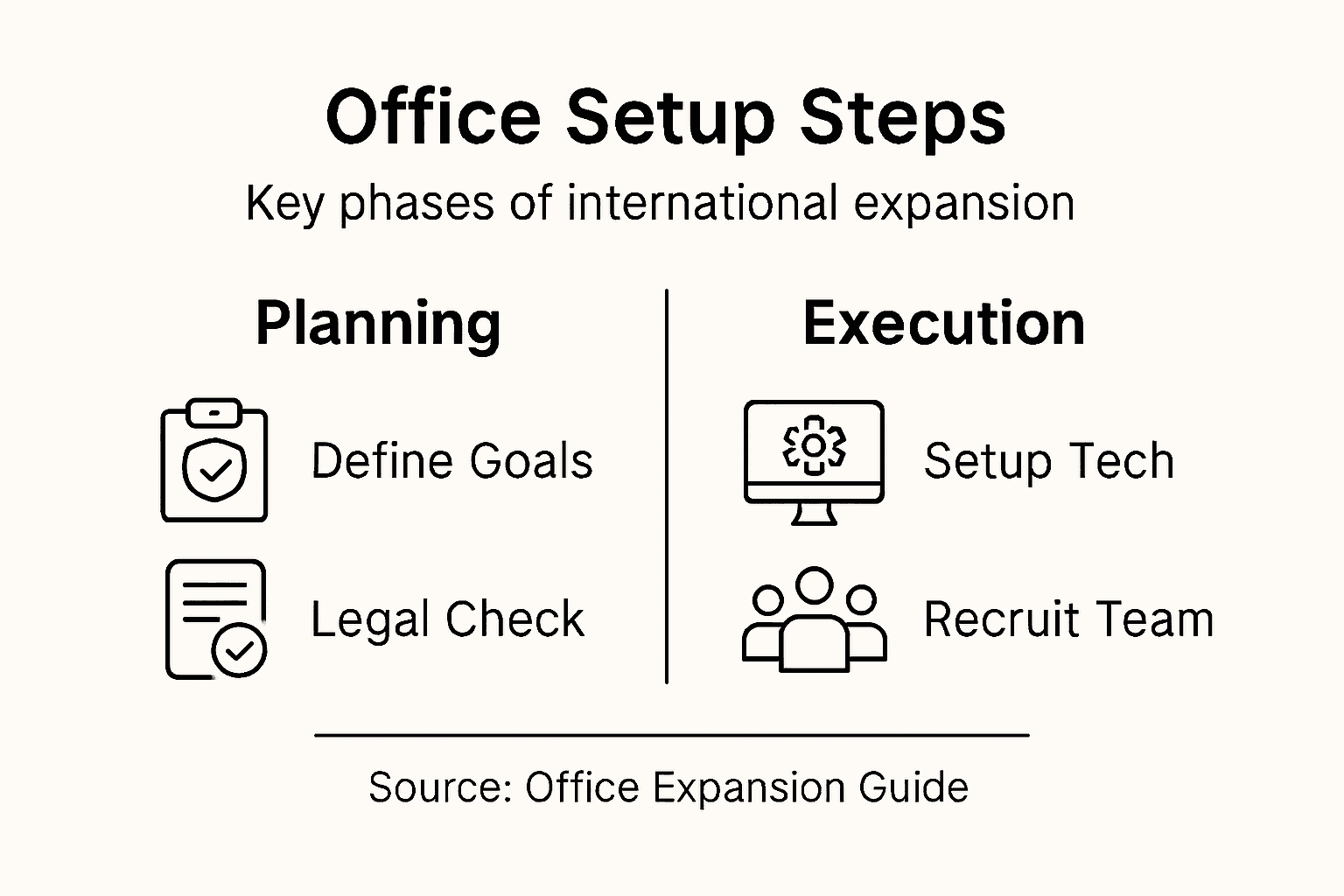
Professional tip: Create a dynamic review framework that allows for ongoing assessment and rapid adaptation, transforming your operational readiness check from a one-time event into a continuous improvement mechanism.
Streamline Your Global Office Setup with Expert Nearshoring Support
Establishing an international office involves complex challenges such as legal compliance, talent acquisition, and infrastructure development. The article highlights key pain points like defining strategic goals, selecting the right location, and building a tech-savvy operational foundation. You do not have to navigate this demanding process alone. At StorsenDigital, we specialize in delivering tailored solutions that align perfectly with your global expansion objectives. From comprehensive talent recruitment to managed BPO services and strategic consulting, our European nearshoring expertise empowers your business to overcome these challenges efficiently.

Unlock the full potential of your international operations by partnering with experts who understand the intricacies of compliance, infrastructure, and staffing. Visit our website now to explore how we can accelerate your global office establishment and provide scalable managed services designed for your success. Start your journey toward seamless global expansion today at StorsenDigital.com and learn more about our tailored outsourcing solutions.
Frequently Asked Questions
How do I define my office requirements for global expansion?
To define your office requirements, conduct a strategic assessment that outlines talent acquisition needs, operational infrastructure demands, compliance considerations, and technology requirements. Create a detailed matrix to document these requirements clearly and ensure they align with your organization’s broader growth objectives.
What factors should I consider when selecting a location for my international office?
When selecting a location, evaluate the business environment, quality and availability of the talent pool, tax incentives, infrastructure readiness, and the overall cost of doing business. Prioritize locations that offer operational efficiency and a straightforward regulatory landscape to streamline your setup process.
How can I ensure legal compliance when setting up an international office?
To ensure legal compliance, research local regulations and decide between establishing a branch office or a standalone legal entity. Engage with local legal professionals early to create a comprehensive compliance roadmap that anticipates regulatory challenges and helps you navigate local laws.
What are the key components to develop in my technology setup for an international office?
Focus on building a robust technology setup that includes network architecture, hardware procurement, security protocols, cloud platforms, and backup solutions. Plan for high-performance connectivity and consider implementing private networks to ensure secure communication among global teams.
How do I recruit the right personnel for my international office?
Recruit the right personnel by developing comprehensive role descriptions that outline expectations, qualifications, and opportunities for career growth. Prioritize candidates with strong technical skills, cultural compatibility, and excellent communication abilities to ensure alignment with your organization’s objectives.
What steps should I take to verify operational readiness before launching my office?
To verify operational readiness, conduct a thorough assessment of your technology infrastructure, team training, and communication protocols. Develop a comprehensive verification checklist to evaluate every component of your office environment and ensure that all systems and processes are prepared for full-scale operations.


