


Most American technology firms have cut operational costs by over 30 percent through strategic outsourcing. For European C-suite executives focused on sustainable growth, refining outsourcing objectives is more than risk management. It is about aligning each decision with long-term value and execution. This guide uncovers practical steps to define clear goals and requirements that drive measurable results while safeguarding profitability and innovation.
Table of Contents
- Step 1: Define Outsourcing Objectives and Requirements
- Step 2: Identify and Evaluate Qualified Outsourcing Partners
- Step 3: Negotiate Terms and Establish Service Agreements
- Step 4: Implement Operational Handover and Knowledge Transfer
- Step 5: Monitor Performance and Optimize Deliverables
Quick Summary
| Key Insight | Explanation |
|---|---|
| 1. Define Clear Objectives | Establish specific goals and requirements before outsourcing to ensure alignment with business needs. |
| 2. Evaluate Potential Partners | Use a structured approach to assess outsourcing partners based on their expertise, reputation, and stability. |
| 3. Negotiate Comprehensive Terms | Draft detailed service agreements that clarify responsibilities, expectations, and compliance standards. |
| 4. Implement Knowledge Transfer | Facilitate effective knowledge sharing and onboarding to minimize operational disruptions during the transition. |
| 5. Continuously Monitor Performance | Regularly evaluate outsourcing performance using KPIs to ensure strategic alignment and optimize outcomes. |
Step 1: Define Outsourcing Objectives and Requirements
Defining clear outsourcing objectives is the strategic foundation for successful business transformation. This critical first step involves identifying precise goals, understanding your organization’s specific needs, and creating a comprehensive roadmap for external partnership.
Start by conducting a thorough internal assessment of your current operational capabilities and performance gaps. Analyze which business functions could benefit most from external expertise, whether in software development, customer support, or back office processes. Global sourcing strategies require precise alignment with broader organizational goals, so map out exactly what outcomes you want to achieve. Consider factors like cost reduction, access to specialized talent, scalability, and potential productivity improvements.
Prepare a detailed requirements document that outlines specific expectations. This should include technical specifications, quality standards, communication protocols, performance metrics, and desired service level agreements. Break down each requirement into measurable components that potential outsourcing partners can understand and evaluate. Research potential providers who demonstrate expertise in your specific domain and can meet your precisely defined objectives.
Here’s a summary of common outsourcing objectives and their potential business impacts:
| Objective | Potential Business Impact | Example Outcome |
|---|---|---|
| Cost Reduction | Improved profitability | Lower operational expenditures |
| Access to Specialized Talent | Accelerated innovation | Faster product development |
| Scalability | Flexible resource allocation | Easier to manage demand spikes |
| Productivity Improvement | Higher efficiency | Reduced cycle times |
Pro Tip: Create a weighted scoring matrix to objectively evaluate potential outsourcing partners based on your predefined requirements and organizational priorities.
Step 2: Identify and Evaluate Qualified Outsourcing Partners
Identifying the right outsourcing partners is a critical process that can make or break your business strategy. This step involves comprehensive research, strategic assessment, and careful evaluation to find partners who can truly drive your organizational objectives forward.
European regulatory guidelines emphasize a rigorous due diligence process for selecting outsourcing partners, which means you need a structured approach. Begin by creating a detailed Request for Proposal (RFP) that clearly outlines your technical requirements, performance expectations, and specific business needs. Look beyond basic cost considerations and examine potential partners comprehensive capabilities. Focus on their technical expertise, industry reputation, financial stability, and proven track record of delivering results in your specific domain.
During the evaluation phase, conduct thorough background checks and request comprehensive case studies demonstrating their previous successes. Arrange initial meetings or video conferences to assess cultural alignment and communication compatibility. Evaluate their technological infrastructure, security protocols, and ability to scale services according to your business growth. Detailed vendor assessment should include analyzing their technical capabilities, financial health, and alignment with your organizational values. Pay special attention to their compliance standards, data protection measures, and commitment to quality management.
Use this table to compare key criteria when evaluating outsourcing partners:
| Evaluation Criteria | Why It Matters | Example Assessment Method |
|---|---|---|
| Technical Expertise | Ensures capability fit | Review case studies |
| Financial Stability | Reduces partnership risk | Analyze financial reports |
| Cultural Compatibility | Supports smooth collaboration | Hold introduction meetings |
| Compliance Standards | Protects legal interests | Request certifications |
Pro Tip: Create a comprehensive scorecard with weighted criteria to objectively compare and rank potential outsourcing partners, ensuring a data driven selection process.
Step 3: Negotiate Terms and Establish Service Agreements
Negotiating the right service agreements is a pivotal moment in the outsourcing process that can define the entire trajectory of your partnership. This critical step transforms your initial requirements into a legally binding framework that protects both parties and sets clear expectations for collaboration.
Effective outsourcing negotiation requires establishing measurable success criteria and clarifying ownership and responsibilities. Begin by drafting a comprehensive contract that covers all essential aspects of the partnership. This means meticulously defining scope of work, performance metrics, deliverable timelines, pricing structures, and payment terms. Be explicit about key performance indicators (KPIs) that will measure the outsourcing partner performance. Include detailed provisions for quality standards, reporting mechanisms, and mechanisms for addressing potential performance gaps.
Comprehensive outsourcing agreements must address complex legal and operational considerations including intellectual property rights, risk allocation, and dispute resolution mechanisms. Invest time in negotiating clauses related to data protection, confidentiality, and compliance standards. Consider including flexible terms that allow for contract adjustments as your business needs evolve. Ensure the agreement includes clear exit strategies and conditions for contract termination. Pay special attention to intellectual property ownership, ensuring your organization retains appropriate rights to work products and innovations developed during the partnership.
Pro Tip: Always have legal counsel review the service agreement to identify potential risks and ensure comprehensive protection of your organizational interests.
Step 4: Implement Operational Handover and Knowledge Transfer
Implementing a seamless operational handover is the critical bridge that transforms your outsourcing strategy from theoretical planning to practical execution. This phase determines whether your partnership will deliver meaningful results or become mired in miscommunication and operational friction.

Knowledge transfer is a deliberate process of sharing critical knowledge skills and expertise among stakeholders during outsourcing, requiring a structured and comprehensive approach. Begin by creating detailed documentation that captures existing workflows processes and institutional knowledge. Schedule intensive onboarding sessions where your internal team can directly transfer nuanced insights to the outsourcing partner. Develop comprehensive standard operating procedures (SOPs) that clearly outline each task expectation performance standard and quality benchmark. Implement collaborative technologies that facilitate real time information sharing and create transparent communication channels.
Establish a phased transition strategy that allows gradual knowledge exchange and skill development. Start with closely supervised tasks and progressively expand the outsourcing partner autonomy as they demonstrate competence and alignment with your organizational standards. Create mentorship programs where experienced team members can directly guide and validate the new teams performance. Monitor the knowledge transfer process through regular assessments feedback loops and performance reviews to ensure continuous improvement and identify potential knowledge gaps early in the partnership.
Pro Tip: Design a comprehensive knowledge management system that captures tacit and explicit organizational knowledge to facilitate smoother future transitions and reduce dependency on individual team members.
Step 5: Monitor Performance and Optimize Deliverables
Monitoring and optimizing outsourcing performance is a continuous process that ensures your partnership delivers strategic value and meets evolving business objectives. This critical stage transforms initial agreements into dynamic operational excellence through systematic evaluation and strategic refinement.
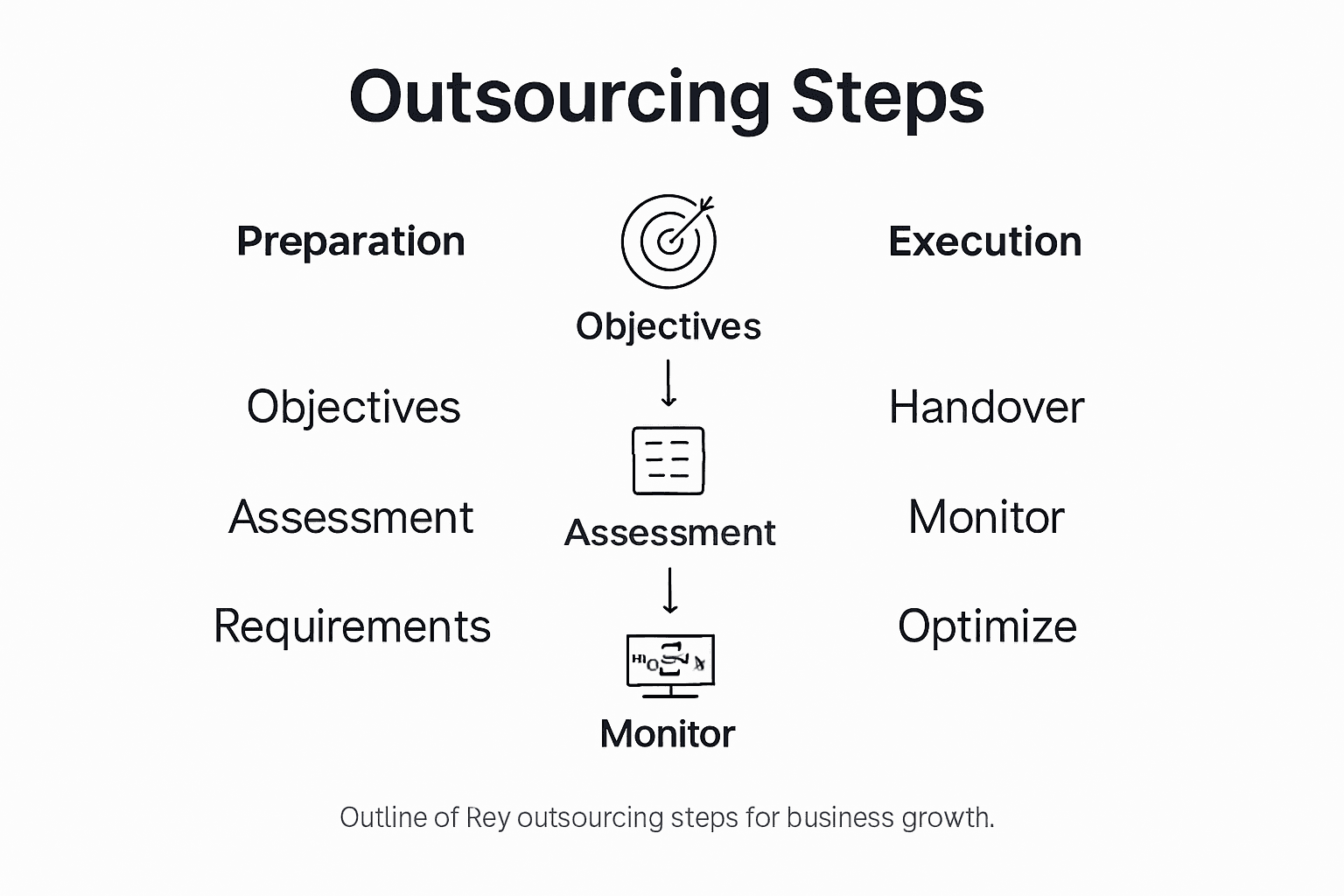
Monitoring outsourced tasks requires defining key performance indicators (KPIs) that align precisely with your business goals and establishing robust tracking systems. Develop a comprehensive performance dashboard that captures quantitative and qualitative metrics across multiple dimensions. Include indicators such as task completion rates delivery timeliness error rates cost efficiency and quality benchmarks. Schedule regular performance review meetings to discuss these metrics collaboratively enabling transparent dialogue about achievements challenges and improvement opportunities.
Effective KPI tracking enables businesses to evaluate vendor performance ensure contract alignment and optimize operational outcomes. Implement a structured feedback mechanism that allows for real time performance insights and swift corrective actions. Use data driven approaches to identify potential performance gaps analyze root causes and develop targeted improvement strategies. Consider implementing a balanced scorecard approach that weighs multiple performance dimensions beyond simple numeric metrics creating a holistic view of your outsourcing partnership effectiveness.
Pro Tip: Create a dynamic performance improvement framework that rewards exceptional performance and provides constructive pathways for addressing performance variations.
Transform Your Outsourcing Strategy Into Real Business Growth
Navigating the complex steps of outsourcing can feel overwhelming from defining clear objectives to ensuring seamless operational handover. The article highlights common pain points such as identifying qualified partners, negotiating precise service agreements, and monitoring performance effectively. If you want to avoid these challenges while gaining access to specialized European talent and scalable Business Process Outsourcing (BPO) solutions, tailored support is essential.
StorsenDigital.com offers expert assistance in every stage of your outsourcing journey. Whether you need help in talent recruitment, managed BPO services, or strategic consulting that aligns with your goals for cost reduction and productivity improvement, our deep expertise ensures your outsourcing partnership thrives. Discover how our customized processes and commitment to transparency can optimize your operations and accelerate your growth.
Ready to elevate your outsourcing approach with trusted European partners? Explore our contact page to begin a personalized consultation.

Take the critical step now to transform your outsourcing plan into successful execution with StorsenDigital.com. Connect with us today and unlock the competitive edge you deserve.
Frequently Asked Questions
What are the first steps in the outsourcing process for business growth?
To start the outsourcing process, you should define your objectives and requirements clearly. Conduct an internal assessment of your operational capabilities and identify which functions can benefit from outsourcing. Create a detailed requirements document to guide potential partners in understanding your needs.
How can I evaluate potential outsourcing partners effectively?
Evaluate potential outsourcing partners by creating a detailed Request for Proposal (RFP) that highlights your specific needs. Assess partners based on their technical expertise, financial stability, and cultural compatibility through background checks and initial meetings to ensure alignment with your organizational goals.
What should be included in a service agreement with an outsourcing partner?
A service agreement should define the scope of work, performance metrics, deliverable timelines, and pricing structures. Be explicit about key performance indicators and include provisions for quality standards, reporting, data protection, and exit strategies to protect both parties in the partnership.
How can I ensure effective knowledge transfer during the outsourcing transition?
To ensure effective knowledge transfer, create detailed documentation of your workflows and conduct onboarding sessions for the outsourcing partner. Implement standard operating procedures and use collaborative technologies to facilitate real-time communication and information sharing between teams.
What are the key performance indicators (KPIs) to monitor in an outsourcing partnership?
Develop KPIs that align with your business goals, such as task completion rates, delivery timeliness, and cost efficiency. Monitor these metrics through a performance dashboard and conduct regular review meetings to discuss achievements, challenges, and improvement opportunities.


