


Recruiting for growth often feels like balancing immediate needs with the pressure to support long-term business goals. For HR managers and procurement officers in European tech companies, this challenge intensifies when expanding operational capacity through nearshoring. Defining role requirements and aligning recruitment goals up front is more than just paperwork—it shapes every search and selection outcome. This guide highlights how strategic recruitment drives productivity, innovation, and competitive advantage by connecting hiring steps directly to overall business objectives.
Table of Contents
- Step 1: Define Role Requirements And Recruitment Goals
- Step 2: Prepare Sourcing Channels And Outreach Strategy
- Step 3: Screen And Assess Candidate Applications
- Step 4: Conduct Interviews And Evaluate Fit
- Step 5: Verify References And Finalize Selection
- Step 6: Onboard New Hires And Monitor Integration
Quick Summary
| Key Insight | Explanation |
|---|---|
| 1. Define role requirements clearly | Clearly outline core responsibilities and essential skills to prevent hiring mismatches. Focus on non-negotiables and document your criteria. |
| 2. Utilize diverse sourcing channels | Explore various recruitment channels beyond LinkedIn to attract a broader talent pool and reduce bias. Engage in industry-specific boards and referral programs. |
| 3. Standardize screening processes | Use consistent evaluation forms that align with defined role requirements to ensure fair candidate assessment and reduce personal bias in decision-making. |
| 4. Implement structured interviews | Prepare focused, relevant questions to assess both skills and cultural fit. Coordinate multiple interviewers to decrease bias and enhance evaluation accuracy. |
| 5. Prioritize comprehensive onboarding | Develop a detailed onboarding process that supports new hires through relationship building and integration into your company culture, enhancing retention. |
Step 1: Define role requirements and recruitment goals
Before you post a job listing or screen a single resume, take time to define exactly what you need. This step shapes everything that follows in your hiring process. You’re essentially creating a blueprint that aligns your hiring decisions with your company’s bigger picture and operational needs.
Start by asking yourself what problem this role will solve. Are you replacing someone who left, or are you adding capacity for growth? The answer matters because it changes how you approach the entire recruitment strategy. If you’re replacing existing talent, your requirements might focus on continuity and proven expertise in specific tools or processes. If you’re scaling, you might prioritize growth potential and adaptability. According to research on strategic recruitment and organizational goals, aligning hiring practices with long-term objectives directly impacts productivity, innovation, and your company’s competitive position.
Next, work backward from your business objectives. What will this person contribute to quarterly targets or annual growth plans? For HR managers in tech companies looking to enhance operational capacity through nearshoring, this means considering whether the role requires someone on-site, remote-capable, or fully distributed. Document the core responsibilities, key skills, experience level, and personality traits that matter most. Don’t get lost in nice-to-haves. Focus on non-negotiables. Will you accept someone with four years of experience, or do you genuinely need seven? Does this person need to manage a team, or work independently? These distinctions prevent wasted time pursuing candidates who don’t fit your actual needs.
Consider your internal talent pool before deciding you need external hiring. Can someone internally step into this role with minimal training? Could a promotion or role adjustment open new doors for existing staff? Workforce planning that assesses internal promotion possibilities first ensures cost-effective recruitment strategies and stronger team morale. This approach also reveals gaps in your current structure that external hiring alone won’t solve.
Here’s how internal and external hiring approaches compare:
| Aspect | Internal Hiring | External Hiring |
|---|---|---|
| Cost | Typically lower, leverages current staff | Higher, includes search and training |
| Speed | Faster onboarding, known talent | Longer timelines for sourcing and ramp-up |
| Culture Fit | Strong, already familiar | May require adaptation |
| Innovation Potential | Limited to existing expertise | Access to fresh perspectives |
Don’t underestimate the value of documenting this thinking. Write down your recruitment goals, timeline, and how this hire connects to bigger company initiatives. This clarity becomes your reference point throughout the process and helps your team stay aligned when reviewing candidates. It also prevents scope creep where hiring managers keep adding requirements mid-process.
If you’re considering nearshoring solutions like those offered through www.storsendigital.com, defining your role requirements upfront becomes even more critical. Dedicated teams built in cost-effective European locations like Bosnia and Herzegovina deliver maximum value when you’ve clearly communicated role expectations, skill requirements, and how the position supports your strategic objectives. StorsenDigital specializes in building dedicated teams that scale with your business needs, and having crystal-clear role definitions accelerates the team formation process significantly.
Pro tip: Create a one-page role summary that captures the position’s core purpose, top three required skills, experience level, and connection to company goals. Share this with stakeholders before recruitment begins to catch misalignments early and save time during the selection phase.
Step 2: Prepare sourcing channels and outreach strategy
Now that you know what you’re looking for, it’s time to figure out where to find those candidates and how to reach them. Your sourcing strategy determines whether you attract a handful of predictable applicants or a diverse, qualified pool of talent that you might not have considered through traditional methods.
Start by mapping out your available channels. LinkedIn remains a powerhouse for professional recruitment, but don’t stop there. Industry-specific job boards, professional associations, university alumni networks, and employee referral programs all offer different angles into talent pools. For tech companies seeking to build capacity, consider the geographic flexibility that nearshoring offers. When you’re open to remote or distributed teams, you unlock talent beyond your immediate market. Skills-based sourcing that expands beyond traditional channels enables you to reach diverse and qualified applicants by emphasizing what candidates can do rather than where they studied or which companies they’ve worked for. This approach reduces bias and opens doors to unconventional talent that might bring fresh perspectives to your team.
Develop a targeted outreach message for each channel. Your LinkedIn recruitment message looks different from an email to a university career office or a post in a professional Slack community. Customize your language and value proposition for each audience. For roles that don’t require physical presence, highlight flexibility and remote work options. If you’re partnering with nearshoring providers like www.storsendigital.com, you’re tapping into European talent markets where Bosnia and Herzegovina stands out as a cost-effective location with strong technical capability and cultural alignment with Western European and American business practices. When you’re sourcing for these partnerships, your outreach should emphasize the opportunity to work with international clients, professional development in a global context, and competitive compensation at best cost rates. StorsenDigital builds dedicated teams that align with your specific needs, so clear communication about role expectations in your outreach accelerates the entire process.
Consider timing and frequency of outreach. Passive candidates who aren’t actively job hunting often respond better to personalized, low-pressure messages than to generic blast emails. Active job seekers move quickly, so speed matters. Strategic recruitment that devises comprehensive sourcing plans aligns outreach efforts with your organizational goals and ensures you attract talent that supports long-term performance. Document your sourcing activities and response rates so you know which channels generate the best candidates. Over time, this data reveals patterns and helps you allocate recruitment energy where it matters most.
Make your job postings inclusive and skills-focused. Instead of requiring “five years of experience in X,” describe the actual problems candidates will solve. Highlight the skills you truly need and indicate where you’re flexible. This opens your candidate pool substantially. Include information about company culture, growth opportunities, and how this role contributes to something meaningful. Candidates increasingly want to understand the bigger picture, not just the daily tasks.
Don’t neglect your internal network. Employee referrals often produce higher-quality hires because your team members understand your culture and can accurately assess fit. Create a simple referral program with clear incentives and easy submission processes. Your existing staff are your best ambassadors and often know qualified people outside your immediate network.
Pro tip: Test your outreach message with a small group of candidates first, then iterate based on response rates and feedback before launching a full campaign. This small investment upfront prevents wasted effort on messaging that doesn’t resonate with your target audience.
Step 3: Screen and assess candidate applications
You’ve sent out your outreach and applications are flowing in. Now comes the critical task of separating strong candidates from the rest. Your screening process determines whether you move forward with people who can actually do the job or waste time interviewing candidates who don’t fit. This step requires consistency, fairness, and a clear framework to avoid letting personal bias influence your decisions.
Start by creating a standardized evaluation form that maps directly to the role requirements you defined earlier. If the position demands expertise in cloud infrastructure, that’s a criterion. If leadership experience isn’t required, don’t penalize someone for lacking it. Structured evaluation forms with criteria aligned to job competencies ensure consistency and fairness throughout your screening process. Without this structure, different team members evaluate candidates differently, and you risk missing strong talent or advancing weak candidates simply because of inconsistent standards. Use a simple rating scale for each competency. Did this candidate clearly demonstrate the required skill? Yes, somewhat, or no. Add a brief comment explaining your reasoning. This documentation becomes invaluable when you’re comparing candidates later and helps you defend your decisions if questions arise.

Resist the urge to skim resumes quickly. Give each application five to ten minutes of focused attention. Look for evidence of capability, not perfect formatting or prestigious company names. A candidate from a lesser-known startup might have more relevant experience than someone from a Fortune 500 company. Watch for what they actually accomplished rather than just the titles they held. Did they lead a project, improve a process, or solve a specific problem? Those concrete examples tell you more than generic job descriptions. Selection assessment methods including formalized tools and structured interviews objectively assess candidate competencies and ensure alignment with position requirements. Consider whether a phone screening or brief skills test would help you evaluate candidates more accurately before investing time in full interviews.
Screen out obvious mismatches quickly, but keep candidates who are close to your requirements. Someone missing one preferred skill but strong in other areas might grow into the role faster than you think. Prioritize your three to five non-negotiable competencies and be flexible about everything else. If you’re screening candidates for roles within a nearshoring partnership through www.storsendigital.com, remember that talent from Bosnia and Herzegovina brings strong technical capabilities and professional maturity, even if their backgrounds look different from your usual applicant pool. StorsenDigital’s dedicated teams demonstrate high capability and cultural alignment, so focus your screening on skills and problem-solving ability rather than requiring candidates to follow conventional career paths. This opens your access to qualified talent that might otherwise be overlooked.
Document your top candidates clearly. Write specific notes about why they advanced. Did they demonstrate the core competencies? Did they show growth potential? Did they communicate clearly about past challenges and how they handled them? These notes guide your interview team and ensure everyone understands who you’re genuinely interested in and why. Conduct a brief calibration conversation with your screening team before moving to interviews. What patterns did you notice? Were certain competencies harder to assess from applications alone? Should you ask different questions during interviews? This quick debrief improves your overall hiring accuracy and catches potential biases before they influence final decisions.
Treat this step seriously because it shapes everything that follows. Strong screening means your interview panel spends time with genuinely qualified candidates. Weak screening wastes everyone’s time and risks hiring someone who looks good on paper but can’t perform the job.
Pro tip: Create a simple scoring spreadsheet where you rate each candidate against your key competencies using a numerical scale. This removes ambiguity, makes comparisons objective, and gives you a reliable shortlist before interviews begin.
Step 4: Conduct interviews and evaluate fit
The interview is where you move beyond resumes and actually talk with candidates. This conversation reveals whether someone has the competencies to do the job and whether they’ll thrive in your organization’s culture. Many hiring managers treat interviews casually, but they’re too important for that. You’re making decisions that affect your team’s performance and your company’s trajectory, so approach this step with intention and structure.
Prepare thoroughly before each interview. Review the candidate’s background and note specific questions based on their experience. If they mention leading a project, ask them to walk you through what went wrong and how they handled it. Generic interview questions produce generic answers and don’t reveal much. Structured interviews using consistent formats and job-related questions fairly assess candidates while providing a positive candidate experience. You want the same core questions for every candidate so you can compare responses accurately. One interviewer asking about conflict resolution while another asks about technical depth leaves you without comparable data. Develop five to seven essential questions tied directly to your key competencies. For a senior engineer role, ask about their approach to code reviews and mentoring junior developers. For a project manager, ask how they’ve handled scope creep or timeline pressure. These targeted questions reveal capability far better than “Tell me about yourself.”
Involve multiple interviewers and rotate them across candidates. When the same person interviews everyone, their personal preferences skew your results. A diverse interview panel catches different things and reduces individual bias. Effective interviews employing standardized questions and consistent evaluation criteria ensure equity throughout candidate assessment. Before interviews begin, brief everyone on the role requirements and evaluation criteria. Share the interview questions so interviewers know what their colleagues are asking. Document responses immediately after each interview while details are fresh. Don’t rely on memory. Train your interviewers to listen actively rather than just checking boxes. The best interviews feel like genuine conversations where you learn who the candidate really is.
Evaluate two dimensions. First, person-job fit asks whether the candidate has the skills and experience to perform the role successfully. Second, person-organization fit examines whether their values and working style align with your company culture. Both matter. Someone technically brilliant but misaligned with your values creates friction. Someone culturally aligned but lacking core competencies won’t succeed. If you’re building teams through nearshoring partnerships like those at www.storsendigital.com, cultural fit takes on additional importance. You’re creating dedicated teams that work with international clients, so candidates need comfort with cross-cultural collaboration and virtual communication. StorsenDigital’s European talent demonstrates strong alignment with Western business practices, but you should still interview thoroughly to ensure candidates understand your specific workflows, communication expectations, and business objectives. Take time to discuss how they’ll work remotely, their experience with distributed teams, and their comfort with asynchronous communication.
After all interviews are complete, bring your interview panel together for a calibration discussion. What patterns emerged? Did candidates struggle with specific questions? Did anyone stand out? Force yourself to rank candidates and articulate why. Avoid vague language like “great energy” or “seems smart.” Instead, reference specific examples. When candidate A described handling a production outage and candidate B didn’t address crisis management at all, that’s a meaningful distinction. Document your findings clearly because you’ll reference them if the candidate asks why they were selected or rejected.
Close the interview loop professionally. Thank every candidate promptly, whether they advance or not. Your interview experience shapes their perception of your company. Someone rejected today might refer talented people tomorrow or become a customer. Treat them with respect.
Pro tip: Use a simple rating sheet for each candidate where interviewers score them on key competencies immediately after the interview, then compare scores before discussion begins. This unbiased first pass reveals consensus and highlights areas where interviewers diverged, which sparks valuable conversation.
Step 5: Verify references and finalize selection
You’ve interviewed candidates and narrowed your choice to finalists. Before you extend an offer, verify what they’ve told you. Reference checks are your last checkpoint to confirm that candidates truly have the experience they claim and that they performed well in previous roles. This step protects you legally and ensures you’re making an informed decision about who joins your team.
Start by requesting at least three professional references from your top candidates. Ideally, these should include supervisors or managers who directly observed their work. References from peers or subordinates provide valuable perspective, but supervisors carry more weight because they evaluated performance, conduct, and fit within organizational structure. Ask candidates to provide contact information and confirm they’ve alerted their references to expect your call. This courtesy prevents awkward moments when you reach someone who has no idea why you’re calling. Reference checks provide critical insights into candidate past performance and verify information presented during hiring. They help you rank finalists and support your hiring decision with factual validation rather than gut feelings or interview impressions alone.
Prepare your reference check questions before making calls. You want consistent inquiries across all references so you can compare responses accurately. Ask about employment dates, job title, and key responsibilities to verify resume information. Then dig deeper. How did this person handle deadlines under pressure? Did they work well in teams? What was their greatest strength in this role? What areas could they improve? Ask open-ended questions that encourage detailed answers rather than simple yes-or-no responses. If a reference seems hesitant or evasive, that signals something worth exploring further. Listen for what they say and what they don’t say. Silence after you ask about reliability speaks volumes. Reference checking conducted responsibly ensures accurate candidate evaluations while avoiding legal risks. Document what each reference tells you factually without including opinions or judgments. Write down specific examples they mention rather than vague impressions. These notes become part of your hiring record and protect you if questions arise later about your selection process.
Be cautious about making assumptions based on reference quality. Sometimes excellent candidates have managers who aren’t great communicators. Sometimes former employers give bland responses because of company policy rather than lack of confidence in the candidate. If you hear concerns about past performance, ask clarifying questions. Was this a one-time issue or a pattern? How did the candidate respond to feedback? People grow and change. Someone who struggled with communication two years ago might have invested in coaching and improved substantially. If you’re considering candidates for nearshoring partnerships through www.storsendigital.com, reference checks become especially valuable. You’re building dedicated teams across geographic and cultural boundaries, so understanding how candidates handled remote work, cross-functional collaboration, and communication is crucial. StorsenDigital’s European talent pool brings strong capability, but verify that your specific finalists have experience working with international clients and distributed teams. Ask previous employers specifically about their remote collaboration skills and adaptability to different working styles.
Once you’ve checked references and have all information in hand, schedule a final calibration meeting with your hiring team. Review interview scores, reference feedback, and overall impressions. Make a clear decision about who you’re offering the role to and why. This focused discussion prevents second-guessing later and ensures everyone understands the rationale. Extend your offer promptly once you’ve decided. The best candidates have other opportunities, and delays cost you talent. Communicate clearly about compensation, benefits, start date, and next steps. Follow up in writing to confirm everything discussed verbally.
Treat candidates you didn’t select professionally. Send timely rejection messages thanking them for their time. Brief feedback helps them grow. Your hiring process reflects your company culture, so every interaction shapes how people perceive your organization.
Pro tip: Call references yourself rather than delegating this to HR. Personal conversation reveals nuance that email or formal questionnaires miss, and you build better intuition about whether a reference’s feedback aligns with your candidate’s interview performance.
Step 6: Onboard new hires and monitor integration
You’ve made your hire. The real work begins now. Onboarding determines whether your new employee becomes productive quickly or struggles for months. It shapes their first impression of your company and influences whether they stay long-term. Many organizations treat onboarding as a one-day orientation, but that’s a missed opportunity. Strategic onboarding is a months-long process that accelerates effectiveness and builds connection to your organization.
Start before their first day. Send welcome materials, confirm start time and location, and ensure their workspace is ready. Have IT provision their equipment, set up email and access credentials, and create accounts on necessary platforms. Nothing undermines confidence faster than showing up day one and discovering you can’t access the tools you need. Assign a clear point person, ideally their direct manager, but also consider assigning a peer mentor from outside their immediate team. This mentor handles the human side of integration, introducing them to people, explaining unwritten cultural norms, and providing candid perspective on how things really work versus how they appear on paper. Effective onboarding is a formal, detailed process that accelerates external hires’ effectiveness by identifying key stakeholders, establishing clear expectations, and explicitly teaching culture. Structured onboarding shortens time to proficiency and strengthens retention. Document your onboarding process so it’s consistent regardless of who’s managing it. New hires should receive clear written materials about company mission, organizational structure, key policies, and how your specific team operates.
During the first week, prioritize relationship building over heavy technical work. Let them meet their team, understand the broader organizational context, and ask questions without pressure to perform. Schedule individual conversations with key stakeholders they’ll work with regularly. Have them attend relevant meetings so they begin understanding workflows and priorities. This investment pays dividends because they start building the network and context they’ll rely on for months ahead. Around day thirty, conduct a check-in specifically about their experience. Are they getting the information and support they need? What’s confusing? What’s working well? Listen carefully and adjust support based on their feedback. Some new hires need more technical training, others need help navigating social dynamics, and many need help understanding decision-making processes.
Onboarding new hires is a strategic process lasting up to a year, essential for retention and engagement. A comprehensive program introduces culture, workflow, and goals with support from management and coworkers. If you’ve hired someone for a nearshoring partnership through www.storsendigital.com, onboarding takes on additional complexity. You’re integrating someone who may be working across time zones and different cultural contexts. Dedicate extra time to clarifying communication expectations, meeting rhythms, and how your teams collaborate virtually. Ensure they understand your company’s specific approach to remote work, decision-making, and escalation paths. StorsenDigital’s dedicated teams bring strong capability, but your integration process determines how quickly they become genuinely productive and whether they feel like part of your organization or like external contractors. Introduce them to key people across your company through virtual meetings, not just email introductions. Help them understand your market, competitive position, and how their role contributes to strategic objectives. This context makes their work more meaningful.
Schedule formal check-ins at thirty, sixty, and ninety days. These conversations assess progress, address concerns before they become problems, and reinforce that you’re invested in their success. Around ninety days, have a deeper conversation about how they’re settling in and whether they need additional support in any areas. Six months in, conduct another reflective check-in. By then, they should feel substantially more integrated and productive. Continue monitoring through month twelve because that’s when many new hires decide whether they’re staying long-term. Gather feedback from their manager and teammates about how integration is progressing. Are there relationship issues worth addressing? Is there a skill gap that needs development? Is their workload appropriate? Use this information to refine your onboarding process for future hires.
The table below summarizes key milestones for structured onboarding:
| Time Frame | Goal | Key Activities |
|---|---|---|
| First Week | Relationship building | Meet team, settle in, intro calls |
| 30 Days | Initial integration check | Feedback session, adjust support |
| 90 Days | Performance and fit review | In-depth evaluation, set next goals |
| 12 Months | Long-term integration | Assess retention, refine processes |
Pro tip: Create a simple onboarding checklist that breaks first-year integration into monthly milestones with specific goals for relationship building, skill development, and cultural integration. Share this with new hires upfront so they know what to expect and can self-assess their progress.
Streamline Your Recruitment Process with Expert Nearshoring Support
Hiring the right talent is one of the most critical steps to achieving your company’s strategic goals. The article’s step-by-step recruitment process highlights common challenges such as defining clear role requirements, sourcing qualified candidates, and conducting thorough screening and onboarding. These pain points often slow down hiring and risk mismatched hires that cost time and resources. If you want to overcome these challenges, reduce recruitment complexity, and gain access to highly skilled European talent, our tailored outsourcing and nearshoring solutions can help.

Partner with StorsenDigital for dedicated teams built in cost-effective European locations like Bosnia and Herzegovina where your recruitment goals are aligned with local talent expertise and cultural fit. Our comprehensive services cover talent acquisition, managed BPO, and office establishment so you can scale your operations efficiently while ensuring smooth onboarding and integration. Visit our contact page today to start building your nearshoring partnership with confidence and accelerate your hiring success.
Frequently Asked Questions
What are the key steps in the recruitment process for efficient hiring?
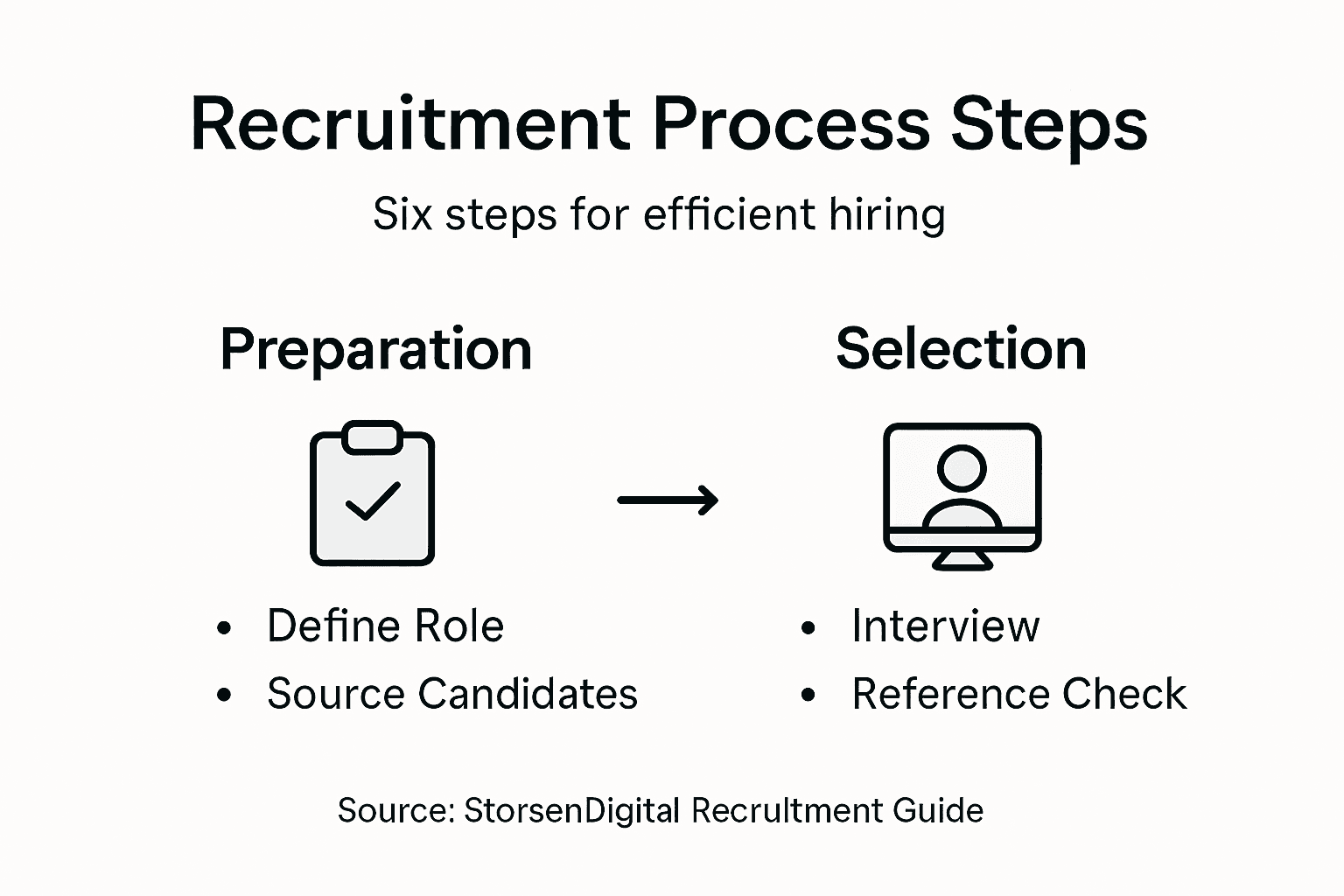
The key steps in the recruitment process include defining role requirements, preparing sourcing channels, screening applications, conducting interviews, verifying references, and onboarding new hires. Start by clearly outlining your hiring goals to align candidate selection with your organizational needs.
How can I define role requirements effectively?
To define role requirements effectively, clarify what problem the role will solve and work backward from your business objectives. Document core responsibilities, key skills, and necessary experience to avoid ambiguity during the hiring process.
What sourcing channels should I use to attract the right candidates?
Utilize a mix of sourcing channels including LinkedIn, industry-specific job boards, employee referrals, and university networks. Map out your available channels and tailor outreach messages to each for better candidate engagement.
How do I ensure a fair screening process for candidates?
Create a standardized evaluation form that directly corresponds to the role’s requirements and ensures consistency across evaluations. Give each resume focused attention, scoring candidates based on their competencies to avoid bias and streamline comparisons.
What should I include during the onboarding process?
Focus on relationship building, clear expectations, and detailed training during the onboarding process. Schedule regular check-ins at 30, 60, and 90 days to monitor progress and ensure that the new hire integrates well into your team.
How can I evaluate cultural fit during interviews?
Evaluate cultural fit by asking questions that assess a candidate’s values, working style, and ability to adapt to your organization’s culture. Include situational questions to see how candidates handle challenges and work in teams to ensure alignment with your company’s culture.


