


Hiring top talent for European tech roles often feels like searching for needles in a haystack. Competing with global companies and balancing cost with quality can leave even seasoned HR directors frustrated. Yet, optimizing your talent acquisition process with clear success profiles and robust sourcing channels transforms this challenge into a strategic advantage. This guide highlights practical steps to leverage inclusive skills-based hiring and nearshoring, gaining access to high-performing professionals in countries like Bosnia and Herzegovina while keeping recruitment aligned with your organizational goals.
Table of Contents
- Step 1: Define Job Requirements And Success Profiles
- Step 2: Build And Optimize Sourcing Channels
- Step 3: Screen Candidates For Skills And Fit
- Step 4: Conduct Structured Interviews And Assessments
- Step 5: Verify Credentials And Finalize Offers
Quick Summary
| Key Point | Explanation |
|---|---|
| 1. Define specific job requirements | Identify exact capabilities and behavioral traits needed for each role to improve hiring accuracy and candidate performance. |
| 2. Optimize diverse sourcing channels | Explore various recruitment channels, including community participation and educational partnerships, to access a broader and higher quality talent pool. |
| 3. Implement structured screening processes | Use skills assessments and standardized scorecards to ensure unbiased evaluation of candidates based on their capabilities and cultural fit. |
| 4. Conduct structured interviews | Ask predetermined, consistent questions to all candidates, enabling fair evaluation and reducing biases in the hiring process. |
| 5. Verify credentials rigorously | Confirm employment history, education, and references to ensure candidates meet qualifications and expectations before making a final offer. |
Step 1: Define job requirements and success profiles
You’re about to do something that will transform how you hire. Defining job requirements and success profiles is not about creating a generic job description that sounds like every other posting in your industry. This is about identifying exactly what capabilities, behaviors, and experiences your organization actually needs to fill a role. When you get this right, everything downstream becomes easier. Your screening process works better. Your interviews become more focused. Your hiring decisions become sharper. And crucially, your new hires perform better because they truly match what your role demands.
Start by conducting what HR professionals call a job-fit and organization-fit analysis. Here’s what this means in practice: you’re examining both the technical demands of the position and how the successful candidate needs to think and behave within your company culture. For a senior developer role, the job-fit includes your tech stack expertise and architectural knowledge. The organization-fit means understanding if they thrive in your collaborative environment, handle your decision-making processes, and align with how your team operates. To do this effectively, talk to current high performers in similar roles. Ask them what actually made them successful versus what the old job description said they needed. Ask their managers what distinguishes the top performer from someone who’s just adequate. This intelligence is gold. It reveals the hidden requirements that job descriptions typically miss.
Once you’ve gathered this insight, translate it into concrete success profiles. According to research on talent management and recruitment outcomes, defining success profiles by identifying critical roles and capabilities enables better recruitment outcomes by ensuring job requirements align with organizational needs. Document the three to five critical capabilities that matter most for success. Not everything. The critical ones. For a customer support team lead in your European tech company, this might include fluency in handling frustrated customers, ability to coach your team members through complex problems, and comfort with ambiguity when standard procedures don’t cover the situation. Get specific about what success looks like. Instead of “strong communication skills,” write “can explain technical concepts to non-technical stakeholders without oversimplifying.” Instead of “team player,” write “actively seeks input from colleagues before making decisions and genuinely incorporates feedback.”
Now consider the behavioral indicators. These are the observable actions that reveal whether someone possesses the capability. Someone with strong decision-making ability might “prioritizes gathering complete information before deciding” or “communicates decisions clearly and explains reasoning.” These indicators become the foundation for your interview questions later. You’re building a bridge from the abstract capabilities to the concrete interview scenarios you’ll present to candidates. This level of specificity prevents the common mistake of hiring talented people who can’t succeed in your particular environment.
Leverage behavior-based and situation-based interview approaches to ground your requirements in real performance data. This means your interview questions will ask candidates to describe how they’ve handled specific situations in the past or how they’d approach scenarios you present. This gives you far more predictive information than asking generic questions about strengths and weaknesses.
When you’re defining requirements for nearshoring or building dedicated teams through partners like StorsenDigital, this clarity becomes even more critical. Your nearshoring partner needs to understand not just the technical specifications but the cultural and behavioral dimensions of what success looks like in your organization. A developer from Bosnia and Herzegovina who understands your company’s communication style and decision-making approach will perform at a completely different level than someone hired purely on technical credentials. Visit www.storsendigital.com to explore how StorsenDigital specializes in building dedicated teams that align with both your technical requirements and organizational culture, ensuring your talent acquisition strategy accounts for European cost optimization without compromising quality or fit.
Pro tip: Document your success profiles in a simple one-page format that you can reference during every stage of hiring, from job posting to final interviews, ensuring your entire hiring team stays aligned on what you’re actually looking for.
Step 2: Build and optimize sourcing channels
Your sourcing channels are where talent actually comes from. Most hiring managers think of job boards and LinkedIn, and yes, those matter. But if you’re only fishing in those two ponds, you’re missing 80 percent of the candidates who could thrive in your organization. Building and optimizing sourcing channels means deliberately creating multiple pathways to find qualified people, including routes that traditional recruiters rarely explore. This is where you expand your reach, diversify your candidate pool, and honestly, where you find better fits faster because you’re accessing talent before competitors discover them.
Start by mapping out where your ideal candidates actually spend their time and how they learn about opportunities. If you’re hiring software engineers in Europe, technical communities matter. GitHub, Stack Overflow, specialized Discord communities, and regional tech meetups are places where developers congregate. If you’re building a customer success team, LinkedIn groups focused on customer experience and professional forums are relevant. The key is thinking about where people with your target skills naturally congregate. Then, create a presence there. This doesn’t mean aggressive recruitment posting. It means genuine participation. Share insights. Answer questions. Build credibility. When you do post an opportunity, people recognize your organization as legitimate and engaged with the community, not just another recruiter grabbing attention.
Inclusive skills-based hiring practices advocate for focusing on skills rather than credentials and sourcing candidates beyond traditional channels. This approach fundamentally changes where and how you recruit. Instead of requiring a university degree from a specific institution, you’re sourcing from coding bootcamp graduates, people with self-taught expertise, and career changers from adjacent fields. This dramatically widens your talent pool. Write job postings that emphasize the skills you actually need and the problems you want solved, not the credential box everyone expects to see checked. A developer who built three successful projects through self-study might outperform someone with a computer science degree who never applied their knowledge. By sourcing broadly, you find these diamonds.
Build relationships with talent sources before you need them. This is where the supply chain thinking applies. According to research on managing talent pipelines like supply chains, companies should develop collaborative relationships with education and workforce partners to create sustainable talent supply chains. For European tech companies, this means connecting with coding bootcamps in your region, partnering with universities that teach relevant skills, and maintaining relationships with industry associations. When you hire through partners like StorsenDigital, you’re tapping into an established network of vetted talent in Europe. StorsenDigital builds dedicated teams that draw from Bosnia and Herzegovina’s strong tech talent pool, offering you access to developers and professionals with competitive skills at optimal European costs. The partnership model means you’re not constantly recruiting from scratch. You have a predictable supply of qualified candidates who understand your culture and requirements.
Don’t overlook internal sourcing. Your current employees know talented people. Implement a structured referral program with clear incentives, but more importantly, make it easy for your team to recommend people. They understand your culture and what success looks like, so their referrals tend to be higher quality. Also actively recruit from within. Someone in your finance team might be ready to move into operations. Someone in customer support could become an excellent product manager. Internal sourcing costs less, onboards faster, and creates growth pathways that improve retention.
Optimize your sourcing channels by measuring what actually works. Track where your best hires came from. If your top performers consistently came from GitHub and referrals but rarely from job boards, shift your effort accordingly. Some channels will surprise you. You might discover that posting in specific regional tech Slack communities yields better candidates than expensive premium job board subscriptions. Use data to guide where you invest your sourcing energy.
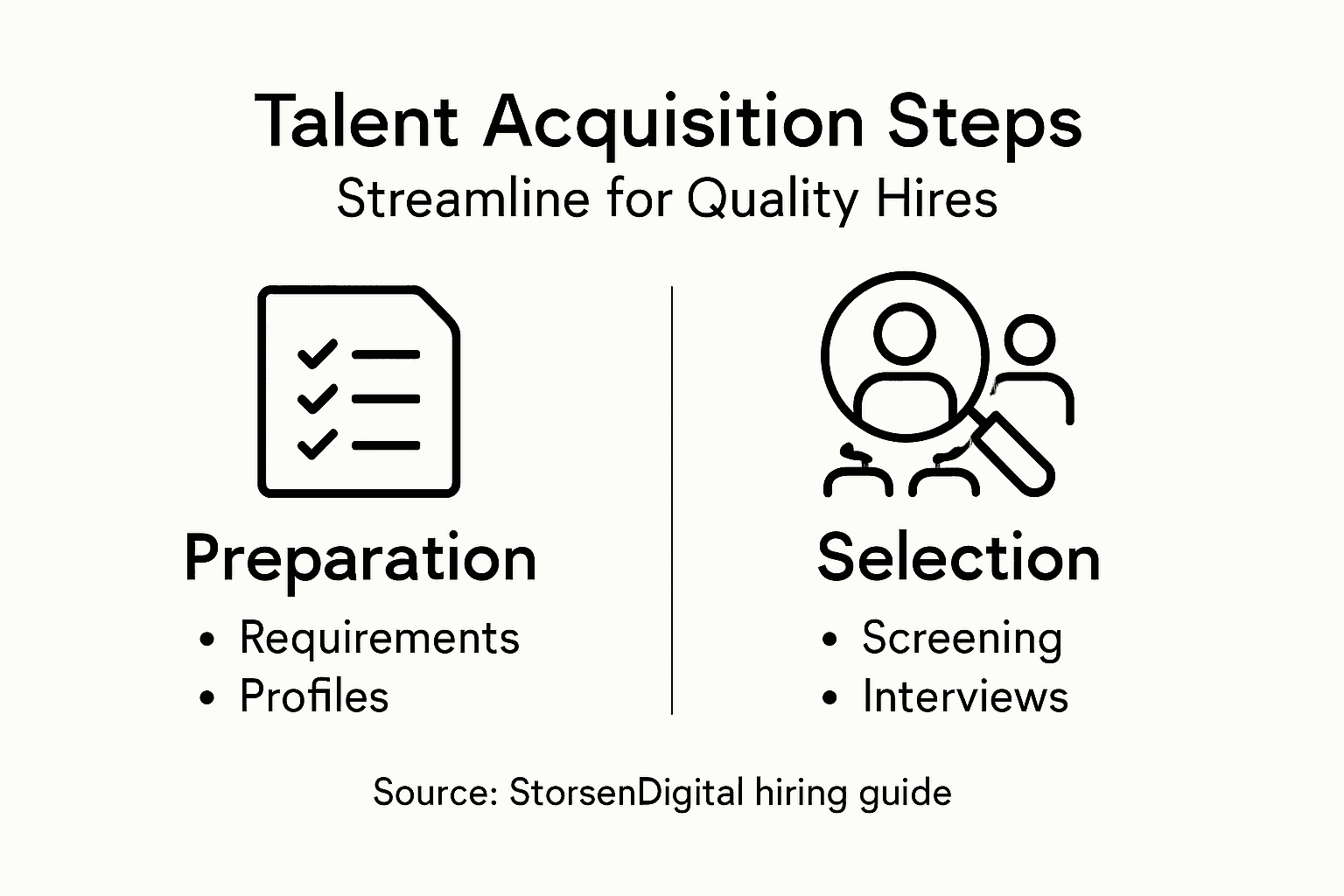
Here’s a comparison of common candidate sourcing channels and their advantages for European tech hiring:
| Sourcing Channel | Reach and Audience | Main Advantages | Example Usage |
|---|---|---|---|
| Job Boards | Broad, high volume | Fast posting, easy access | Popular tech roles |
| Developer Communities | Niche, skill-focused | Relevant discussions, targeted pool | GitHub, Stack Overflow |
| Internal Referrals | Employee networks | Higher fit, trusted recommendations | Structured referral programs |
| Bootcamp Partnerships | Recent graduates, career changers | Diverse backgrounds, practical skills | Local coding bootcamps |
| Nearshoring Partners | Cross-border talent | Cost-efficient, vetted candidates | StorsenDigital, regional agencies |
Visit www.storsendigital.com to explore how StorsenDigital optimizes sourcing channels across Europe, providing access to dedicated talent pools in Bosnia and Herzegovina and beyond, delivering premium quality at best cost for your talent acquisition strategy.
Pro tip: Create a sourcing calendar where you consistently engage with talent communities throughout the year, not just when you have open positions, so when you do recruit, you already have relationships and visibility with qualified candidates.
Step 3: Screen candidates for skills and fit
Screening is where you separate serious candidates from those who applied because the job posting caught their eye. You’re moving beyond the resume now and actually evaluating whether someone has the capabilities you defined earlier and whether they fit your organizational culture. This step determines who gets invited to interviews, so getting it right saves enormous time downstream. Bad screening wastes everyone’s time interviewing people who were never going to work out. Good screening creates a shortlist of candidates who genuinely could succeed in your role.

Start with a skills assessment that directly maps to the success profiles you created. If one of your critical capabilities is “can analyze complex data and communicate findings clearly,” then your screening should test exactly that. This might mean asking candidates to walk through a past project where they extracted insights from messy data, or giving them a practical scenario to evaluate. You’re not testing random knowledge. You’re testing the specific competencies that matter for success. Use behavioral questions during this screening phase. Ask about times they handled situations similar to what they’ll encounter in your role. “Tell me about a time you had to make a decision with incomplete information” reveals more about decision-making than “How would you approach this hypothetically.” Past behavior predicts future performance far better than theoretical answers.
Don’t neglect the fit assessment. According to research on job-fit measures and assessment tools, standardized questionnaires help identify applicants whose profiles align with organizational culture and job demands. These aren’t personality tests for entertainment. They’re tools that compare a candidate’s values, work preferences, and communication style to your organization’s characteristics. Does this person prefer structured environments or thrive in ambiguity? Do they prefer independent work or collaborative problem-solving? Do they value stability or growth and change? When you’re hiring for a fast-moving startup, someone who craves predictability will become frustrated. When you’re building stable enterprise systems, someone who needs constant change might feel bored. Conducting organization-fit and job-fit analyses ensures that your candidates aren’t just skilled but culturally aligned with how your team operates.
Create a standardized screening scorecard. This keeps your evaluation consistent and prevents bias from creeping in. Your scorecard should have specific criteria for technical skills and cultural fit, each with clear indicators of what excellent, good, and acceptable look like. One interviewer shouldn’t give a candidate a 9 for communication while another gives them a 5 based on different standards. When you’re evaluating candidates from nearshoring partners like StorsenDigital, a standardized approach becomes even more valuable. A developer from Bosnia and Herzegovina might have different communication patterns than someone from your headquarters, but a clear scorecard helps you distinguish between different communication styles and actual communication competency. You can assess whether someone communicates differently but equally effectively.
Scale your screening efficiently. If you’re getting 200 applications for one role, you can’t spend 30 minutes evaluating each one. Use initial filters that are objective. Does this candidate have the minimum required technical background? Have they worked in a relevant industry? Then move to a quick phone screening for the top candidates. This 15-minute conversation tells you more than reviewing dozens of resumes. Ask direct questions about their experience with your core technologies, their approach to problem-solving, and their motivation for the role. You’ll quickly sense whether someone has genuine interest or is just hitting apply on dozens of postings.
When you screen candidates from diverse backgrounds, including international candidates through nearshoring arrangements, watch for unconscious bias. A candidate who learned to code through a bootcamp in Sarajevo is not less qualified than someone with a degree. A developer whose first language isn’t English might communicate clearly but with different phrasing. Make sure your screening criteria measure actual job-fit, not comfort level. StorsenDigital understands this nuance, specializing in building dedicated teams across Europe where Bosnia and Herzegovina talent competes globally on capability while offering your organization cost advantages without quality trade-offs. Visit www.storsendigital.com to see how effective candidate screening across European markets can strengthen your talent pipeline and accelerate your hiring timeline.
Pro tip: Create a 10-minute phone screening script with five to seven core questions that you ask every candidate, ensuring you compare apples to apples and catch red flags early before investing time in formal interviews.
Step 4: Conduct structured interviews and assessments
This is where you move from paper screening to actual conversation with candidates. Structured interviews are your weapon against bias and inconsistency. Instead of casual chats where different candidates face different questions and interviewers score them based on gut feeling, you’re creating a predictable, fair process that reveals true capability. Structured interviews ask every candidate the same predetermined questions in the same order with standardized scoring, which means you can actually compare candidates fairly and predict who will perform best in the role.
Start by designing your interview questions directly from the success profiles and behavioral indicators you developed. If one of your critical capabilities is “solves complex problems by breaking them into manageable pieces,” then your interview questions should put candidates in scenarios that require exactly that skill. Rather than asking “Tell me about a time you solved a complex problem,” you’re more specific. “Describe a situation where you had to understand a technical system you’d never worked with before. What was your approach, and what did you discover?” This behavioral question reveals actual problem-solving methodology, not a rehearsed answer. According to research on structured interviews and systematic competency assessment, asking all candidates the same predetermined questions in the same order with standardized scoring improves predictive validity and reduces bias in candidate evaluation.
Prepare situational questions as well. These present hypothetical scenarios where you ask how the candidate would respond. “Your team disagreed with your technical recommendation. How would you handle that conversation?” gives insight into decision-making and conflict resolution. Pair behavioral questions with situational ones. Behavioral questions show what they actually did. Situational questions show how they think they would respond. Together, they paint a complete picture. Write down your questions in advance. Don’t wing it. This consistency ensures that candidate A isn’t asked easier questions than candidate B, which is the biggest source of unfair comparison in hiring.
Use multiple interviewers and standardized rating scales. One person’s perspective is limited. One interviewer might think someone is confident while another perceives arrogance. Have two or three people interview each candidate, and give them all the same rating scale. Maybe you score each answer on a 1 to 5 scale based on clear descriptors. A 5 means the candidate demonstrated all the key behaviors and addressed all aspects of the question. A 3 means they showed some behaviors but missed important elements. This removes the “I just have a good feeling about this person” decision-making that often leads to hiring mistakes. Effective talent selection integrates well-designed interview frameworks with multiple interviewers and standardized rating scales to reduce bias and improve hiring outcomes through reliable assessments.
Incorporate practical assessments alongside interviews. For a software engineer, this might be a coding challenge that reflects actual work they’d do. For a project manager, it might be a case study where they develop a project plan. For a customer success manager, it might be a role-play conversation with a difficult customer. These assessments reveal capability in action, not just what candidates claim they can do. They also level the playing field for candidates from different backgrounds. A developer from Bosnia and Herzegovina and a developer from Berlin can both solve the same problem and show comparable results, removing the advantage of local networks or resume formatting preferences.
When you’re interviewing candidates for nearshoring arrangements, structured interviews become even more valuable. Different cultural communication styles might otherwise create misunderstandings. A candidate who pauses before answering isn’t indecisive. A candidate who asks clarifying questions isn’t uncertain. Your standardized assessment framework ensures you’re evaluating actual competency, not cultural communication preferences. StorsenDigital understands this deeply, having interviewed thousands of candidates across European markets where communication styles vary but capability remains globally competitive. Visit www.storsendigital.com to see how structured assessment frameworks help identify top talent across Europe and build dedicated teams that match your technical and cultural requirements while delivering premium quality at optimal European costs.
Document everything during the interview. Take notes on specific examples candidates provide. When you’re comparing candidates later, these notes remind you what someone actually said, not your impression. Rate each candidate immediately after the interview while details are fresh. Then compare scores across all candidates. The candidate with the highest scores across multiple interviewers becomes your hire, not the person you liked best in the moment.
Pro tip: Record your structured interview questions in a shared document that all interviewers use, and establish a 30-minute post-interview window where you complete your rating scale before discussing impressions with other interviewers, ensuring evaluations are independent and based on actual performance.
Step 5: Verify credentials and finalize offers
You’ve found your ideal candidate. They interviewed beautifully, scored highest across all your evaluators, and you can already picture them succeeding in the role. Now you verify that everything they told you is actually true. Credential verification isn’t bureaucratic busywork. It’s your final safeguard against misrepresentation and a critical step before extending an offer. This process confirms that the person you’re about to hire has the qualifications they claimed and holds any required certifications or licenses. It also protects your organization legally and ensures you’re making an informed final decision.
Start with the basics. Verify employment history by contacting previous employers. Ask about job titles, dates of employment, responsibilities, and performance. Many candidates stretch the truth about their role scope or impact. Someone might claim they “led a team of five developers” when they actually supervised two people. Someone might list six months as a year. These discrepancies matter because they affect how you evaluate their actual experience level. Request references from people who directly supervised the candidate, not colleagues they choose to avoid critical feedback. When you call, ask specific questions about how they handled situations relevant to your role. “How did they approach problems when requirements weren’t clear?” tells you more than “Were they a good employee?” People are more honest when you ask concrete questions about specific situations.
Verify educational credentials directly with the institution. Don’t rely on the candidate’s diploma copy. Contact the registrar or alumni office and confirm they actually completed the program and earned the degree stated. For technical certifications like AWS certifications or Project Management Professional credentials, verify through the issuing organization’s database. Understanding credential requirements and comparing credential options helps ensure candidates meet your organizational and job requirements, strengthening your hiring decision. This is especially important when hiring internationally through nearshoring arrangements. A software developer from Bosnia and Herzegovina might hold certifications that are less familiar to you but equally or more rigorous than familiar credentials. Verify the credential’s legitimacy and its relevance to your role requirements.
Conduct background checks in accordance with local labor laws. In many European countries, background check requirements vary significantly. Some countries restrict what information you can access. Others require candidate consent before checking. Understand the regulations in the locations where your candidates live and work. When working with partners like StorsenDigital, they handle many of these regional compliance details for dedicated team arrangements, but you should still understand what verification happened before candidates reached you. For positions handling sensitive data or financial information, background checks become more extensive. For general technical roles, they might be basic.
Run reference checks early enough that you have time to follow up if something seems off. If a reference raises a concern about a candidate’s technical depth or work style, you might want to conduct an additional technical assessment before finalizing the offer. Sometimes a reference reveals information that makes you reconsider, and you want to know that before you’ve already committed to the hire. The final selection process involves verifying candidate credentials and qualifications before extending offers to ensure hiring integrity and compliance with organizational standards, which directly impacts successful onboarding and employee performance.
Once verification is complete and everything checks out, finalize your offer. This includes the job title, salary, benefits, start date, and any conditions. Be clear about what success looks like in the first 90 days. Include expectations around location (remote, in-office, or hybrid), working hours, and team structure. If the candidate is coming from another position, understand their notice period and plan accordingly. When you’re hiring through nearshoring partners like StorsenDigital for dedicated team arrangements, the offer structure might differ from traditional employment. You might be contracting with the nearshoring partner rather than directly employing the individual. Clarify all contractual details upfront so there’s no confusion. Get the offer in writing and have the candidate confirm acceptance in writing as well.
Here’s a summary of key steps in credential verification for final offers:
| Step | Purpose | Details Checked |
|---|---|---|
| Employment Verification | Confirm past roles and performance | Titles, dates, responsibilities |
| Education Validation | Ensure required degrees/certifications | Institution, completion status |
| Reference Checks | Gain independent insights into fit | Supervisor contact, feedback |
| Background Screening | Legal compliance and trust | Criminal record, regional laws |
| Offer Documentation | Ensure expectations are clear | Title, salary, onboarding info |
Now here’s something many organizations miss. After someone accepts your offer, maintain communication and momentum. Some candidates withdraw acceptances if they hear nothing for weeks. Send them information about the onboarding process, introduce them to their future team informally if possible, and share what they should prepare before day one. StorsenDigital specializes in this handoff when building dedicated teams across Europe, ensuring your new hires hit the ground running. Visit www.storsendigital.com to see how their comprehensive screening and credential verification processes, combined with structured onboarding support, help European tech companies quickly integrate nearshored talent while maintaining quality standards and cost advantages.
Pro tip: Create a verification checklist that includes employment history, education, certifications, reference contacts, and background check requirements, then track completion of each item in a shared document so nothing falls through the cracks before the offer letter is sent.
Unlock Seamless Talent Acquisition With Strategic Nearshoring
Hiring the right talent is a complex challenge as outlined in the article “Streamline Your Talent Acquisition Process for Better Hires.” You understand the pain points of balancing technical skills, organizational fit, and cultural alignment while optimizing costs and speed. Overcoming these challenges requires clear success profiles, broad sourcing channels, precise candidate screening, and structured assessments that cut through uncertainty and bias. The article highlights how nearshoring partners need to go beyond mere technical recruitment to deliver candidates who truly integrate into your company culture and work style.

At StorsenDigital, we specialize in building dedicated teams across Europe that meet these exact demands. Our expertise in nearshoring connects you to vetted talent from Bosnia and Herzegovina and other European markets offering premium skills at competitive costs. Whether you need support designing success profiles, optimizing sourcing pipelines, or conducting comprehensive screening and credential verification, our tailored solutions are designed to accelerate hiring timelines and improve retention. Do not let talent gaps slow your growth or lead to costly hiring mistakes. Discover how StorsenDigital.com can transform your talent acquisition strategy with nearshoring and managed services.
Ready to optimize your hiring process and secure top European talent now Explore our approach by visiting Contact StorsenDigital and start building your scalable, high-performance team today.
Frequently Asked Questions
How can I define clear job requirements for better hiring?
Defining clear job requirements involves analyzing both the technical needs of the role and the cultural fit within your organization. Start by consulting with current high performers in similar roles to gather insights on what capabilities are essential, then create specific success profiles that detail these requirements.
What are effective sourcing channels for finding qualified candidates?
Effective sourcing channels include specialized communities, internal referrals, and educational partnerships, in addition to traditional job boards and LinkedIn. Map out where your ideal candidates spend their time and establish a presence in those areas to engage them authentically and build a diverse candidate pool.
How should I screen candidates to ensure a good fit?
Screen candidates by conducting skills assessments that align directly with the success profiles you’ve defined, in addition to behavioral questions that reveal how they’ve handled similar challenges in the past. Implement structured screening scorecards to ensure consistency and reduce bias, ultimately improving your shortlist of candidates.
What does a structured interview process involve?
A structured interview process involves asking all candidates the same predetermined questions in the same order, with standardized scoring for each response. Prepare situational and behavioral questions that relate to the critical capabilities required for the role, ensuring a fair comparison between candidates.
How can I verify candidate credentials effectively?
Verify candidate credentials by contacting previous employers to confirm job titles and responsibilities, as well as contacting educational institutions to validate degrees. Establish a checklist for verification to systematically track completion of each item, ensuring nothing is overlooked before extending an offer.
What steps can I take for better onboarding of new hires?
For better onboarding, maintain regular communication with new hires after they accept your offer, sharing relevant information about the onboarding process and introducing them to their future team. Provide a clear outline of what success looks like in their first 90 days to set expectations and help them integrate smoothly into your organization.


