


Many American companies now rely on outsourcing to tap into a broader range of expertise and control costs. Despite its growing popularity, confusion persists about what outsourcing really means and how it shapes business outcomes. With advantages like access to global talent pools and improved scalability, understanding the facts versus the myths can help your organization make smarter, more profitable decisions in a competitive marketplace.
Table of Contents
- Defining Outsourcing And Common Misconceptions
- Main Types Of Outsourcing Services
- How Outsourcing Works In Practice
- Key Benefits: Scalability And Cost Efficiency
- Risks, Challenges, And How To Mitigate Them
- Why Nearshoring In Europe With Storsendigital
Key Takeaways
| Point | Details |
|---|---|
| Strategic Outsourcing | Outsourcing enables companies to focus on core functions by delegating tasks to external experts, enhancing operational efficiencies. |
| Common Misconceptions | Many leaders mistakenly believe outsourcing leads to loss of control; in reality, it fosters collaborative partnerships with clear communication and performance metrics. |
| Benefits of Outsourcing | Benefits include access to global talent, reduced operational costs, and improved organizational agility, empowering businesses to scale effectively. |
| Risk Mitigation | Effective outsourcing requires assessing potential risks, developing thorough contracts, and ensuring ongoing communication to maintain quality and security. |
Defining Outsourcing and Common Misconceptions
Outsourcing represents a strategic business practice where organizations delegate specific tasks, processes, or functions to external service providers. This approach allows companies to focus on core competencies while leveraging specialized expertise and cost efficiencies. Understanding critical outsourcing frameworks helps businesses make informed decisions about which operational components can be effectively managed by third-party partners.
Common misconceptions about outsourcing frequently prevent organizations from realizing its full potential. Many business leaders incorrectly assume that outsourcing means completely relinquishing control or compromising quality. In reality, strategic outsourcing involves collaborative partnerships where clear communication, performance metrics, and shared objectives ensure high-standard outcomes. Addressing prevalent outsourcing myths reveals that professional service providers like StorsenDigital offer robust quality assurance mechanisms.
The primary benefits of outsourcing extend beyond simple cost reduction. Organizations can access global talent pools, accelerate technological adoption, and scale operations more flexibly. Key advantages include:
- Reduced operational expenses
- Access to specialized skill sets
- Improved organizational agility
- Enhanced focus on core business strategies
Successful outsourcing demands careful vendor selection, clear contractual frameworks, and ongoing performance monitoring. Businesses must evaluate potential partners based on their track record, technological capabilities, and cultural alignment to ensure seamless collaboration and strategic value creation.
Learn more about strategic outsourcing solutions at www.storsendigital.com, where expert teams help businesses transform operational challenges into competitive advantages.
Main Types of Outsourcing Services
Businesses today leverage multiple outsourcing strategies to optimize operations and drive strategic growth. Knowledge process outsourcing represents a sophisticated approach involving complex, high-value tasks that require specialized expertise and advanced analytical capabilities. This advanced form of outsourcing goes beyond traditional service models by focusing on intellectual and knowledge-based work.
The primary categories of outsourcing services include:
- Business Process Outsourcing (BPO): Handling non-core business functions like customer support, human resources, and accounting
- Information Technology Outsourcing (ITO): Managing technological infrastructure, software development, and technical support
- Knowledge Process Outsourcing (KPO): Delivering high-level research, data analysis, and strategic insights
- Manufacturing Outsourcing: Delegating production processes to specialized manufacturers
- Professional Services Outsourcing: Engaging external experts for legal, consulting, and specialized professional tasks
Enterprise-level organizations strategically select outsourcing examples that align with their specific operational requirements. By carefully choosing service providers, companies can transform potential challenges into competitive advantages, accessing global talent pools and cutting-edge technological capabilities.

The evolution of outsourcing continues to reshape business landscapes, enabling organizations to remain agile and focused on core competencies. Successful implementation requires thorough vendor evaluation, clear performance metrics, and robust communication frameworks. StorsenDigital specializes in providing comprehensive outsourcing solutions that help businesses scale efficiently and maintain high-quality standards across diverse service categories.
Explore more about our specialized outsourcing services at www.storsendigital.com, where we help businesses transform operational complexities into strategic opportunities.
How Outsourcing Works in Practice
Implementing outsourcing requires a strategic approach that extends far beyond simple task delegation. Examining transition phases in outsourcing reveals a complex process involving careful planning, vendor selection, and seamless integration of external resources into existing organizational frameworks. Successful outsourcing demands comprehensive understanding of both operational requirements and potential challenges.
The practical implementation of outsourcing typically involves several critical stages:
Needs Assessment
- Identify core business functions suitable for external management
- Analyze potential cost savings and operational efficiencies
- Determine specific performance metrics and expectations
Vendor Selection
- Conduct thorough background investigations
- Evaluate technological capabilities
- Assess cultural compatibility and communication strategies
Contract Negotiation
- Define clear service level agreements (SLAs)
- Establish performance benchmarks
- Create robust exit strategies
Software testing outsourcing exemplifies how specialized outsourcing can transform complex business processes. By engaging independent experts, organizations can access advanced technological capabilities without maintaining extensive in-house infrastructure.
Businesses must recognize that outsourcing is not a one-size-fits-all solution. Best practices for outsourcing emphasize the importance of continuous monitoring, regular performance evaluations, and maintaining flexible partnership models. StorsenDigital helps companies navigate these intricate dynamics, ensuring smooth transitions and sustainable long-term collaboration.
Explore strategic outsourcing solutions at www.storsendigital.com, where we transform operational challenges into competitive advantages.
Key Benefits: Scalability and Cost Efficiency
Outsourcing provides businesses with transformative opportunities to optimize operational performance and financial structures. Professional employer organizations demonstrate how strategic external partnerships can dramatically enhance organizational scalability and cost management. By leveraging specialized external resources, companies can redirect internal investments toward core strategic initiatives.
The primary scalability and cost efficiency benefits of outsourcing include:
Reduced Operational Overhead
- Minimize fixed labor expenses
- Eliminate infrastructure maintenance costs
- Access specialized talent without long-term commitments
Flexible Resource Allocation
- Scale teams quickly based on project demands
- Adjust workforce size without complex hiring processes
- Maintain lean organizational structures
Global Talent Access
- Recruit top-tier professionals worldwide
- Bypass geographical talent limitations
- Leverage diverse skill sets at competitive rates
Financial advantages extend beyond simple cost reduction. Companies can achieve strategic cost optimization by converting fixed expenses into variable costs, enabling more dynamic and responsive business models. Outsourcing allows organizations to transform traditional expense structures, converting capital expenditures into predictable operational expenses.
Businesses seeking comprehensive scalability solutions can explore managed services that provide end-to-end support. StorsenDigital specializes in creating customized outsourcing strategies that align technological capabilities with specific organizational objectives, ensuring sustainable growth and operational efficiency.
Discover how your business can scale smarter at www.storsendigital.com, where we turn operational challenges into competitive advantages.
Risks, Challenges, and How to Mitigate Them
Comprehensive risk identification in outsourcing reveals that successful partnerships demand strategic planning and proactive management. Organizations must anticipate potential challenges and develop robust mitigation strategies to ensure smooth operational transitions and sustained performance. Understanding these risks is crucial for maintaining competitive advantage and protecting organizational integrity.
Key risks and corresponding mitigation strategies include:
Data Security Risks
- Implement rigorous confidentiality agreements
- Establish strict cybersecurity protocols
- Conduct regular security audits
Quality Control Challenges
- Define precise performance metrics
- Create comprehensive service level agreements
- Maintain continuous performance monitoring
Communication Barriers
- Establish clear communication channels
- Invest in cultural awareness training
- Use collaborative project management tools
Outsourcing decision frameworks emphasize the importance of thorough pre-contractual risk assessment. Companies must conduct extensive due diligence, evaluating potential partners across multiple dimensions including technological capability, cultural compatibility, and long-term strategic alignment.
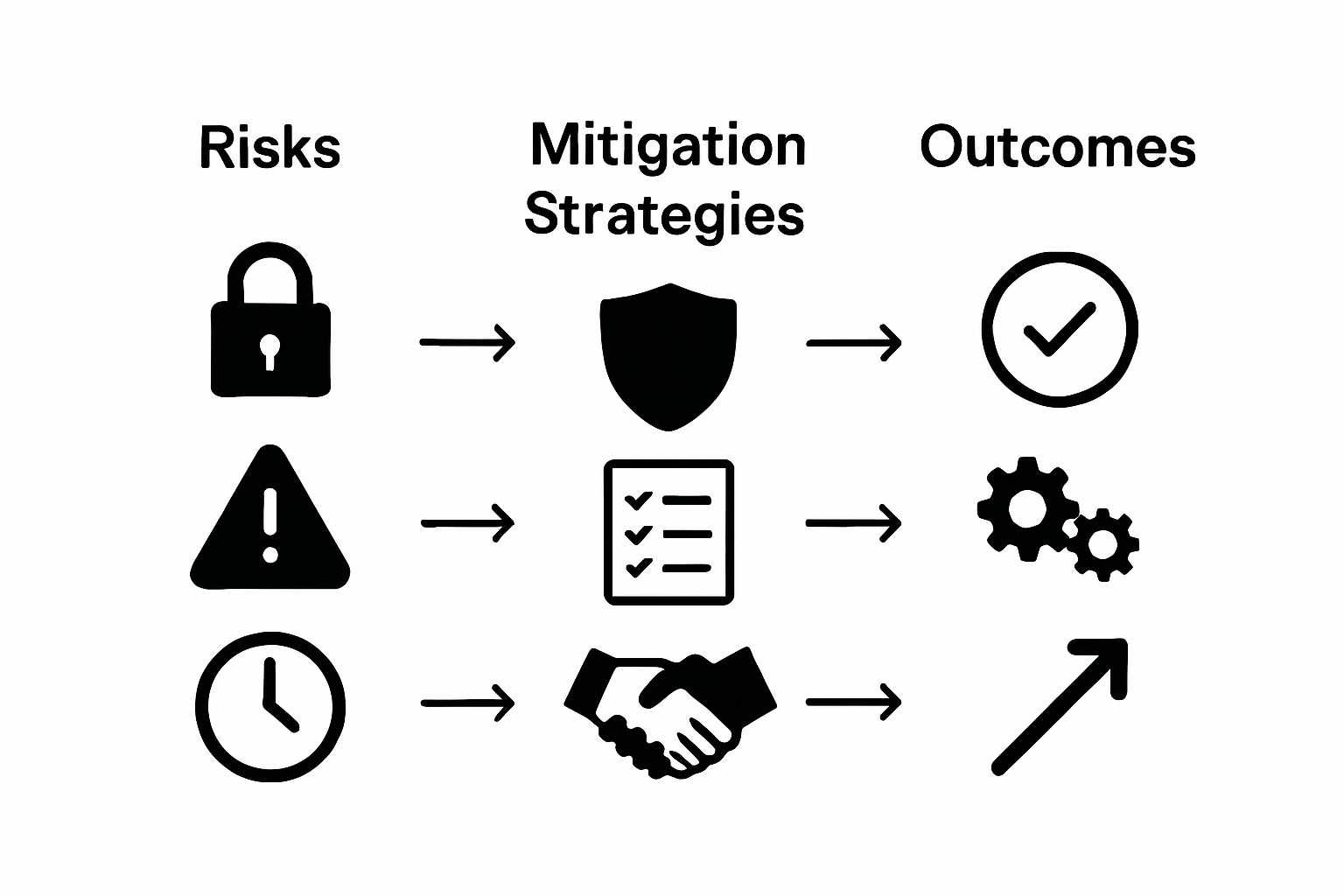
Successful risk management requires a holistic approach. Best practices for outsourcing recommend developing flexible contracts with clear exit strategies, maintaining transparent communication, and creating collaborative partnerships that prioritize mutual success. StorsenDigital specializes in navigating these complex dynamics, providing strategic guidance that transforms potential challenges into opportunities for growth.
Explore comprehensive risk mitigation strategies at www.storsendigital.com, where we turn operational challenges into competitive advantages.
Why Nearshoring in Europe with StorsenDigital
Nearshoring in Europe offers businesses a strategic approach to scaling operations with unparalleled efficiency and precision. Co-sourcing strategies demonstrate the power of collaborative partnerships that balance internal control with external specialized resources. StorsenDigital emerges as a premier nearshoring solution, bridging technological expertise with cost-effective operational models.
Key advantages of nearshoring with StorsenDigital include:
Cultural and Linguistic Alignment
- Minimal communication barriers
- Shared European business standards
- Similar time zones for seamless collaboration
Cost-Effective Talent Acquisition
- Access to highly skilled European professionals
- Competitive pricing compared to Western European markets
- Reduced operational and labor expenses
Advanced Technological Infrastructure
- State-of-the-art digital capabilities
- Robust cybersecurity frameworks
- Cutting-edge technological expertise
Why choose nearshoring goes beyond simple cost considerations. Bosnia and Herzegovina represents a hidden gem in the European outsourcing landscape, offering a unique combination of technical expertise, cultural compatibility, and strategic geographic positioning. StorsenDigital leverages this exceptional talent pool to provide businesses with transformative operational solutions.
The company specializes in creating dedicated teams that seamlessly integrate with client organizations, delivering exceptional value across multiple business domains. By focusing on advantages of nearshoring, StorsenDigital helps companies transform potential operational challenges into sustainable competitive advantages.
Discover your pathway to smarter scaling at www.storsendigital.com, where we turn global talent into your strategic asset.
Unlock Smarter Scaling and Cost Savings with StorsenDigital
Understanding the complexities of outsourcing is only the first step toward transforming your business operations. If your company faces challenges like balancing quality control, managing seamless communication, or accessing top European talent while reducing costs then strategic outsourcing and nearshoring solutions are essential. The article highlights how outsourcing goes beyond simple cost-cutting to deliver scalability, enhanced focus on core strengths, and access to specialized global expertise.
Partnering with StorsenDigital means overcoming these exact pain points through tailored Business Process Outsourcing (BPO), nearshoring in Europe, and managed services designed to keep your operations agile and efficient. We help you build dedicated teams aligned with your goals while minimizing risk and operational overhead. Our strategic consulting and talent recruitment empower you to scale smarter and focus on growing your business with confidence.
Explore how you can turn outsourcing challenges into competitive advantages today

Take the next step toward operational excellence and cost efficiency. Contact our experts at StorsenDigital now to discover customized outsourcing solutions that meet your unique needs and empower your business to thrive in the global marketplace.
Frequently Asked Questions
What is outsourcing?
Outsourcing is a strategic business practice where companies delegate specific tasks, processes, or functions to external service providers, allowing them to focus on core competencies while accessing specialized expertise and cost efficiencies.
What are the main types of outsourcing services?
The main types of outsourcing services include Business Process Outsourcing (BPO), Information Technology Outsourcing (ITO), Knowledge Process Outsourcing (KPO), Manufacturing Outsourcing, and Professional Services Outsourcing.
How can outsourcing help businesses cut costs?
Outsourcing can help businesses reduce operational overhead, convert fixed costs into variable costs, and access specialized talent without long-term commitments, resulting in significant cost savings.
What are the key risks associated with outsourcing?
Key risks associated with outsourcing include data security risks, quality control challenges, and communication barriers. Companies can mitigate these risks through thorough vendor selection, strict performance metrics, and clear communication strategies.


